
Copyeditors, given their passion for exactness, like to go by the book and feel uneasy if they have to improvise. In copyediting scholarly works, citations, and references are relatively straightforward matters, and all style guides explain in excruciating detail the recommended form for citing sources. If you look up the successive editions of any style guide, you will see that the number of examples it uses to illustrate the format of presenting the full details of a given source — a journal article, a chapter in a book, a web page, an audio recording, and so on — has been steadily rising to keep pace with newer digital forms in which the content is packaged: emails, Facebook posts, WhatsApp posts, Instagram posts and messages, YouTube videos. . . .
The fact that NAIWE’s executive director, April Michelle Davis, suggested that I contribute an article on how to cite blogs, press releases, and newsletters is proof enough that editors need a template for every form of packaging. And that, to my mind, is a demand unlikely to be met no matter how comprehensive a style guide. I will of course dispense some advice on dealing with blogs, press releases, and newsletters as dictated by a couple of style guides, mainly APA (the Publication Manual of the American Psychological Association, 7th ed.) and Chicago (the Chicago Manual of Style, 17th ed.), but I also intend to share with my fellow editors how, once you know the four basic elements of a reference, namely the author, the date, the title, and the source, it is easy to deal with every new kind of source that information technology can throw at us.
As the following examples show, these basic elements continue to make up any reference and continue to retain the sequence in which they are given in a reference. For example, here is how to format the reference, APA style, when the source in question is a blog post:
- Charlesworth Author Services. (2022, April 16). Understanding author affiliation and accurately mentioning it in different scenarios. https://www.cwauthors.com/article/understanding-and-accurately-mentioning-author-affiliation
Chicago differs in that it adds the word “blog,” in parenthesis, after the title of the blog post, moves the date farther from the author’s name, and places the title of the blog post within quotation marks:
- Yateendra Joshi, “Using “et al.” for in-text citations in research paper,” Editage Insights (blog), January 16, 2014, https://www.editage.com/insights/using-et-al-for-in-text-citations-in-research-papers?refer-type=article.
For press releases, however, APA makes it a point to identify the genre by inserting the phrase “Press release,” within square brackets, at the end of the title or heading of the press release, as shown in the following made-up example:
- Institute of Typographic Research. (2021, July 18). Unambiguous characters for captcha texts [Press release]. https://www.ITR.org/Newsroom/announce/glyphs34.htm
Chicago differs in that it uses “news release” and does not enclose it within square brackets:
- Institute of Typographic Research, “Unambiguous characters for captcha texts,” news release no. ITR07182021, July 18, 2021, https://www.ITR.org/Newsroom/announce/glyphs34.htm
Formatting the reference to an item in a newsletter is straightforward because newsletters are serial publications, usually with volume numbers, issues numbers, and a date (typically the month and the year). Therefore, the reference follows the standard format for an article in a journal. However, items in newsletters are rarely attributed to named authors, and the entity that publishes the newsletter is taken as the author.
However, what is really important — far more than following the stipulated format by using square brackets instead of round brackets (or vice versa, as the case may be) — is that as copyeditors we ensure that readers are given all the necessary information so that
- the exact source is pinpointed
- enough information is given (especially the author, the title, and the year) to help readers decide whether they should consult the original article
- relevant details are supplied to help readers obtain the article in question.
In turn, the necessary information comprises the four basic elements mentioned above, basic because they answer the following questions:
- Who is the entity responsible for the content (the author)?
- How recent or dated is the information (the date)?
- What is the content all about (the title)?
- How to locate it (the source)?
So long as you keep these basic elements in mind, you will be less worried about not having the exact template for each kind of source — be it a blog, a press release, or a story in a newsletter.
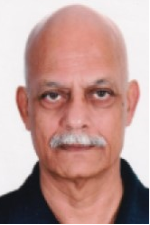 Yateendra Joshi, has been copyediting scientific and technical documents for more than 30 years and helps researchers and academics get published in high-impact-factor journals. Certified as a master editor by the Board of Editors in the Life Sciences — only 30 editors worldwide have been thus recognized so far — and a former researcher himself, Yateen has taught full-semester courses on technical writing, has conducted more than 30 shorter training programs, and as many webinars from March 2020 to December 2021 on successful submissions to high-impact-factor journals. Yateen is a member of the editorial board of Information Design Journal, was elected for the second term (2021–2023) as a member of the council of the European Association of Science Editors, and is a professional member of the Chartered Institute of Editing and Proofreading. His book, Communicating in Style, was favorably reviewed by a dozen international journals and newsletters, and the late John le Carré called it “A gem. Courteous, unfrightening and essential. A perfect companion to Fowler’s A Dictionary of Modern English Usage for today’s communicators.”
 Ruth Thaler-Carter has been a full-time freelance writer, editor, proofreader, and desktop publisher for more than 30 years. She has been published locally, regionally, nationally, and internationally in, and does writing, editing and proofreading for, publications, associations, nonprofits, websites, service firms, and businesses. She sold her first freelance articles when she was still in high school. Often called the Queen of Networking, Ruth is active in about a dozen professional associations, serving as a newsletter editor, webmaster, publication author, speaker/presenter, blogger, program host or planner, and chapter leader. In 2006, Ruth launched the Communication Central “Be a Better Freelancer”® annual conference to help aspiring and established freelancers find greater success and connections with colleagues. Ruth is also owner and editor-in-chief of the An American Editor blog and owner of the A Flair for Writing publishing business. She received the Philip M. Stern Award of Washington (DC) Independent Writers for service to freelancers; the Writers and Books Big Pencil Award for teaching adults and contributions to the literary community; EFfie awards for writing, editing, and newsletters; and the APEX award for feature writing. She was also an IABC/DC Communicator of the Year.
 Kristen Fischer is a copywriter and journalist living at the Jersey Shore. She worked as a reporter and copyeditor for Gannett before launching her full-time freelance business in 2005. Her work has been published in Parents, New Jersey Monthly, Prevention, Woman’s Day, SheKnows, and Healthline.
 A farmer on a horse looks at the Tungurahua volcano eruption on December 10, 2010, in Banos, Cordillera, central Ecuador. (Photo by Kseniya Ragozina)[/caption]
 There is a little-known field on the website of The Associated Press Stylebook that lets users outside AP offer suggestions for updates for the style guide. I’ve dug my way through various layers to find it, and I’ve offered my thoughts on various minor questions of language and usage. The most recent was one of the more inconsequential, I thought, but it was also a relative no-brainer. AP Stylebook took my suggestion, even
  This illustrates a strength of the AP Stylebook over other reference sources — it responds quickly when it needs to. It was updated almost immediately after I brought Ecuadorian to the Stylebook editors’ attention. Every spring, the book publishes anew with scores of changes and additions. Between editions, the online version updates as needed. Some recent additions include advice on reggaeton, the musical style, and on the United States–Mexico–Canada Agreement, the successor to the North American Free Trade Agreement (the initialism USMCA is acceptable on first reference with a definition, but spelling it out is preferred).
 Mark Allen is an editor, writer, and teacher focused on helping people communicate with clarity and honesty. He has trained hundreds of editors and writers on a variety of topics, including the latest and most important elements in the Associated Press Stylebook and the Chicago Manual of Style. Mark has led conversations about copyediting and writing at conferences and workshops in Detroit, St. Louis, Las Vegas, New Orleans, Philadelphia, Portland, Columbus, Chicago, Pittsburgh, New York City, and York, England. He was the first freelancer elected to the executive board of ACES: The Society for Editing, and Mark currently teaches advanced copyediting for UC San Diego Extension’s copyediting certificate program.
 Claudia Suzanne is a consummate ghostwriter/teacher, understanding what authors need in order to successfully complete their book dream, and she has a finely honed talent for communicating what she knows to her students and clients. Popularly dubbed “The Einstein of Ghostwriting,” Claudia has entertained and informed tens of thousands of writers, editors, journalists, and aspiring authors at countless writer and professional meetings, conferences, radio and BlogTalk radio broadcasts, webinars, and podcasts. Claudia was an invited expert on Penguin’s Author Solutions Expert Video series and a featured entrepreneur in Orange County Business Journal and Norwegian Business Daily. Her signature title, This Business of Books: A Complete Overview of the Industry from Concept through Sales, earned her a 2018 Author of Influence Award from Connected Women of Influence.
 Mary Jo (“MJ”) Courchesne is the owner and principal consultant of Gryphon Publishing Consulting. A publishing veteran with more than 20 years of experience in trade, academic, and direct-response publishing, she has spent nearly two decades specializing in licensing, subsidiary rights, and permissions. MJ is a frequent and polished presenter on licensing and copyright. When it comes to intellectual property, she firmly believes that everyone from authors to publishers to corporations should know their rights. To that end, MJ has instructed on copyright and permissions in the George Washington University’s Masters in Publishing program for the last 15 years. She currently serves on the Board of Experts for the National Association of Independent Writers and Editors and is a member of the Independent Book Publishers Association and the Society of Children’s Books Writers and Illustrators. MJ has also held memberships with other publishing organizations such as the American Society of Picture Professionals and Washington Publishers.
 Kajli Prince (“Prince”) has over 20 years of experience in small business tax preparation; he is a senior tax analyst and small business certified tax professional in the Centreville, Virginia, Block Advisors office. As a self-published author, Prince holds a special appreciation for NAIWE and its members. One of his passions is sharing relevant information with people and showing them how best to use it for their benefit. Prince is a small business owner of 25 years, and his specialties include emerging currencies (e.g., virtual/crypto currencies), information technology, intellectual property, and investment real estate.
 Marcia Rosen (aka M. Glenda Rosen) is the author of 10 books including The Senior Sleuths, the Dying To Be Beautiful Mystery Series, and her latest offering (which she wrote with her son Jory Rosen and was a 2021 New Mexico–Arizona Book Awards winner), The Gourmet Gangster: Mysteries and Menus. She is also the author of The Woman’s Business Therapist and award winning My Memoir Workbook. For 25 years, Marcia was owner of a successful national marketing and public relations agency and also facilitated numerous writing programs. She continues to work with aspiring author clients, providing manuscript reviews and advising them on book development and marketing, as well as writing articles, appearing on author blogs, and presenting writing programs on Zoom and in person. Marcia was co-presenter of “About Being an Author” for The National Steinbeck Center. She is a member of Sisters in Crime Albuquerque (2022 vice president), Southwest Writers, Women Writing the West, Central Coast Writers, New Mexico Book Association, Public Safety Writer’s Association, and National Association of Independent Writers and Editors—for which Marcia is also a current board member.