

Member's Library I am what the librarians have made me . . . B. K. Sandwell
  • About
    • About NAIWE
    • Board of Experts
    • Books Published by NAIWE Experts
    • FAQs
    • Advertising
  • Member’s Area
    • Member’s Library
    • Member Website Development
    • Benefit Links and Passcodes
    • Manage Your Account
    • The Member’s Edge
    • NAIWE Media
    • On-Demand Training (Discount)
  • Training
    • Upcoming Webinars
    • On-Demand Training (Discount)
  • Find a Professional
  • News & Events
    • Blog
    • The Edge
    • The Member’s Edge
    • The Edge Writers Guidelines
    • Conference
    • Podcasts
    • Summer Challenge
    • Words Matter
      • Words Matter Week
      • How to Participate
      • Media
  • Post a Job
  • Contact
  • Member Sites

You’ve Written a Book: Now What?

Thursday, January Post a comment

Now what? Indeed!

There are numerous options for authors today to get their books in print, but many people have a room full of good-looking printed books they wrote and wonder, “What do I do now?”

From traditional publishing, self-publishing, independent publishing, and university presses to e-books, it’s important that your publisher pays attention to your requests and needs and that they offer the expertise and experience to help you publish your book the way you intend. However, it is also essential for you as an author to realize that publishing is only the beginning. You need an aggressive and comprehensive marketing plan incorporating traditional and social-media options and opportunities.

Who is going to read your book? Who will buy it? Oh yes, of course some friends and family. All traditional and self-publishers will tell you, “You need to market your book. YOU need to promote it, tell your story and create a buzz about it.”

You’re a writer. You’re a creative person. You really don’t want to be a marketer. However, more and more, it’s a proven fact that writers have to promote their books. No matter how wonderful, interesting, compelling your book might be, you still have to let the reading world know it exists. Unless you market your book, chances are it will fall through the cracks of literary chaos.

Marketing includes everything from getting your book reviewed to doing book signings or seminars. It’s also important to have a website for your book. It’s like that old question that advertisers asked: “Do you know what happens when you don’t advertise?” Answer: “Nothing.”

Public relations provides information and can be a way to get free publicity through articles, book reviews, and interviews in print or with electronic media.

Advertising is when you pay for placement in the media such as a Facebook Author Fan Page, a Google ad, or even local media, which is far less costly than national media. Authors can also pay for reviews in publications such as Kirkus Indie Review, Goodreads, and San Francisco/Manhattan Reviews. Another avenue is to search through Google for reviews and event contest options.


Traditional Marketing Actions

  • Set up book launch signings, time, place, and details.
  • Develop an invitation list and sign-in sheet, and bring books to sell if you are self-published.
  • Donate several copies of your book to the main library in your community.
  • Send a press release including the cover of your book and your personal photo to media, announce the release on your website, email it to organizations of which you’re a member and to your personal contacts. (Continue to build your contact list.)
  • Develop pitch letters for speaking opportunities, and make list of potential places you might speak such as target-appropriate conferences.
  • Submit to online calendar listings in your target market.
  • Have book swag (bookmarks, cards, flyers, pens, etc.).
  • Write an eye-catching sell sheet incorporating your book cover, book synopsis, and author bio.
  • Write articles related to your book and submit to organization blogs, newsletters, local papers, and magazines.


Online and Social Media Actions (a few ideas)

  • Participate in Goodreads giveaway programs.
  • Join or develop a blog tour.
  • Set up a Facebook Author Fan Page and boost some of your posts. This can be very effective in building social-media and website traffic. Posts can include reviews, announcements, new books, links to book chapters, event dates, press releases, etc.
  • Look into Instagram and X and other offerings. Be aware of scams and ask other authors about their experience with a particular promotional opportunity.


So, now what? Be willing to spend the time, money, and energy to fulfill your dreams and ambitions.

 

Marcia Rosen (aka M. Glenda Rosen) is an award-winning author of twelve books including her newest one, An Agatha, Raymond, Sherlock and Me Mystery: Murder at the Zoo plus The Senior Sleuths, Dying To Be Beautiful Mystery Series, and The Gourmet Gangster: Mysteries and Menus (menus by her son Jory Rosen). She is also author of The Woman’s Business Therapist and award-winning My Memoir Workbook and has given memoir writing presentations and classes for close to 20 years. Marcia has assisted many authors in developing, writing, publishing, and promoting their books. For 25 years, she was the owner of a successful national marketing and public relations agency. Marcia has frequently been a speaker or program moderator at organization meetings and conferences, bookstores, libraries, and Zoom programs. Topics she has taught and presented over the past 20 years include Encouraging the Writer Within You, Marketing for Authors, Writing Mysteries…Not A Mystery, Writing Your Memoir, and recently Anatomy of Writing a Murder. Many articles on these topics have been published on mystery reader blogs and in newsletters and magazines and her newest articles include Location, Location, Location: Murders Have Their Places; Hearing Voices of Past Famous Detectives: Their Impact and Influences; and Writing Mysteries at a Zoo: With Caution. Marcia is a member of Sisters in Crime National and New Mexico (Croak & Dagger), Southwest Writers, New Mexico Book Association, Women Writing the West, Public Safety Writer’s Association, Women’s National Book Association, and National Association of Independent Writers and Editors.
Categories: Marcia Rosen, Marketing, Social Media

Writing Your Life Story

Thursday, January 1 Comment

Each of us has our own unique story. Our memories can evoke a wide range of emotions. They can bring a smile and remind us of a time when we were particularly happy. Other memories can bring tears, especially when they are memories of a broken heart.

With some thought, we can also recall experiences that have affected our ideas and ideals. They are the basis of our hopes, distrust, and uncertainty. They have contributed to our commitments and distractions. They surely give voice to our dreams and determinations.

Whether you are writing for your grandchildren, to help or inspire others outside your family, or to leave a lasting voice to celebrate your life, you have a story to tell! Your memoir can be about a single period of your life or the whole of your life.

This is your history. Be willing to go on an emotional journey that can be both wonderful and painful. Be willing to tell the truth. It is essential you do your very best to be honest and open about your life experiences.

Organize your thoughts into lists such as important dates in your life, work, or career; domestic and foreign travel destinations; moments that left you feeling wonderful or sad; milestones in your childhood or family life; and, of course, your personal dreams and passions. Make a note of what was fun, what was frightening, and what may have stopped you from doing what you really wanted to do in life.


The Writing Process

Remember to write from your voice in the first person. Unlike an autobiography that is usually written in chronological order, a memoir can begin and end wherever you want and that best tells your story. Everyone has a story to tell. I encourage you to tell yours. Writing your life story can be an emotional, exciting, moving, and rewarding experience.


Writing Your Life Story Tips

  • Start writing in a journal or notebook
  • Make a list of important dates and events in your life
  • Make a list of your life experiences
  • Jog your memory with photos and mementos
  • Gather pertinent information
  • Research as many details as possible
  • Determine your goals
  • Write what inspires you
  • Decide if you want to write about a part or all of your life
  • Prepare to tell the truth
  • Relate to all your life senses: sight, sound, smell, touch, and taste
  • Read at least several memoirs
  • Don’t let the negative opinions of others deter you
  • Keep writing
  • Get help editing, proofreading, marketing, and selling your book


Marcia Rosen (aka M. Glenda Rosen) is an award-winning author of eleven books including her newest one, An Agatha, Raymond, Sherlock and Me Mystery: Murder at the Zoo plus The Senior Sleuths, Dying To Be Beautiful Mystery Series, and The Gourmet Gangster: Mysteries and Menus (menus by her son Jory Rosen). She is also author of The Woman’s Business Therapist and award-winning My Memoir Workbook and has given memoir writing presentations and classes for close to 20 years. She has assisted many authors in developing, writing, publishing, and promoting their books. For 25 years, she was owner of a successful national marketing and public relations agency. Marcia has frequently been a speaker or program moderator at organization meetings and conferences, bookstores, libraries, and Zoom programs. Topics she has taught and presented over the past 20 years include Encouraging the Writer Within You, Marketing for Authors, Writing Mysteries…Not A Mystery, Writing Your Memoir, and recently Anatomy of Writing a Murder. Many articles on these topics have been published on mystery reader blogs and in newsletters and magazines and her newest articles relating include Location, Location, Location: Murders Have Their Places; Hearing Voices of Past Famous Detectives: Their Impact and Influences; and Writing Mysteries at a Zoo: With Caution. She is a member of Sisters in Crime National and New Mexico (Croak & Dagger), Southwest Writers, New Mexico Book Association, Women Writing the West, Public Safety Writer’s Association, Women’s National Book Association, and National Association of Independent Writers and Editors.

Categories: Marcia Rosen, Memoir, Writing

Location, Location, Location: Mysteries Have Their Place!

Friday, March Post a comment

After landing on the moon . . . that could have been a fun location for a murder.

The Egyptian Pyramids, Eiffel Tower, or White House? They would be great locations for a good murder. In fact, they have been.

Major cities, small towns, and many made-up villages have become the location for a murder mystery and, especially, several very successful mystery series.

There were plenty of murders in cities along Rt. 66. John Steinbeck named it the Mother Road. I think of it as the Murder Road.

Location was once considered everything in business . . . before technology. Location is still essential in a good mystery. Location is place, and the place is as much a character in mysteries as the people.

Murder on the Orient Express — what a great location for a murder, moving and stopped. As was the apartment in Rear Window, and another apartment in the haunting film, Laura. In and around London there were many murders with Sherlock Holmes and Dr. Watson and a fascinating one on an English Country Estate in Godsford Park.

We lovers of mysteries know that murders and other crimes have occurred on all sorts of moving vehicles, in different rooms in small homes and large estates, and possibly even in our own backyards?  Well, hopefully not!

The lover of mystery books enjoys envisioning the place where a story takes them, and in movies and on television, the place often becomes central to the appeal and importance of the story. It helps the viewer to become caught up in it, perhaps even feel a part of it.  Some plots are dark and frightening and provide an extra sense of anticipation for lovers of thrillers like the type written by Stephen King, and his locations add to the suspense.

The art of a murder mystery and investigation includes a private detective or the police or, in a cozy mystery, an amateur sleuth. The dialogue needs to create suspense with some foreshadowing and fake clues that are followed and soon ignored. Finally, the arc of the murder mystery begins with the chase of the real villains, who are caught — dead or alive — of course.

But, what about a location, where murder and mayhem terrorize the residents. Doors are locked and there are whispers and secrets behind those closed doors. Questions remain.  Who killed their neighbor’s wife in the alley next to the post office? Who stabbed the old man as he walked across the bridge late at night? Who pushed the young man off his apartment balcony? Why did the murderer run his or her car over the victim on a country road? Were there witnesses to any of these murders? Ah, where are they possibly located?

As a mystery writer, I believe location plays a huge part in the plot and ultimately when and where the murder is solved.  Two escaped murderers hide in a location fitting of the plot designed to build up a sense of suspense and anticipation.

We as readers and viewers also enjoy explosive endings. There are gunfights and car chases up and down city streets. There are threats and demands until the final moments of capture. The movie Witness ended in an Amish barn. In the book The Name of the Rose, written by one of my favorite authors, Umberto Eco, the murders and the ending take place in an Abbey in the 1300s. In Hitchcock’s North by Northwest, the finale is on Mt. Rushmore. Another favorite of mine is Sue Grafton’s Alphabet Series taking place somewhere along the California coast. And, in historical fiction, the landscape fits the century and the plot.

Location, location, location. The book ends. The film is finished. Surely calm prevails, the dark sky is lighter, and all is right again. Or is it?


Marcia Rosen (aka M. Glenda Rosen) is an award-winning author of eleven books including her newest one, An Agatha, Raymond, Sherlock and Me Mystery: Murder at the Zoo plus The Senior Sleuths, Dying To Be Beautiful Mystery Series, and The Gourmet Gangster: Mysteries and Menus (menus by her son Jory Rosen). She is also author of The Woman’s Business Therapist and award-winning My Memoir Workbook. For 25 years, she was owner of a successful national marketing and public relations agency. Marcia has frequently been a speaker or program moderator at organization meetings and conferences, bookstores, libraries, and Zoom programs. Topics she has taught and presented over the past twenty years include Encouraging the Writer Within You, Marketing for Authors, Writing Mysteries…Not A Mystery, Writing Your Memoir, and recently Anatomy of Writing a Murder. Many articles on these topics have been published on mystery reader blogs and in newsletters and magazines and her newest articles relating include Location, Location, Location: Murders Have Their Places; Hearing Voices of Past Famous Detectives: Their Impact and Influences; and Writing Mysteries at a Zoo: With Caution. She is a member of Sisters in Crime National and New Mexico (Croak & Dagger), Southwest Writers, New Mexico Book Association, Women Writing the West, Public Safety Writer’s Association, Women’s National Book Association, and National Association of Independent Writers and Editors.

Categories: Marcia Rosen, Mysteries, Setting, Writing

A Collection of Pens

Friday, March Post a comment

I read a book that says writers can — and even should — write just about anywhere and everywhere. We should write in cafes, restaurants, and coffee shops; on buses, boats, trains, and planes; and where beauty surrounds us in museums, art galleries, and places of worship.
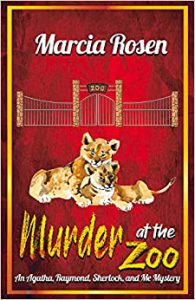
Our minds can travel along with our physical beings so that our thoughts can become words that express ideas, which can be organized to form a book, article, play, or script. When our words are grouped in such a work, they allow us to say, “I’m a writer.”

What a lovely idea to be able to write anywhere! One can even compose comfortably in a public place in full view and with the full view of passersby. We can watch people moving at their own pace giving us impressions and insights for stories and for characters whose voices and personas we want to create. Watching these passersby, we might ask ourselves: “Who are they? Where are they going? What are they thinking about? Are they wondering why I am watching them?”

We can write from the coffee shop down the street or from a café somewhere across the world. Sometimes we just move from idea to idea. Sometimes, in a precious moment, we find a concept that takes hold of us and we cannot let go of it until we have explored it and given it breath of life. Then we must determine whether we should support its development or let it die so we can move on unhampered to the next moment.

When I began to think about this, and then to write about such thoughts, I wondered, “Does it really matter where I write? There might be something special about a person or place that could become the focus of where I might begin, or even end, a story. However, the most important thing was not where I write, but that no matter where, I keep writing.

“I’m a writer,” I repeat aloud to myself when no one is near to wonder whether I might be crazy.  I introduce myself as a writer to people I’ve never before met. I need them to believe this. I need to have others believe it so I will also be convinced of its truth. Call it what you may: ego, desire, or wishful thinking.

Writing has been my heart’s desire since I was a youth. “Such things are not important,” I’d been told. I was raised in a home where there were no books, no music, and no one willing to help me believe in my dream. Remembering that now, as well as many times over the years, still makes my soul sad.

On a trip with a friend not so long ago, I thought about all this while sitting in a lovely guest room in an Inn in Vermont. It was a warm winter weekend, but spring had not yet touched the trees or grass. In Vermont, spring was still miles away. My friend would not be coming to meet me for a few hours, so I decided to write.

However, I realized I needed a pen. For some reason, I could not find any of the several pens I had brought with me.  So, I went into the office like a pilot on a mission and helped myself to one of their free pens. With it already in my hand, I said to the desk clerk, “I’m taking one of your pens. Writers shouldn’t be without a pen.” She smiled in apathetic agreement.

I had noticed the pens when I walked into the lobby earlier that morning. There they were: Vermont green pens with white stenciling on them that promoted the Inn’s name and telephone number. Its web address was clearly imprinted on it as well.

Yes, I could have used my laptop.  But it’s just not the same. It’s not the same to someone who feels about pen and paper the way I do. I write on lined pads of beautifully colored paper. I have them in purple and blue and pink. I love the way it feels when my pen touches the paper. I know that when the words appear they are from my voice. Sometimes the words and phrases seem to spread across the colored paper as if by magic!

It is right then and there in the Vermont Inn that I decide to begin “A Collection of Pens.” It would be both a story and a real collection. I would collect pens from everywhere and anywhere that I wrote. Then, I would write about my collection of pens. “After all, I’m a writer.”

I decided I would also buy a “special pen” in each city I visited. My collection of pens would remind me of the dream of my youth and the belief of that dream becoming reality in my older age. The pens would have been my paint brush if I had been an artist. They would have been my ballet slippers if I had been a ballerina.

My collection of pens is not meant to be displayed.  I don’t really need anyone else to see them. I certainly don’t want anyone to touch them! In fact, there are only a few people to whom I might consider showing my treasures because for me they are precious. They allow my heart and soul to share my secrets and my truths. I hold them tightly when I’m writing for fear that if loosen my grip the ideas might escape. Then, how would I write?

When I hold a pen, it becomes my friend, my lover, my conscience. Sometimes I hold a pen in long embrace thinking about what I want to do next. Where do I want to go with my ideas or the relationship of my characters? The pen feels my emotions as I squeeze it, tap it, swirl it around, or even put it in my mouth. The pen knows my touch. We are intimate. The pen even knows when to be ruthless and unforgiving, grabbing hold of thoughts before they wander or lose their way.

Together, we are in this pursuit of words and sentences and paragraphs and pages and chapters that become a book filled with human dignities, and at times, even indignities. In books, we can find ourselves or lose ourselves. We might travel long distances or take short walks across time and place. We find expressions of all emotions and complications, as in many relationships. We wonder how it feels to be that person, in that place, in that time. We pretend and envision that we could lead that life and occupy a special place in the book.

My collection of pens has helped me open minds and hearts: Sometimes those of others, sometimes my own. I have thought quite seriously about what this collection of pens means to me. I understand clearly and certainly that it is about my promise to myself as a youth that, “I will one day be an important writer.” I had envisioned my books in the windows of bookstores. I had seen myself signing books as a long line of waiting and eager readers came to the table with their purchase of my book and told me their name to sign in it.

Today, when people at my book signings tell me about themselves and their dreams, I feel a connection. I understand their hunger. It was my hunger as well to have a dream fulfilled. Some ask me how long it takes to write a book. Others simply say: “Thank you, you’re a wonderful writer.” I beam. I reach out and touch their hand, look at them, and say thank you. I really mean it. At the same time, I whisper to myself, “Dear God, thank you for this gift.”

My collection of pens has helped me to reach the dream that appeared to me so long ago. They have been my support and my determination. Too often we writers do not have people who encourage us. Sometimes we have one or two, but it is not always enough. People in our lives tell us we are foolish or unrealistic. We often give them too much power.

To this day, that awful voice with the destructive words and attitude has never quite left me. People who should have supported me said: “Who do you think you are?” Although I long ago beat it, drowned it, and buried it beneath layers of hopefulness, now and then, that voice creeps to the surface. I answer by reminding myself of my accomplishments: “I’m a writer. I not only have my collection of pens, I also have the books I’ve written to prove it.”

So do you!


Marcia Rosen (aka M. Glenda Rosen) is an award-winning author of eleven books including her newest one, An Agatha, Raymond, Sherlock and Me Mystery: Murder at the Zoo plus The Senior Sleuths, Dying To Be Beautiful Mystery Series, and The Gourmet Gangster: Mysteries and Menus (menus by her son Jory Rosen). She is also author of The Woman’s Business Therapist and award-winning My Memoir Workbook. For 25 years, she was owner of a successful national marketing and public relations agency. Marcia has frequently been a speaker or program moderator at organization meetings and conferences, bookstores, libraries, and Zoom programs. Topics she has taught and presented over the past twenty years include Encouraging the Writer Within You, Marketing for Authors, Writing Mysteries…Not A Mystery, Writing Your Memoir, and recently Anatomy of Writing a Murder. Many articles on these topics have been published on mystery reader blogs and in newsletters and magazines and her newest articles relating include Location, Location, Location: Murders Have Their Places; Hearing Voices of Past Famous Detectives: Their Impact and Influences; and Writing Mysteries at a Zoo: With Caution. She is a member of Sisters in Crime National and New Mexico (Croak & Dagger), Southwest Writers, New Mexico Book Association, Women Writing the West, Public Safety Writer’s Association, Women’s National book Association, and National Association of Independent Writers and Editors.

Categories: Marcia Rosen, Writing

Writing Mysteries and Murders at a Zoo (With Caution and Care for the Animals)

Wednesday, March Post a comment

New Mexico is a land of amazing sunrises and sunsets with a sky constantly changing colors and forms, mountains framing the background, and a desert that stretches across the mesa often giving the land a mystical feeling. Known as the land of enchantment, it still has its share of mysteries, ancient and new. As a mystery writer, I find it intriguing and exciting to involve this land as an important character in my new mystery. Place is often as important a character as the people in a novel.

But at a zoo? Well, yes, with much caution and caring for the animals. Please don’t worry about the animals in my stories. They are well-cared-for and loved. In Murder At The Zoo, two lion cubs are born: Imani (meaning faith) and Sabrina. They are “adorable and not the least bit camera shy.” Mom and Dad, Kamali and Kasi, are very proud and protective parents. A baby zebra is born and there is a contest to name him. In fact, after the two main characters in the book, the veterinarian and detective, watch the foal being born, Miranda, the veterinarian, tells Bryan, the detective, with a grin, “We just had a baby.” The poor guy is a bit freaked at that comment. Miranda and Bryan alternate between flirting and fighting off romantic feelings. Murder keeps getting in their way.

The zoo veterinarian and the charming police detective become romantically involved as they work toward solving a series of murders. Their romance certainly has a hefty fair share of friction and interruptions, since Miranda’s father is a gangster — even though he claims to be retired. What could possibly go wrong? Plenty! There are also a number of other interesting, crazy, and unusual characters, as well as a fair share of humor to encourage you to smile a bit.

Writing any murder mystery book is akin to putting together a puzzle with a thousand pieces. When the mystery begins with a murder at a popular zoo, there is bound to be a need to also add a lot of positive animal experiences. And I make sure to do that.

The good characters are interesting and appealing, so the question becomes, How does the author present the bad guys and surprise the reader? A good mystery tries to lead the reader astray a bit by placing suspicion and blame on various suspects. It’s important to have the reader involved and interested in your story, so they attempt to solve the crimes along with you. Don’t make it too easy. Still, murders at a zoo?


Excerpt:

“Miranda, get to the zoo! Visitors are pointing at a human arm in the lions’ enclosure.”

“Hmmm. This is intriguing. A body in the lions’ den. What are the facts?”

“Agatha, Raymond, facts if you please,” Sherlock demanded.

 “All of you shut up!”

It was not the first time Miranda shouted to the voices in her head. Sometimes they seemed so real to her. She had read nearly every book of every famous mystery writer and had seen movies made from them many times. She was often absorbed and obsessed by the stories and the characters.

Miranda loved their ways of thinking, analyzing problems, finding solutions, and delving into the dark spaces hidden in humanity: Raymond Chandler’s tough Detective, Philip Marlowe, who always found a dame he could lust after and distrust and Agatha Christie’s Hercule Poirot, Miss Marple, and her Tommy and Tuppence. Their gossip and ways of finding clues and uncovering secrets swirled in her head, while the famous Sherlock Homes demanded facts and attention to the tiniest of details.

There were other geniuses of mysteries who stopped by to give Miranda their “two cents” at times, especially when Agatha, Raymond, and Sherlock were disagreeing with each other.

Miranda was sure they would have plenty to say about the murder at the zoo.

End of Excerpt


Why would I choose a zoo as a place for a murder mystery? Why would anyone? Well really, why murder anyone, anywhere for that matter? Even when the murders take place at a zoo, you eventually have to get the bad guys to talk or confess or have someone give them up. Along the way, you are also on the chase with your characters through conflict, danger, and mystery. In addition, this book provides an opportunity to give a positive voice to all the wonderful reasons for the existence of zoos.

In Agatha, Raymond, Sherlock & Me: Murder at the Zoo, these characters are often telling the veterinarian what to think or do. In Sherlock Holmes and the London Zoo Mystery (W. Lane; 1986), it is an entertaining story that recaptures the atmosphere of Arthur Conan Doyle’s original Sherlock Holmes’ tales and includes the familiar figures of Sherlock Holmes, Dr. Watson, and Inspector Lestrade. The book also features several real-life characters, including Abraham Bartlett (Superintendent of London Zoo, 1859–1897), the famous African elephant Jumbo, Matthew Scott (Jumbo’s keeper), and P.T. Barnum.

Ultimately, you want to be able to explain your characters’ motivations for their criminal behavior. Common sources are anger, hate, power, money, and, of course, revenge. Revealing truths, secrets, and lies with stories of betrayal and vengeance and surprise endings can leave your readers wanting more. Your first sentence, your first paragraph, should grab your reader . . . maybe even by the throat, like a good murder!

Many years ago, we had a lassie collie who thought she was a lap dog, and my son and she adored each other. It’s good for children to grow up with pets and learn to care for them. It’s also wonderful for adults to have the love of an animal who doesn’t judge them. Right?


Excerpt:

Bryan whispered to Isabella, walked out, and came back in with the most special gift of all. Handing Miranda the leash to an Australian Shepherd puppy he said, “Your new watch dog.” And giving her a big kiss, he whispered, “You know, I love you.”

The detective and the veterinarian were too busy to deal with the “I love you” issue for now but . . . eventually.

Of course, the voices had to have their say.

“Yes, you can trust him.” Agatha was such a romantic.

“Well, we agree!” chimed in Sherlock and Raymond.

“What are you going to name her?”

With a mischievous grin Miranda said, “Agatha.”

End of Excerpt


End Note

The main benefits of zoos include conservation, education, and research programs that are designed to preserve and protect wild populations of animals, as well as educate.

Some fun facts about zoos:

  • There are more than 2,800 zoos and aquariums all over the world.
  • Every year, more than a hundred million people visit zoos. This number exceeds the total attendance of all big-league basketball, football, and baseball games.
  • There are 350 zoos in the United States.
  • The first public zoo in the United States was opened in 1874 in New York and was called the Central Park Zoo.
  • April 8th is National Zoo Lover’s Day.


A clever, intriguing, and gripping new cozy mystery filled with exciting twists and turns, bizarre murders, and fascinating characters, including several dead authors who seem to speak to Veterinarian Miranda Scott. A fan since childhood of Agatha Christie, Raymond Chandler, and Sherlock Holmes, their voices seem to live in her head frequently telling her what to do . . . and not do. Especially when it comes to solving mysteries. Murders, deceit, revenge, a gangster father, and godfather also often get in the way of a fine romance!


Marcia Rosen (aka M. Glenda Rosen) is an award-winning author of eleven books including her newest one, An Agatha, Raymond, Sherlock and Me Mystery: Murder at the Zoo plus The Senior Sleuths, Dying To Be Beautiful Mystery Series, and The Gourmet Gangster: Mysteries and Menus (menus by her son Jory Rosen). She is also author of The Woman’s Business Therapist and award-winning My Memoir Workbook. For 25 years, she was owner of a successful national marketing and public relations agency. Marcia has frequently been a speaker or program moderator at organization meetings and conferences, bookstores, libraries, and Zoom programs. Topics she has taught and presented over the past twenty years include Encouraging the Writer Within You, Marketing for Authors, Writing Mysteries…Not A Mystery, Writing Your Memoir, and recently Anatomy of Writing a Murder. Many articles on these topics have been published on mystery reader blogs and in newsletters and magazines and her newest articles relating include Location, Location, Location: Murders Have Their Places; Hearing Voices of Past Famous Detectives: Their Impact and Influences; and Writing Mysteries at a Zoo: With Caution. She is a member of Sisters in Crime National and New Mexico (Croak & Dagger), Southwest Writers, New Mexico Book Association, Women Writing the West, Public Safety Writer’s Association, Women’s National book Association, and National Association of Independent Writers and Editors.

Categories: Marcia Rosen, Mysteries, Writing

Staying Motivated

Monday, February Post a comment

It’s not always easy. We can get distracted, tired, anxious, frustrated, and sometimes wonder why we even bother writing. Still, many of us, including myself, would agree with Sylvia Plath: “You ask me why I spend my life writing? I write only because there is a voice within me, That will not be still.”

I find it helpful to establish priorities and boundaries. Do not call me between certain hours. It’s best if you have a set place to write (even if it’s at a coffee shop) and write each day as much as you can. It’s also important to check in with yourself on a regular basis to be sure you haven’t gotten off track from your original dreams and ambitions.

When you first thought about what you wanted to write, it’s possible you might have known it would be demanding and challenging. Perhaps you thought it would be easier or quicker or certainly more fun. So, when you get off track, or feel like you are going to, reconsider what the right track is for you. Are you really writing about what you want? Are you taking your writing seriously? You have every right to be a writer. Don’t listen to negative voices!

So, if you’re procrastinating, or experiencing anxiety about writing, it may help to do some of the writing prompts below. Writing exercises and prompts can help you to escape for a time from thinking about whatever else it is your writing. These exercises allow you to view situations and people, or even some characters in your book, from different perspectives. Respond to any or all of them and don’t be concerned about your answers. They can be your secret!


Writing Prompts

  • Pick several people you know, and write a brief paragraph about each one of them.
  • Select five of your favorite words, and write a paragraph using them.
  • Write a letter to your favorite author, and tell them how much you admire their work.
  • Write a letter to anyone you love or admire.
  • Write about something you might be grieving or sad about.
  • Write about how you see the world today.
  • Write something funny.

Finally, remember your words do matter. They matter to you and you can make them matter to others. The power of words, your words, can help others explore new ideas and develop different opinions. Believe it . . . your words can have an impact!

“There is no greater agony than bearing an untold story inside you.” Maya Angelo


Marcia Rosen (aka M. Glenda Rosen) is an award-winning author of eleven books including her newest one, An Agatha, Raymond, Sherlock and Me Mystery: Murder at the Zoo plus The Senior Sleuths, Dying To Be Beautiful Mystery Series, and The Gourmet Gangster: Mysteries and Menus (menus by her son Jory Rosen). She is also author of The Woman’s Business Therapist and award-winning My Memoir Workbook. For 25 years, she was owner of a successful national marketing and public relations agency. Marcia has frequently been a speaker or program moderator at organization meetings and conferences, bookstores, libraries, and Zoom programs. Topics she has taught and presented over the past twenty years include Encouraging the Writer Within You, Marketing for Authors, Writing Mysteries…Not A Mystery, Writing Your Memoir, and recently Anatomy of Writing a Murder. Many articles on these topics have been published on mystery reader blogs and in newsletters and magazines and her newest articles relating include Location, Location, Location: Murders Have Their Places; Hearing Voices of Past Famous Detectives: Their Impact and Influences; and Writing Mysteries at a Zoo: With Caution. She is a member of Sisters in Crime National and New Mexico (Croak & Dagger), Southwest Writers, New Mexico Book Association, Women Writing the West, Public Safety Writer’s Association, Women’s National book Association, and National Association of Independent Writers and Editors.

Categories: Marcia Rosen, Motivation & Productivity, Writing

Audiobooks Sell: Production and Marketing

Monday, January Post a comment

The audiobook market is one of the fastest-growing segments of the publishing industry. According to the Audio Publishers Association, it grew an estimated 24.5% from 2017 to 2018. This included self-published authors and small publishers who access numerous marketing actions and opportunities to create and an awareness and enhance sales. And think of the millions of people who drive to and from work each day many listen to audiobooks. They are just one audience since people can listen anywhere, anytime. Following are the major elements involved in producing and marketing an audiobook.
 

Production

Recording

The recording of your book is the first step in the process. Either the author or a talent will need to be well spoken, easy to understand, and appealing to listen to. Once the talent has been selected, the recording sessions can begin and recording time will depend on the length of the book. Usually estimated by word count, for example, a 60,000- to 70,000-word book should take about ten hours.


Post-Production/File Creation

Once the recording is complete, the file should be carefully reviewed to make sure all flubs, misreads, etc. are cleaned up. Music, pauses, and other needed elements should be inserted in the proper places for an entertaining final product.

Once the product is completed, files are created in the proper formats for the author’s website, Audible, Hoopla, and other audiobook sellers. The files are delivered and uploaded as needed for each site. Tests should be made to make sure the files are being downloaded correctly and meet both yours and the seller’s requirements.


Distribution

Audiobooks can be distributed and sold on Amazon, Audible, Apple, Google, Chirp, Hoopla, etc. Your publisher should be able to help you list it on Amazon. There are companies like Findawayvoices.com that can help with development, and there are companies like librofm.com, an independent audiobook retailer, that can help with distribution. Be sure to compare pricing. If you’re published through Kindle, they should be able to help you list your audiobook on Amazon.


Marketing

With the recording done and the files uploaded, it’s time to market the book to drive sales. This includes creating strong, appealing messaging concepts with opportunities for ongoing visibility for your audiobook.

First and foremost, audio-specific marketing materials, graphics, and posts for audiobooks need to be created. A simple and quick example would be to have a book rendering with headphones bracketing the cover. This is an easy way to catch the attention of audiobook listeners, letting them know that this book is available in audio format and is being marketed directly to them.

Following are some additional strategies for promoting an audiobook for preorder and sales:

Launch. Develop and distribute a press release announcement. Send to your contacts and post on your social media and also on your personal website.

Your Website. The file will be uploaded to your website where people can download samples and also purchase your book. Adding an e-commerce element to your site is simple and can be set up to handle credit card transactions with the funds from the sales being delivered directly to a bank account of your choice. You have the price set and run various promotions, including contests to generate sales. In addition, this will be a good way to sell printed copies of all your titles. Or, of course, you can work with a distribution company such as Findawayvoices.com.

Social Media. An audiobook should be promoted across all social media channels. Samples should be available for download with direct links to your or other sites for purchase. Consider running contests for free copies of the audiobook.

Newsletter. Announce the preorder via your newsletter or blog if you have one and on your social media pages. Many of these groups are genre-specific (like Aural Fixation and Audio Loves on Facebook for the romance genre). Authors can do a search for groups or pages that focus on audiobooks in your genre.

Bloggers. Approach audio-centric bloggers (e.g., AudioGals), genre-specific bloggers, and review podcasts. Offer an Advance Listener Copy (ALC) or ask about partnering on a giveaway for an ALC to one of their subscribers/listeners.

Podcasts. Review podcasts also tend to have promotional spots/opportunities for advertisers, where authors pay a fee to share a sneak peek of their audiobook on the podcast. Data suggests podcast listeners are also audiobook listeners. There are a number of podcasters listed on Google who feature interviews with authors.

Facebook Live. Leading up to the release or even after the audiobook is out, ask your narrators if they’d be willing to do a Facebook Live video with you. Prepare questions ahead of time for your narrator and share short snippets of the book live. Make sure you post the link to your audiobook in all social media and special event posts. You can also do Facebook posts and boosts to vast and specific audiences.

Boost Retailer Pages. Post screenshots of your audiobook available on retailers, and tag that retailer in your post/social media announcement. Some retailers might even share your post to their audience, especially if you consistently share their purchase links (even library distributors, like Hoopla and OverDrive!).

Affiliate Links. Always remember to use affiliate links on your website, directing all traffic (social media, podcasts, bloggers, newsletter, etc.) through your affiliate links.

Discount the Audiobook and Promote It on Chirp (owned by Bookbub). This is another marketing option to consider. The ability to control the price of an audiobook on retailers is an extremely valuable marketing tool. If you distribute through Findaway Voices (to Chirp, Apple Books, Google Play, Authors Direct, Audiobooks.com, Hoopla for libraries, etc.) then you can have full control over the price of your audiobooks on those retailers. Ultimately, you’ll have the ability to offer discounts and sales on your terms and your schedule rather than having the price (or discount) dictated to you.


Audiobooks are a huge market and an opportunity to significantly increase awareness of your books and you as an author, while potentially increasing your income. Costs vary. Comparison shop or ask for a referral.


Marcia Rosen (aka M. Glenda Rosen) is the author of 10 books including the Dying To Be Beautiful Mystery Series, The Gourmet Gangster: Mysteries and Menus (which she wrote with her son Jory Rosen and was a 2021 New Mexico-Arizona Book Awards winner) and The Senior Sleuths. She is also the author of The Woman’s Business Therapist and award winning My Memoir Workbook. For 25 years, Marcia was owner of a successful national marketing and public relations agency and also facilitated numerous writing programs. She continues to work with aspiring author clients, providing manuscript reviews and advising them on book development and marketing, as well as writing articles, appearing on author blogs, and presenting writing programs on Zoom and in person. Marcia was co-presenter of “About Being an Author” for The National Steinbeck Center. She is a member of Sisters in Crime Albuquerque (2022 vice president), Southwest Writers, Women Writing the West, Central Coast Writers, New Mexico Book Association, Public Safety Writer’s Association, and National Association of Independent Writers and Editors — for which Marcia is also a current board member.

Categories: Audiobooks, Book Marketing, Marcia Rosen, Writing

Writing Mysteries . . . Is It A Mystery?

Monday, January Post a comment

Your first sentence, your first paragraph, should grab your reader . . . maybe even by the throat, like a good murder!

Writing a mystery book or series is akin to putting together a puzzle with a thousand pieces. Where should you begin? Do you start the puzzle with the corner and edge pieces, providing details on the main characters including the heroes and criminals? Or do you start in the middle, revealing upfront the murder and complexity of the story plot?

Whether you start with corners, or centerpieces, what matters is sticking with your structure and then pacing the plot. You need to keep it moving forward by creating suspense with clues and mysterious happenings.

In the television mystery series Columbo, the murder always took place at the beginning of the story. The seemingly flustered but persistent detective follows various suspects and clues to eventually catch the murderer. In other television mysteries, you follow the path of an ordinary citizen — writer, baker, doctor, librarian, or florist — who is captivated by certain events and incidentally gets involved in solving crimes. These amateurs just can’t seem to help themselves, even when following the clue leads them to danger.

From these types of mysteries known as cozies to film noir with gangsters and hard-boiled detectives to terrifying thrillers, mysteries have long appealed to the reader and viewer. As a writer, you can choose your own style, your own way of creating characters and stories of murders and mayhem, and your own way of presenting clues and suspects leading toward solving the crime. Yet, there are certain elements essential to a good mystery, which can take the reader on a fascinating ride through a criminal’s mind and the minds of those who reach into that mind to catch them.

Yes, everyone has a right to remain silent! Even you . . . right to the end. Of course, you eventually have to get the bad guys to talk or confess or have someone give them up. Along the way, you are also on the chase with your characters through conflict, danger, and mystery. However, your intent is to capture your readers!

You want your readers to become involved and interested in your story so they follow the clues you leave, and they attempt to solve the crimes along with you. Don’t make it too easy: there should be a number of possible suspects. Enhance the plot with character conflict and red herrings that might confuse and steer the reader away from the real murderer. The bad guy can also lead the reader astray by placing suspicion and blame on someone else.

A good mystery story includes an intriguing plot, interesting characters (often with unique characteristics), descriptive places and locations that set a mood, interesting and controversial dialogue, clues (real and false) leading to the bad guys (and gals), and a bit of humor. Be clear about your point of view. Is it from the perspective of the main character as in Sue Grafton novels or a third person as in Raymond Chandler mysteries?

Ultimately, you want to be able to explain your characters’ motivation for their criminal behavior. Common sources are anger, hate, power, money, and, of course, revenge. Revealing truths, secrets, and lies with stories of betrayal and vengeance with surprise endings leave your readers wanting more — especially in a series!

Although you might think it strange, I suggest you ask yourself what your motivation is for writing or wanting to write mysteries. In my mystery series, The Senior Sleuths, the actions of my senior characters, Dick and Dora, often reflect my truths about life and relationships.


Marcia Rosen (aka M. Glenda Rosen) is an award-winning author of eleven books including her newest one, An Agatha, Raymond, Sherlock and Me Mystery: Murder at the Zoo plus The Senior Sleuths, Dying To Be Beautiful Mystery Series, and The Gourmet Gangster: Mysteries and Menus (menus by her son Jory Rosen). She is also author of The Woman’s Business Therapist and award-winning My Memoir Workbook. For 25 years, she was owner of a successful national marketing and public relations agency. Marcia has frequently been a speaker or program moderator at organization meetings and conferences, bookstores, libraries, and Zoom programs. Topics she has taught and presented over the past twenty years include Encouraging the Writer Within You, Marketing for Authors, Writing Mysteries…Not A Mystery, Writing Your Memoir, and recently Anatomy of Writing a Murder. Many articles on these topics have been published on mystery reader blogs and in newsletters and magazines and her newest articles relating include Location, Location, Location: Murders Have Their Places; Hearing Voices of Past Famous Detectives: Their Impact and Influences; and Writing Mysteries at a Zoo: With Caution. She is a member of Sisters in Crime National and New Mexico (Croak & Dagger), Southwest Writers, New Mexico Book Association, Women Writing the West, Public Safety Writer’s Association, Women’s National book Association, and National Association of Independent Writers and Editors.

Categories: Marcia Rosen, Mysteries, Writing

Podcast Marketing for Authors

Saturday, January Post a comment

How do you reach your potential market? Especially now with limited opportunities for in-person events at bookstores and many writers’ conferences cancelled. As a marketing/public relations professional and agency founder, I know authors are like other businesses and authors should create a presence and consistent message by implementing various marketing strategies.

Let’s face it. It ain’t easy writing a book.

First, you write the book with, hopefully, a plausible idea.

Then, there are the rewrites, edits, more rewrites, more edits, and, much of the time, some level of concern about deadlines, publishers, distribution to bookstores, and—fingers crossed—sales.

Then what?

Wait? I don’t think so. Not the best idea. Having owned a marketing/public relations firm for many years, I know that good marketing campaigns work.

As an author I agree that, oftentimes, writing the book is the easiest part; it’s what comes next that involves anticipation, hope, and serious effort to get the word out about our words.

There is a truth to our ambition: most authors have a story to tell, created from life experiences or imagination. Our love of words and how they’re put together allows us to create the magic of a book. Our own book.

So . . . how do you reach your potential audience? There are many good ways, some not so good, and some that are just scams. Beware of the scams! Ask seasoned writers what they recommend and what to stay away from. You’ll save time and money.

I have found that book-signing events, some online promotions, publishing articles, blogging, and guest spots on blogs are good options. All of these give you visibility and establish your potential reader’s awareness of you and your books. As an agency founder myself, I know authors need a strong voice promoting their work, for both visibility and relevance.

One fairly new and valuable book marketing approach: podcasts.

Millions of people are listening to podcasts. Online surveys have revealed over 70 million Americans listen to podcasts each month on tablets, smartphones, home computers, and other listening devices. Online statistics assert that “beyond any doubt, podcasts are a potential goldmine for promoting your book(s).”

The following are my tips on booking an appearance as a podcast guest:

  • Be prepared.
  • Know what podcast is best for you.
  • Connect with podcast hosts.
  • Pitch the host or booker. Tell why you believe their audience will find your books, and you as a guest, entertaining.
  • Ask the host what is expected of guests.

The following are my tips on being a successful podcast guest:

  • Be prepared.
  • Provide the host with information about you and your book prior to the podcast. (You want the host to create audience interest when introducing you.)
  • Be able to discuss why you wrote the book, along with
    • what motivated, inspired, and interested you in the story or subject
    • what type of research you did
    • your writing process
    • your top three favorite authors and why.
  • Sound enthusiastic and excited about being on the podcast.
  • Never say anything negative about other authors or publishers.
  • Tell listeners where they can purchase your book.
  • And be sure to thank the person interviewing you! You may want another visit for your next book.


Marcia Rosen (aka M. Glenda Rosen) is the author of 10 books including The Senior Sleuths, the Dying To Be Beautiful Mystery Series, and her latest offering (which she wrote with her son Jory Rosen and was a 2021 New Mexico–Arizona Book Awards winner), The Gourmet Gangster: Mysteries and Menus. She is also the author of The Woman’s Business Therapist and award winning My Memoir Workbook. For 25 years, Marcia was owner of a successful national marketing and public relations agency and also facilitated numerous writing programs. She continues to work with aspiring author clients, providing manuscript reviews and advising them on book development and marketing, as well as writing articles, appearing on author blogs, and presenting writing programs on Zoom and in person. Marcia was co-presenter of “About Being an Author” for The National Steinbeck Center. She is a member of Sisters in Crime Albuquerque (2022 vice president), Southwest Writers, Women Writing the West, Central Coast Writers, New Mexico Book Association, Public Safety Writer’s Association, and National Association of Independent Writers and Editors—for which Marcia is also a current board member.


Categories: Book Marketing, Marcia Rosen, Podcasts, Writing

Recent Posts

  • Beyond Writing: How Expanding Your Services Can Strengthen Your Freelance Business
  • Am I a Writer or Not?
  • Be Prepared for That Crisis Moment When You Need Business Backup
  • Stick with Your System
  • In a Pricing Rut? Try These 3 Strategies

Categories

Meta

  • Log in
  • Entries feed
  • Comments feed
  • WordPress.org

Latest Posts

Beyond Writing: How Expanding Your Services Can Strengthen Your Freelance Business

July 22, 2026

Am I a Writer or Not?

July 16, 2026

Be Prepared for That Crisis Moment When You Need Business Backup

June 30, 2026

Stick with Your System

June 29, 2026

In a Pricing Rut? Try These 3 Strategies

June 25, 2026

Improving Your Vision

June 24, 2026

Contact Us

  • 804-476-4484
  • P.O. Box 412
    Montpelier, VA 23192-0412
Facebook Instagram Linkedin twitter

© NAIWE. All rights reserved. Designed by My House of Design.