
The past few weeks have been so exciting for this super-extrovert because it looks like in-person networking is back, and I’m loving every opportunity to connect, or re-connect, with colleagues in real life. I’ve been on a plane, at a sizable conference, at a couple of local events . . . life is starting to feel almost normal again.
Networking never really went away during the past two years or so of coping with the COVID-19 pandemic, but it’s been conducted remotely, and I’ve really missed getting together in person, both formally and informally. I’m very appreciative of the ways we’ve been able to stay connected through social media and online events, and I don’t see those virtual or remote interactions ending any time soon. It’s just so much more energizing — at least to me — to meet in person again.
Networking over Zoom, email, or social media has its own conventions. We need to know about making our Zoom presence its most effective and professional, which means remembering to wear something appropriate for the event, placing lighting in front of our computers and faces, reducing noise and interruptions as much as possible, using the mute function out of courtesy to other participants (as well as to reduce that noise), and trying to read participants’ faces and voices to understand both intent and spoken words. It also means showing up as promised — many online events have been free that a lot of people got into the habit of RSVPing and bagging the commitment at the last minute — and doing our best to contribute something positive and constructive to conversations rather than wasting time on irrelevancies.
Now that we’re going back to networking in person, I’ve noticed a few aspects that we might want to keep in mind for that next event, whether it’s an organization chapter session or large-scale conference.
- Remember the process.
Networking is a two-way process. Colleagues are usually more than willing to provide advice, resources, and shoulders to lean on, but expect to see some response as well. For every time you use your network to get something, try to give something back.
- Look your best!
We can get away with minimal “dress for success” efforts for Zoom and other virtual platforms, but for in-person events, it’s time to make the effort to look professional. That doesn’t have to mean a three-piece suit or stockings and high heels, but it also doesn’t mean T-shirts and jeans, at least for most of the events we’re likely to attend. I tend to prefer dressing up a bit to dressing down, so you won’t see me in anything super-informal or sloppy, but I’ve had to stop myself before heading out the door to put on earrings and a dash of lipstick.
It also doesn’t hurt to keep a few breath mints at your door, in your car, and in your pockets and briefcase or other bags. Now that we’re breathing on people again, we want those breaths to be fresh and enjoyable!
- Take along a mask.
Most of the in-person events I’ve attended recently have not required that the attendees wear masks, but I take them along anyhow. Some venues still require them, and we don’t always know the people we’ll meet well enough to assume that they’ve taken basic precautions.
- Carry those cards.
Business cards remain important. Even when a lot of attendees seem to use their phones to record the contact information of newly met colleagues, I still prefer to get and give business cards, and many people seem to agree — every meeting I’ve attended so far this year has included being asked for, and asking others for, business cards. I’d rather go home with all of my cards still in hand than be the person who says, “Oh, it’s been so long since I’ve been to an in-person meeting that I forgot all about business cards.” I keep a stash of cards in every jacket pocket, briefcase, and handbag, and in my car, so I don’t become that person.
I also use business cards with nametags, especially ones hanging from lanyards. You know how those hanging tags can flip over when you aren’t paying attention to them? I tuck a business card on the other side of the nametag so if it does flip over, people still see my name and affiliation rather than a blank surface. If I’m wearing something without pockets, I put a few cards in the nametag holder so I don’t have to fumble around when someone asks for one.
Your card is part of your marketing strategy. Don’t leave home without it!
- Show up.
In-person events cost money, either for the venue or the refreshments, if not both. If you sign up for an event, show up unless there’s a really, really good reason not to. The host, whether an individual or an organization, is counting on you and probably wasting money on you if you’re a last-minute cancellation.
- Speak up.
Getting together in person might mean refreshing your “elevator speech” skills. Take some time at home to practice introducing yourself.
- Keep hands off.
Figure out a smooth escape from shaking hands or unsolicited hugs if you or the people around you are not yet comfortable with physical contact, and don’t be the one who tries to hug everyone else. Yes, it’s great to be back together in person, but even mild physical contact still can feel risky.
- Use business planning as networking activity.
For me, an important part of networking is to take a few moments early in a new year to think about what did and didn’t work for my writing and editing business in the past one, and what I might do more or better in the new one. Doing so plays into my networking strategy (yes, I have a strategy!) because sharing those thoughts could help colleagues enhance their professional efforts for the year.
These are some of my resolutions for my editorial business in 2022; I hope they are useful to my NAIWE colleagues:
- Remain or become more visible in at least one professional membership organization to enhance credibility and expand networking.
- Update membership profiles, and look for new organizations to join and network in.
- Review style guides and check for any updates, revisions, additions, and other changes that might affect work for various clients — and share them with colleagues as part of networking activity.
- Learn a new skill or service to offer to existing clients; something new about the topic area of a client; or an entirely new topic to write about, edit, or proofread (or index, photograph, illustrate, or otherwise work on) to expand my business.
- Create or refresh my website to reflect recent projects, client testimonials, new skills or training, and whatever else will make me look good to past, current, and prospective clients.
- Draft a few potential posts to use for my own blog or as a guest on colleagues’ blogs; being a guest blogger is a great way to network.
- Seek new clients on a regular basis, through cold queries, responding to membership association opportunities, social media resources, etc.
- Make networking an active, constant part of every business day, or at least every week, by giving something back to colleagues or communities.
- Save toward retirement! And think about colleagues to hand off work to when I’m ready for that life moment.
- Update or change all passwords.
- Establish or refresh a connection with a family member, friend, or colleague to back up passwords and access to phone, email, social media, banking, and other important accounts — just in case.
Here’s wishing my NAIWE colleagues a successful approach to networking together as — we hope — the world starts to tilt back toward being able to interact in person.
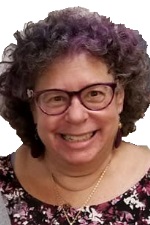 Ruth Thaler-Carter has been a full-time freelance writer, editor, proofreader, and desktop publisher for more than 30 years. She has been published locally, regionally, nationally, and internationally in, and does writing, editing and proofreading for, publications, associations, nonprofits, websites, service firms, and businesses. She sold her first freelance articles when she was still in high school. Often called the Queen of Networking, Ruth is active in about a dozen professional associations, serving as a newsletter editor, webmaster, publication author, speaker/presenter, blogger, program host or planner, and chapter leader. In 2006, Ruth launched the Communication Central “Be a Better Freelancer”® annual conference to help aspiring and established freelancers find greater success and connections with colleagues. Ruth is also owner and editor-in-chief of the An American Editor blog and owner of the A Flair for Writing publishing business. She received the Philip M. Stern Award of Washington (DC) Independent Writers for service to freelancers; the Writers and Books Big Pencil Award for teaching adults and contributions to the literary community; EFfie awards for writing, editing, and newsletters; and the APEX award for feature writing. She was also an IABC/DC Communicator of the Year.
Leave a Reply