

Member's Library I am what the librarians have made me . . . B. K. Sandwell
  • About
    • About NAIWE
    • Board of Experts
    • Books Published by NAIWE Experts
    • FAQs
    • Advertising
  • Member’s Area
    • Member’s Library
    • Member Website Development
    • Benefit Links and Passcodes
    • Manage Your Account
    • The Member’s Edge
    • NAIWE Media
    • On-Demand Training (Discount)
  • Training
    • Upcoming Webinars
    • On-Demand Training (Discount)
  • Find a Professional
  • News & Events
    • Blog
    • The Edge
    • The Member’s Edge
    • The Edge Writers Guidelines
    • Conference
    • Podcasts
    • Summer Challenge
    • Words Matter
      • Words Matter Week
      • How to Participate
      • Media
  • Post a Job
  • Contact
  • Member Sites

Beyond Writing: How Expanding Your Services Can Strengthen Your Freelance Business

Wednesday, July Post a comment

When I first started freelancing in 2012, I spent about 80 percent of my time marketing and 20 percent of my time writing. Over time, that ratio flipped. As my client base grew, I spent most of my days doing the work itself rather than looking for the next project.

For many years, writing alone was enough to meet my business goals. But over the last few years, I’ve watched the marketplace change dramatically. Artificial intelligence has altered client expectations. Marketing budgets have tightened. Many organizations are investing more heavily in video, social media, and other forms of content rather than relying exclusively on long-form blogs, newsletters, and articles.

Like many writers and editors, I found myself asking an important question: How do I continue building a sustainable business in a changing environment?

My answer wasn’t to stop writing. It was to expand the ways I help clients solve problems. Writing is still a piece of that puzzle, but an increasingly smaller role in my business overall. It’s had an interesting effect: while it was hard to pivot, I also now have more of my “writing brain” left over for my own creative pursuits and publishing projects. Ultimately, that’s a win for me.


Why Marketing Writing Services Has Become More Challenging

The challenge facing many independent writers and editors isn’t a lack of talent. It’s that clients are increasingly focused on outcomes rather than deliverables.

A client may think they need blog posts. What they actually want is more website traffic, better lead generation, stronger customer engagement, or increased book sales. Writing remains part of the solution, but it is often no longer the entire solution. As a result, many freelancers are finding themselves competing in a crowded marketplace where writing is viewed as one component of a larger strategy.

That doesn’t mean writing skills are less valuable. In fact, I would argue the opposite. Strong communication skills are more valuable than ever. The difference is that many clients now need help connecting those skills to larger business objectives.


Look for Adjacent Opportunities

One of the biggest mistakes I see freelancers make is trying to diversify into whatever seems new, trendy, or profitable.

A better approach is to look for adjacent services that naturally connect to the work you already do and enjoy.

In my own business, diversification often happened because clients kept asking for help with challenges beyond writing. Could I help manage a project? Could I coordinate other freelancers? Could I help build a process? Could I advise on marketing strategy?

Those requests eventually led me into project management, consulting, fractional CMO work, fractional COO work, developmental editing, book coaching, publishing consulting, and content strategy.

The common thread wasn’t that I suddenly became an expert in a completely unrelated field. Instead, I built on skills I was already using every day.

Writers and editors often possess highly transferable skills, including:

  • research
  • organization
  • interviewing
  • communication
  • strategic thinking
  • process improvement
  • project coordination.

Many of us are already managing deadlines, coordinating stakeholders, gathering information, and synthesizing complex ideas. Those abilities translate surprisingly well into consulting, project management, training, coaching, and strategic advisory work.


Start Small Before Making a Major Pivot

If you’re considering adding a new service, resist the temptation to launch an entirely new business overnight. Instead, test it. Offer a small project to an existing client. Take on a short-term engagement. Explore the work before making a major commitment.

Every new service comes with learning curves and blind spots. There are often gaps in our knowledge that don’t become apparent until we work through a few real-world projects. Starting small gives you the opportunity to refine your systems, establish boundaries, improve your processes, and determine whether you actually enjoy the work. That’s an important point (it’s how I learned I really hated running Amazon Ads for other authors, but love doing Facebook ad strategy.)

Just because a service is profitable doesn’t mean it belongs in your business. The goal is not simply to generate more revenue. The goal is to create a business that is sustainable and enjoyable for the long term.


How Additional Services Can Deepen Client Relationships

One unexpected benefit of expanding my services is that I now work with fewer clients, but at a deeper level. Years ago, I might have had 10 to 15 writing clients at any given time. Today, I have only one client whose engagement consists solely of writing. Even that client recently approached me about expanding into project management and operational support.

When you become a trusted advisor rather than a single-service provider, your relationship with clients often changes. For example, I may begin working with an author as a developmental editor. Later, that same client may need help creating a marketing plan, navigating the publishing process, organizing a launch strategy, or coordinating outside vendors.

Similarly, a business client might initially hire me for content creation but later need assistance with project management, operational systems, freelancer coordination, or strategic planning. The result is a stronger relationship built around solving problems rather than delivering a single product.

Many of these relationships also tend to last longer. One of my current fractional CMO engagements is entering its sixth year. I’m harder to “let go” because I represent a big part of their marketing or operational plan.


The AI Opportunity for Writers and Editors

Artificial intelligence is often framed as a threat to writers and editors. While it has certainly changed the landscape, it has also created new opportunities. Nearly every client I work with wants guidance on AI. They want to know when to use it, how to use it, and where its limitations exist.

Because writers understand language, nuance, audience, and quality, we are uniquely positioned to help clients make informed decisions. In many cases, AI can help generate rough draft outlines, frequently asked questions, or ideas. In other situations, particularly when technical expertise, legal accuracy, brand voice, or strategic messaging are involved, human oversight remains essential. Lean into that. People trust me for my advice on this because I can show them where AI’s limits are and what’s at stake. Especially in the publishing world, many new authors don’t know what they should not be doing with AI, so I’ve had a lot of conversations about that with prospective clients who see me as a trusted ally from day one because I steered them away from dangerous waters.

Clients increasingly need someone who can explain the difference between what AI does well and where it really doesn’t belong at all. Same goes for conversations around software vs. people. That advisory role represents a significant opportunity for experienced professionals.


Build Multiple Referral Pathways

One final advantage of expanding your services is that it creates multiple referral channels.

Today, a significant percentage of my business comes through referrals. Some people refer me for fractional leadership work. Others refer me for book coaching, developmental editing, content strategy, or publishing guidance. Because I offer several complementary services, there are more opportunities for people to think of me when a need arises. That doesn’t mean you should offer everything. It means you should thoughtfully consider where your expertise can solve additional problems.


Moving Forward

The future of independent writing and editing doesn’t require abandoning the work you love. For many of us, however, it may require thinking more broadly about how we apply our expertise.

The strongest opportunities often exist just beyond the services we currently offer. By listening to client needs, exploring adjacent skills, and testing new offerings thoughtfully, writers and editors can create more resilient businesses while continuing to build careers centered on communication, creativity, flexibility, and problem-solving.

 

Laura Pennington Briggs
NAIWE’s Business of Writing Expert

Laura Pennington Briggs is the founder and CEO of the Freelance Coach. A three-time TEDx speaker on how freelancing is changing the economy, Laura has helped over 15,000 freelancers start and scale their businesses. She’s an expert on systems, project and client management, marketing a solopreneur business, delegating to team members, retainers, and developing multiple income streams for writers of all stripes. Laura is the author of five books, including the Six-Figure Freelancer, How to Start Your Own Freelance Writing Business, and award-winning Remote Work for Military Spouses. She’s currently preparing to defend her dissertation for her doctorate in business administration.

Categories: Editorial Services, Freelancing, Laura Pennington Briggs, NAIWE Board of Experts

Am I a Writer or Not?

Thursday, July Post a comment

I was born into a family of artists. On the paternal side, each generation has produced painters, sculptors, photographers, musicians, dancers, and crafters. No writers until me, and none since.
But I didn’t start as a writer. Rather, by elementary school I was illustrating my life in pen and colored pencil, outperforming peers through high school art classes and developing a reputation as an artist. We all expected me to continue into art school and become a professional illustrator.

It took only one semester of college-level training to make it clear I didn’t have what it takes to be a commercial artist. Nor did I want to be one. Art, I realized, was for myself only. I could not, would not, produce it on demand or according to anyone else’s criteria, which left me standing on square one, wondering what to do with my life.

My only employable skills were typing and spelling. These had built up in the background while I was focusing on art, first from a voracious reading habit and then from decades of writing in diaries and journals, plus composing reports in school. In fact, I had already written a novel. It arose from my teenage fantasies that initially were serial illustrations similar to comic strips. Eventually I dropped the pictures and extended the prose, first in longhand and then on a typewriter. To my surprise, I enjoyed the process. It engaged both the creative and technical parts of my brain.

By the time I nixed art as a career, my only realistic options lay in secretarial work or document production. Accident of timing placed me at the launch of the computer age, where my excellent typing and spelling gave me an employment advantage as a word processor. Thus began a long, bumpy journey in which I sought the right niche in publishing or marketing. Meanwhile, I wrote another novel.

From college onward, I lost having my own bedroom, where I used to draw and paint in privacy. The new normal was cohabiting with partners and/or housemates in close quarters, which made it nigh impossible to create art unobserved. But I could write in notebooks, and later type on screens — even save the material to disk, what a bonus! — without anyone seeing what I was doing.  So I spent more time writing and less time drawing, until I quit art altogether with a sad self-portrait on my thirty-fifth birthday.

Meanwhile, multiple writing-related threads wove together. Business documentation brought me into proofreading and typesetting. Personal projects centered on revising and developing my two novels into publishable works. A rising interest in publishing itself brought me into copyediting. Slowly but surely my career coalesced around producing words.

The day came when I was downsized out of a terrific production job that engaged all my skills and interests, leaving me standing on a new square one. Again by accident of timing, I lived where no comparable jobs were in commuting distance — but the internet had arrived, making remote work possible. As well, the publishing industry was being upheaved by corporate buyouts and dumping a lot of editorial staff, who promptly established themselves as freelancers and created online support communities and referral networks. The combination made it the right time for me to risk self-employment.

I could either reactivate my art side and become a designer and compositor, or stick with the language side and become an editor/proofreader/writer/manuscript preparer. An investment in hardware and software was required either way. Not only was it less expensive to kit up as an editor/writer, but also I had learned that while I might have been born an artist, I did not inherit the designer gene. Failure was guaranteed if I went that route.

So I hung out my shingle and took on all the word-related work I could get: short form, long form, fiction, nonfiction — including academic and technical — in both traditional and indie publishing. I wrote articles for magazines. I finally sold both of my novels, though not until after I’d completed a work-for-hire volume in a nonfiction self-help series. That led to blogging. Then I added book reviewing and contest judging. Occasionally I attended conferences and did some teaching or coaching.

By this route I achieved a role in publishing, but . . . what to call myself? My business name and tagline served — “DocuMania: Production Support for Editors, Writers, and Designers” (or “DocuMania Editorial Services,” as circumstances warranted) — but what about individual identity? It happened often enough in social situations that somebody asked what I did for a living, or business introductions required a simple label.

I settled for Editor, because that covered it all: reading, writing, evaluating, discussing, and producing written material, while dealing creatively with other writers’ works. Unlike my own artistic efforts, editing was — and remains — something I could do on demand, any time, any place, any subject, always engaging my technical side even if the creative side was groaning or shut down. It led me at last to my niche: copyeditor, line editor, and assessor of indie novels. These allowed me to occupy the worlds of imagination and expression while helping others with the mechanical elements they’re wobbly with, in a mutual-benefit balance that paid the bills.

Thanks to this positive mix, I was able to write a third novel, and self-publish it because my experience included mastering the basics of that, too.

My success would not have happened without the support of the online editorial community. While some editors began their careers in the pre-computer era so were already established when tools and opportunities expanded, my late start and uncertain direction would have impaired me at an earlier time, especially since I never lived anywhere near a publisher, university press, magazine, or newspaper — or adequate libraries. By the time I joined the crowd online, endless resources and mentors were available, without having to leave my rural homestead.

In hindsight, I realize I needed to go through the artist phase to discover the writer phase, which proved to suit me better. Yet I still consider myself an artist, because editing is a component of writing, and writers are the literary practitioners among the full arts family that includes painters, sculptors, photographers, musicians, dancers, and crafters. Each of these arts involves technique, tools, and technicians as well as passion and creativity. As an Editor, therefore, I am a Writer and an Artist.


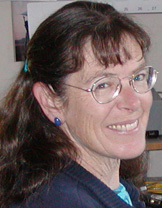
Carolyn Haley

Proprietor, DocuMania Editorial Services

Categories: Editorial Services, Motivation & Productivity, Writing

Copyediting Dialogue: Shaping Purposeful Communication

Tuesday, March 1 Comment

Editing dialogue goes beyond mechanical editing, partly because people, and thus characters, don’t always speak in grammatically correct ways. Not only does a character’s dialogue reveal their personality, but it also must contribute to the forward momentum of the plot. Every word should have a purpose. And if it doesn’t, get rid of it.

As a copyeditor, I am entrusted to help refine a person’s message to the world. And when it comes to the “spoken” word of dialogue, it is particularly meaningful. Words are not only important for meaningful connections, but they have divine significance and power; they reveal, create, and transform. And when it comes to dialogue, words can paint a thousand pictures, so to speak.

So how do you make this magic happen? When copyediting dialogue, ask yourself: Is this believable? Does it feel natural? Is the author preaching through the characters, or are they letting the story unfold organically? Then consider deleting the dialogue altogether. If you do delete the dialogue, does the scene lose anything important? Would readers notice something is missing? If not, get rid of it. But in addition to the content of the dialogue itself, there are several craft tools we can use to make sure our author’s dialogue is the best it can be.

Speaker Attributions

Speaker attributions—like “he said” or “she whispered”—are tools we wield carefully. They’re sometimes essential for clarity, especially in multi-character scenes, but only use them if you have to. I recommend reading the dialogue aloud without them; if you can follow who’s speaking, leave them out.

Be aware of colorful alternatives to said, such as retorted, chortled, exclaimed. Many times, the dialogue itself can be written in a way that already clearly conveys these ideas. Said becomes invisible, blending seamlessly, while flashy attributions can bring attention to the words themselves, temporarily pulling readers out of the story.

Action Beats

Action beats are descriptive snippets that identify the speaker through movement or context. When an action beat is used correctly, you don’t need a speaker attribution at all. Below, the sentence in bold is an action beat.

He leaned forward, eyes narrowing. “We can’t wait any longer.”

Action beats aren’t just identifiers; they pace the scene. In tense moments, sparse beats keep the energy high. But after intensity, longer and more complex sentences slow things down, giving readers a breath. Beats also add depth, showing emotion through action rather than telling.

Author Explanations

Author explanations are sneaky adverbs, phrases, or beats that overexplain what’s already clear. Some examples are identified in bold below.

“Get out,” she said brusquely.

“Are you really going to do that?” He said with curiosity in his voice.

Arthur apologized all over himself. “I’m so sorry. I can’t believe I did that. I feel so bad.”

Why tell when the dialogue shows? Trust your readers; strong dialogue conveys tone without handholding.

Yet there are times when the spoken words themselves don’t indicate volume or tone. If it’s not obvious, author explanations become essential to the reader’s experience.

He whispered fiercely, “Not here.”

Voice

Character voice ties it all together. Each person’s speech should reflect their background, profession, and personality through their diction, jargon, and regional quirks. In historical or speculative fiction, avoid anachronisms—no modern slang in ancient settings, no real-world metaphors in imagined realms. Consistency within each character’s voice is key. If characters sound interchangeable, query the author and suggest they spend more time on distinguishing each character’s speech. Minor characters need less distinction.

As you move forward to greater heights of writing and editing, remember that your life is meaningful, your voice is significant, and your contribution is unique.

Pleasant penning,

Rachel E. Bradley
The Copyediting Expert

Rachel E. Bradley holds a BS degree in paralegal studies from Northeastern State University in Oklahoma and graduated summa cum laude in 2006. She is a gold member of the Christian PEN: Proofreaders and Editors Network, is an established freelance editor with the Christian Editor Connection, is an instructor with the PEN Institute, is a judge for the Editors’ Choice Award, and has served as faculty for PENCON, the only conference for editors in the Christian market. After serving nine years in the legal field and becoming an advanced certified paralegal, Rachel started her business as a freelance editor and indexer. She now owns Revisions by Rachel Inc. In 2018, Rachel lost her first husband, Matthew, after an intense battle with brain cancer. This life experience carried over into her editing and gave her a new understanding and a fierce compassion for people who feel broken and hurt. In celebration of continued life and hope, Rachel became a licensed skydiver and takes to the skies with her rainbow canopy, “Promises,” any chance she gets. In early 2021, she asked God to choose her next husband. In an incredible tale of trusting God and giving him her yes without exception, Rachel is now joyfully married to Alexander Bradley. They have been assigned the awe-inspiring and continually humbling task of raising two incredible children. Beyond reading, Rachel enjoys Bible studies, dancing during church worship, skydiving, swing dancing, rock climbing, reading, teaching, discussing important issues, watching Star Trek, sewing, cooking, Pilates, horseback riding, water sports, playing guitar, and snow skiing.

Categories: Editorial Services, NAIWE Board of Experts, Rachel Bradley

Make the Best Use of Your Editing Budget: A Pre-Editing Checklist

Thursday, January Post a comment

By the time you hire a copyeditor, academic evaluator, or proofreader, you may be eager to be done with your project and feel like dumping it directly on the editor’s desk without any sort of self-checking. After all, the editor’s job is to catch errors, right? It’s true that your editor will catch errors, but when you are paying by the hour for an editor, there are some simple self-checking steps you can do before engaging the editor so that the editor can focus on the specialty service that you are paying for. Some self-checking steps include the following:

  1. Use spell check to find and correct all simple errors.
  1. Use the dictionary to verify word meanings.
  1. Use grammar check to flag grammar and usage issues. Be aware that grammar check is not always right, so consult a guide such as the Chicago Manual of Style if you aren’t sure if something has been correctly flagged.
  1. Check that you have used punctuation If you are unsure of any item, look it up in a style and usage guide.
  1. Be aware of overused words and phrases, and substitute appropriate synonyms or metaphors.
  1. Eliminate the passive voice. Rather than, “The report was submitted by Jennifer,” write “Jennifer submitted the report.”
  1. Remove extraneous detail. If you are presenting a case or making a point, use critical detail only.
  1. Be sure you have met requirements or conventions for presentation, including length, margins, and fonts.
  1. If your work is nonfiction, verify basic facts and provide correct citations.
  1. If your work is fiction, read it entirely through when it is finished to be certain that your plot is clear, that the settings and characters are well-defined and distinctive, and that you haven’t accidentally left out any other critical information.
  1. Once you have completed items 1–10, do them all over again if you have time. You’ll be amazed at what escaped you the first time through!


Janice Campbell is the former executive director of the National Association of Independent Writers and Editors. She has been a freelance writer, editor, coach, and speaker since the late 1980s.

Categories: Editorial Services, Janice Campbell, NAIWE Board of Experts, Writing

How to Choose a Freelance Editor

Tuesday, December Post a comment

An editor can bring out the best in a book or manuscript, but for this to happen, you must choose the right type of editor for the job. Although there is some overlap in the specialties, many editors have a specific focus. As you search the NAIWE database, you’ll want to look for a specialist whose experience matches your needs. For example:

  • If you want an editor to help you develop a nonfiction book and coach you through the writing process, you will need to look for a writing coach with experience in nonfiction.
  • If you are a graduate student looking for an editor to fact-check a master’s thesis in physics, you will need an academic evaluator with an advanced degree in physics.
  • If you have written a how-to book and you’re not sure if it’s organized well enough for a lay reader, you will need a developmental editor with experience in nonfiction editing.
  • If you are a fiction writer, it’s very important to choose an editor, often a writing coach, with extensive experience and credentials in editing the kind of fiction — literary, genre, juvenile — you are writing.
  • If you have a completed manuscript and you need to have it edited for clarity and conventions (mechanics), you will need a copyeditor.
  • If you and your writing coach are happy with the content of your book but you need to double-check the mechanics, a proofreader will help to ensure that your copy is error-free.
  • If you’re a homeschool parent looking for a writing mentor for your student, you’ll want to start with academic evaluators and coaches who specialize in your student’s grade level.
  • If you’re a self-publisher, consider using a project editor to guide your project from start to finish or assemble a team of editors.

No matter what type of writing project you are working on, there is an editor who can help you. The primary specialties include the following:

  • Academic evaluator
  • Copyeditor
  • Copywriter
  • Developmental editor
  • Fiction editor
  • Ghostwriter
  • Multimedia editor
  • Newsletter editor
  • Nonfiction editor
  • Project editor
  • Proofreader
  • Writing coach
  • Writing tutor

Many experienced editors specialize in one type of service or a single genre, such as the following:

  • Abstracting
  • Academic evaluation
  • Copyediting
  • Critique
  • Curriculum development
  • Developmental/substantive editing
  • Editorial consulting
  • ESL/translation editing
  • Fact checking
  • Ghostwriting
  • Line editing
  • Literary coaching
  • Manuscript evaluation
  • Multimedia editing
  • Newsletter editing
  • On-screen editing
  • Permissions
  • Project editing
  • Project management
  • Proofreading
  • Public speaking/teaching
  • Reference checking
  • Reporting
  • Research
  • Self-publishing assistance
  • Sensitivity reading
  • SEO
  • Structural editing
  • Stylistic editing
  • Submission letter preparation
  • Transcribing
  • Translating
  • Website text editing

To help simplify the process of selecting the editor that is right for you, be sure to pay attention to the experience and specialties of any editor you are considering.


Janice Campbell is the former executive director of the National Association of Independent Writers and Editors. She has been a freelance writer, editor, coach, and speaker since the late 1980s.

Categories: Editorial Services, Janice Campbell, NAIWE Board of Experts

Three Phases of Developmental Editing Novels

Saturday, March Post a comment

Writing a novel is hard; editing it can be even harder. After weeks, months, or even years of writing, you need to give the writer a vacation and invite your editor to the computer — but where do you start and how do you do it?

It’s not actually possible to condense novel editing into three steps, but you can break it into three phases to give you a starting point and make each step more manageable. With my clients and my own books, I break novel editing into these three phrases:

  1. Characters
  2. Plot
  3. Fiction-Writing Techniques


Characters

It doesn’t matter how interesting and unique your plot is if the characters aren’t engaging. You can blow up buildings, create new worlds, and introduce as many twists as you want, but none of these will work without good characters.

So how do you edit your characters? Look for and answer these questions:

  • Where do I see my main characters’ goals and motivations expressed? One (if not both) of them should be revealed soon after introducing your characters.
  • How many goals and motivations do my characters have? Each character needs to start with at least two (personal/professional; internal/external; short-term/long-term), and those need to change throughout the story. There’s not a set number, but you should see these goals and motivations change as the character changes.
  • Can you see your characters’ arcs? Your main character(s) should change throughout the story. If she starts as a stuck-up genius, how will she end up? If he’s a shy jock, how will he change? Your characters must change throughout the story.
  • Are your characters behaving consistently? They need to behave consistently in three ways: according to their background, according to their goals/motivations, and according to their arcs. Main characters should not react the same way to the same situation at the beginning and end of your novel.


Plot

Once your characters are falling into line, it’s time to look at the plot. (If you’re writing literary fiction, this isn’t quite as important as you’ll focus more on theme.) Your plot needs structure, whether you’re writing three or four acts or using the “save the cat” method. As the three-act structure is so widely known, I’ll reference it here, but the same technique can be applied.

  • What’s your inciting incident/initial plot point? This can’t be an everyday occurrence. Going to work happens daily, so it’s not story worthy. Going to work and having a car break down in the rain on the day your main character has a presentation can be that incident.
  • Did you establish normal? It’s important to take time to show readers what your characters’ lives are like when the story starts so they understand what changes and how it affects the characters when you get into the second act.
  • Is there a decision/event that moves the character into the second act? How do you know if you have that decision/event? After this event, your character’s normal life is interrupted. Frodo goes to Mordor. Elizabeth meets Mr. Darcy. Things will never be the same.
  • Do things get worse? Throughout the second act, you want to put more and more obstacles in front of your characters.
  • Is there a life-changing decision/event? Frodo puts the ring on instead of throwing it into the fires of Mount Doom; he ends up crippled for the rest of his life. Elizabeth won’t tell Lady Catherine that she’ll reject Mr. Darcy; that gives Mr. Darcy the courage to propose again. Without this second decision/event, there wouldn’t be a new normal.
  • Is there a satisfying conclusion (including tying up loose ends)? You don’t need a happily ever after (unless you’re writing romance), but the ending does need to meet your genre and reader expectations.


Fiction-Writing Techniques

Only after you’ve strengthened your characters and plot is it time to focus on your fiction-writing techniques (again, because it won’t matter how well you write if the story bores the reader). At this point, it’s a good idea to create a checklist to go over to make sure you’ve checked each element. Your must-edit items include:

  • Point of view
  • Verb tense
  • Big telling (info dumps)
  • Little telling (aka weasel or telling words)
  • Setting
  • Dialogue
  • Purple Prose
  • Pacing

By separating your novel’s developmental edits into these three phases, you can take an overwhelming task and break it into smaller, easier-to-attack steps that will help you work your way through that first round of editing.


Karin Beery is an award-winning author and editor with experience in traditional and self-publishing, freelance editing, and editing for publishers. She is an active member of Advanced Writers and Speakers Association, Christian Authors Network, and the Christian Proofreaders and Editors Network. Karin’s specialty is substantive fiction editing with an emphasis in romance and women’s fiction.

Categories: Characters, Editorial Services, Karin Beery

Your Fast Track to a Bestseller

Saturday, February Post a comment

bestseller2

(with apologies and thanks to Steve Harrison)

If you’d like your title to be a bestseller — maybe even a New York Times Bestseller — then this post is for you.

An author emailed me after one of my recent panels on ghostwriting. She said, “Claudia, you know so much about the book business. What do I have to do to make my book into a bestseller?”

She had been writing all her life and had a Creative Writing degree from an impressive school. Her teachers loved her book. Her friends and family raved about it. She got 4 and 5-star reviews on Amazon.

But when it came to actual sales — those just trickled in.

I suspected the reason her book wasn’t selling well had nothing to do with her ability to spin a tale, create wonderful characters, or bounce nouns off verbs.

She obviously had good writing skills.

What she didn’t have was a formula for taking her ideas from concept to bestseller status.

So I sent her the seven simple questions below.

(If you’d also like your book to be a bestseller, ask yourself these questions and see if you can answer “YES” to each one.)

Question #1 — Do you have a strong first draft, AND a well-structured second draft, punchy lined-edited third draft, and carefully copy-edited fourth draft?

Question #2 — Do you have the three strongest, most diverse BISAC Subject Headings attached to your nonfiction ISBN? Do you have the best-niche BISAC Subject Heading attached to your fiction ISBN? Do you have the three best Amazon.com categories and 10 top keywords to position your book as a bestseller?

Question #3 — Do you have honest reviews from total strangers who you haveNOT paid but who have actually read your entire book?

Question #4 — Do you have a list of high-volume buyers AND a one-sheet that gets them to say, “Wow, this is great! We need your title”?

Question #5 — Do you have a marketing kit that connects your title to a current, hot, or “sexy” news topic?

Question #6 — Do you have a business plan for online AND offline marketing and promotion? Do you have a list of organizations and groups that need to hear about your book AND a one-sheet that gets them to call you to speak?

Question #7 — Do you have a ready supply of physical books to sign and sell at the back of the room?

My new pen pal responded “NO” to most of the questions. (She had written a strong first draft and she had a supply — a large supply, in fact — of physical books to sell.)

So I wrote back, “That’s wonderful–now you know the missing pieces you need.”

This is the Point Where I’m Supposed to Pitch My Services-

…but I really meant to write more of a post than an advertorial, so let’s leave it here:

If you answered “NO” to any of the questions and would like my help filling in the gaps of your “bestseller plan,” email me at claudiasuzanne@gmail.com or call me at 1-800-641-3936 (USA) or 1-714-954-0580 (International).

If you want to do the heavy lifting yourself and need a coach or a guide, I’m here for you.

If you want referrals to other great people who can help you, here’s my short list:

Flo Selfman’s copy editing
Devon Blaine’s book publicity
Penny Sansevieri’s online marketing
And (of course) Steve Harrison’s publicity and speaking programs

I look forward to seeing your bestseller!


Claudia Suzanne is a consummate ghostwriter/teacher, understanding what authors need in order to successfully complete their book dream, and she has a finely honed talent for communicating what she knows to her students and clients. Popularly dubbed “The Einstein of Ghostwriting,” Claudia has entertained and informed tens of thousands of writers, editors, journalists, and aspiring authors at countless writer and professional meetings, conferences, radio and BlogTalk radio broadcasts, webinars, and podcasts. Claudia was an invited expert on Penguin’s Author Solutions Expert Video series and a featured entrepreneur in Orange County Business Journal and Norwegian Business Daily. Her signature title, This Business of Books: A Complete Overview of the Industry from Concept through Sales, earned her a 2018 Author of Influence Award from Connected Women of Influence.

Categories: Business, Claudia Suzanne, Editorial Services, Ghostwriting, NAIWE Board of Experts

What Level of Copyediting Do I Need?

Sunday, February Post a comment

You’ve finished your manuscript (MS), and now you are looking for an editor. Congratulations! The first step you need to take is to have a professional editor evaluate your MS. Once you’ve confirmed that you have a solid story structure, a sound plot, and well-rounded characters through an evaluation, you’re ready for copyediting.

Punctuation, word usage, grammar, spelling (aka “PUGS”), capitalization, and formatting are all part of mechanical editing. It’s black and white, the standards are set (if not by the style guides, by the author’s preference, or publisher’s house style), and your editor will conform the text to these rules. But your MS might need more than this. The areas of editing that change with the levels deal more with the ideas that are conveyed in the text and the techniques used to create the readers’ experience.


Light Copyediting

If your MS needs a light copyedit, that means it doesn’t have any peculiarly worded phrases or sentences. You’ve conveyed your ideas with concision, and you don’t have any wordy and repetitive sections. The ideas are presented with clarity and there’s nothing there to confuse your readers. Sentences use strong verbs and fresh descriptors. And you’ve kept details consistent throughout. However, manuscripts that haven’t already been professionally copyedited rarely need only a light copyedit.


Medium Copyediting

In a medium copyedit, you may have some awkward or repetitive content, minor point-of-view issues, long paragraphs that need to be broken up for more comfortable reading, or transitions that need a bit of work to flow better. If you have unnecessary dialogue tags, weak writing, or purple prose, a medium copyedit will also take care of these.

Of course, it’s likely that as the author, you may not realize theses awkward or repetitive phrases, otherwise you would have corrected them yourself. But a trained professional will be able to pinpoint issues like this right away.


Heavy Copyediting

If this is your first book, and you’ve had no training in self-editing, I can almost guarantee your MS needs a heavy copyedit. Your editor will resolve inconsistencies in voice, diction, setting, point of view, and chapter titles. They will break up paragraphs where appropriate for more comfortable reading, eliminate unnecessary dialogue tags, add action beats where appropriate, and generally strengthen the writing. If you have areas that “tell” where you should “show,” your editor will fix these. And your editor will ensure appropriate levels of description for settings and characters, rewriting a bit if necessary, cutting a lot if necessary. This level of editing takes the most amount of time, which translates into a higher cost. So what should you expect when it comes to paying for a copyedit?


Copyediting Pace

As you’ve probably concluded, the cost of editing depends on the amount of time it takes to complete it. That’s why editing can get so expensive. So it’s helpful to have an idea of how much time your editor is investing in your MS. Here is a general guide I’ve found to be pretty accurate, taken from The Copyeditor’s Handbook.[i] Keep in mind that a manuscript page is equivalent to 250 words.

Standard Text                       Difficult Text

Light copyedit              6–9    pages/hour                   4–6      pages/hour

Medium copyedit          4–7    pages/hour                   2–4      pages/hour

Heavy copyedit             2–3    pages/hour                   1–2      pages/hour


How does this translate into cost? A 50,000-word manuscript is going to cost anywhere from $800 to $4,000, depending on the level of copyediting it needs and time it takes to complete it. Knowing this will help you better prepare to hire a quality editor who will give you a great experience for the money you pay.


As you move forward to greater heights of writing and editing, remember that your voice is significant, your life is valuable, and your contribution is unique.


[i]. Amy Einsohn, The Copyeditor’s Handbook (Berkeley and Los Angeles: University of California Press, 2000), 22.


Rachel E. Bradley holds a BS degree in paralegal studies from Northeastern State University in Oklahoma and graduated summa cum laude in 2006. She is a gold member of the Christian PEN: Proofreaders and Editors Network, is an established freelance editor with the Christian Editor Connection, is an instructor with the PEN Institute, is a judge for the Editors’ Choice Award, and has served as faculty for PENCON, the only conference for editors in the Christian market. After serving nine years in the legal field and becoming an advanced certified paralegal, Rachel started her business as a freelance editor and indexer. She now owns Revisions by Rachel Inc. In 2018, Rachel lost her first husband, Matthew, after an intense battle with brain cancer. This life experience carried over into her editing and gave her a new understanding and a fierce compassion for people who feel broken and hurt. In celebration of continued life and hope, Rachel became a licensed skydiver and takes to the skies with her rainbow canopy, “Promises,” any chance she gets. In early 2021, she asked God to choose her next husband. In an incredible tale of trusting God and giving him her yes without exception, Rachel is now joyfully married to Alexander Bradley. They have been assigned the awe-inspiring and continually humbling task of raising two incredible children. Beyond reading, Rachel enjoys Bible studies, dancing during church worship, skydiving, swing dancing, rock climbing, reading, teaching, discussing important issues, watching Star Trek, sewing, cooking, Pilates, horseback riding, water sports, playing guitar, and snow skiing.

Categories: Editorial Services, Rachel Bradley

My Editing Role Model

Monday, October Post a comment

Today I took my dog Chilly, a white miniature poodle, to a brand new groomer named Sally. After I dropped Chilly off, I ran two blocks down the street to pick up a prescription from CVS. I was expecting to wait at least an hour and thought I’d get one errand done in the interim. Less than 20 minutes later, when I returned to Sally’s shop, Chilly was already finished! I laughed, because staring at me through the front window was Chilly and an identical dog. Well, identical except for one big difference. This dog was two feet taller than Chilly! I even joked with the cashier, stating, “I thought for a moment you transformed him into a giant!”
On our walk back home I got to thinking about how much a great editor is like a great dog groomer. Sometimes a literary work requires a full bath, a haircut, and a nail trim.  Sometimes it only needs a bath and a sanitary trim. And sometimes, the only thing necessary is a quick trim of the nails.  A great editor must be able to recognize what needs to be cleaned up or trimmed down, and make all the necessary adjustments while keeping the integrity of the original work. No one wants their work of art going in as a miniature poodle and coming out as a standard poodle!

Perhaps, equally important as keeping the integrity of a work is the way an editor communicates with their clients. Even worse than picking up a bigger dog would be picking up a distressed or psychologically traumatized dog, right!? When I arrived to pick up Chilly today he was as happy as he could be.  I knew Sally had treated him kindly. And just like her, an editor must be kind and compassionate every time they interact with their clients.

A great editor must also have a keen intuitive sense. Chilly has always had very long quicks in his nails. In the past most groomers have been afraid to cut them. But today, when we got home, I discovered Sally actually cut his nails. “Wow,” I thought, “this Sally is a real find! She must know how to trust her gut. We’re definitely going back to see her.”

Just like Sally the dog groomer, as an editor I want to always deliver feedback in a timely and efficient manner. I want to be able to communicate with clients in a kind and compassionate way. And above all, I want to be able to trust my intuition to know when to take risks, and when to back off.


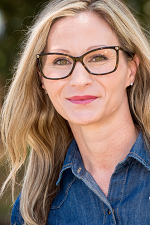
Ashley Henyan is a digital marketing consultant, a freelance writer, and the executive director for the American Red Cross of Lowcountry South Carolina. Previously, she held leadership roles in digital communications and media relations with the Red Cross (the 2017 Harris Poll Non-profit Brand of the Year). Ashley has-developed curriculum and trained hundreds of staff and volunteers across the United States in courses like Leveraging Your Story on LinkedIn and Social Media Story Telling. She has been invited to discuss social media marketing and brand visibility on various podcasts and with local and national associations. Ashley has played an integral part in award-winning social media campaigns including honorable mention recognition with the PR Daily Content Marketing Awards and numerous Silver Telly Awards for Branded Content. She holds a B.A. in government and politics from the University of Maryland and an M.A. in English and creative writing with a concentration in screenwriting from Southern New Hampshire University. Ashley’s work as a ghostwriter has appeared in national and international publications including Yahoo News, China Global Television Network, and The CEO Magazine.

Categories: Ashley Henyan, Editorial Services

How to Find an Editor

Wednesday, September Post a comment

Once you’ve completed your manuscript, you’re likely to feel a sense of accomplishment. Those months, or possibly even years, of hard work and dedication to your story have finally come to completion! You then go back to your manuscript and revise it, tinker with it, and maybe run it through a software program to check for issues with grammar and spelling. After those steps have been exhausted, you may realize there’s only so much you can do on your own, and you embark on the next step toward publication — finding an editor. But how do you find one, and more importantly, how do you find one who is trustworthy, skilled, and reliable?

Before you begin your search, though, you’ll want to determine which type of editing you would most benefit from. Are you concerned that the character arcs are more of a flat line or that the plot flounders halfway through? If so, a developmental editor will be able to help you. Or are you worried that some of your sentences are more than a mouthful, that you’ve repeated words or phrases, or that the dialogue is stilted and unnatural? In this case, an editor who specializes in line editing can address any of these concerns. And finally, if you feel confident that your manuscript only needs to have the grammar and mechanics finetuned, you will be looking for a copy editor. But if you’re not sure, not to worry! Many editors will provide assessments and will be happy to guide you in the right direction.

Now that you’ve likely narrowed down the type of editing your manuscript needs, it’s time to figure out where to look. While there are multiple places to look for an editor, here are three that almost guarantee you will receive a bounty of responses:

  1. Professional associations, such as NAIWE, usually have easily searchable member directories. You can then narrow down the search results to show only service providers who are familiar with your genre and perform the type of editing you’re looking for.
  2. Facebook writing groups will provide you with additional options, but it pays to be cautious on this platform as you’ll need to wade through the multiple responses from scammers (which sometimes outnumber those from bona fide professionals).
  3. Fellow authors often share recommendations for all types of publishing-related service providers. They will also have insights that can’t be gleaned from a professional directory or Facebook post, such as how quickly the editor responds to emails or if the editor is frequently late with submitting promised deliverables.

Soon, your inbox will be overflowing with messages from editors eager to work with you. However, the time has come to separate the scammers and the unqualified from the experienced. These tips will help you do just that:

  1. Are the editors familiar with your genre? If not, they won’t be aware of conventions, beats, and reader expectations, which could lead to poor reviews/not having your manuscript acquired by a press. Browse through the editors’ websites to see whether they’ve edited books in your manuscript’s genre, ask which projects they’ve worked on before that are similar to yours, and check a few of the listed books on Amazon to check that it’s really their name in the acknowledgments/front matter to make sure this isn’t a cover they “borrowed” and claimed as their own work.
  2. Ask to look over the editors’ contracts (and make sure they have a contract as this protects both of you!). It may be beneficial to request a “No AI” clause since some scammers are known for running manuscripts through writing software programs and then charging for something you could have done on your own . . . for free. Also run their correspondence through an AI detector as some scammers may use an AI generator to write their responses for them to increase the likelihood that they’ll sound like a trusted professional.
  3. Ask for a sample edit, and then send the editors a section of your manuscript once they’ve agreed. Do not ask to see or rely on an already edited sample since there is no way to prove who actually completed this work, and it also doesn’t demonstrate how this editor can improve your Some editors charge a small fee for sample edits while others will complete one for free. Either is perfectly acceptable (after all, editors are giving up time that could be put toward paid projects to complete the sample and any write-up that accompanies it).
  4. Make sure the editors accept payment methods that allow the consumer to make a fraud claim/receive a refund. For instance, PayPal is a valid payment method, but avoid someone who asks for payment through PayPal “friends and family” or similar payment methods that the platform will see as payment between two individuals and not as money exchanged for a good or service.
  5. Finally, go with your gut! If something seems off, that’s reason enough to say “no thanks” and continue your search.


Jennia Herold D’Lima is a full-blown logophile. She joined her high school’s newspaper in ninth grade, winning statewide awards for her writing, and expanded her journalism skills by continuing to write and edit throughout her high school years and as a college freshman. While earning her BA in psychology (and minoring in cultural anthropology with a focus on precolonial Mesoamerica) and her MA in applied developmental psychology, her writing and editing naturally skewed toward all things academic. Writing for and publishing in peer-reviewed journals, editing papers for classmates, and writing parenting resource guides honed her research skills. Jennia joined multiple professor-led research groups and completed four internships throughout her academic career. After graduating with a master’s, she worked at a national nonprofit in Washington, DC, and as an assistant researcher at the University of Washington in Seattle. Jennia gradually transitioned to full-time editing. She is the host of the Writing & Editing podcast. Jennia enjoys traveling, volunteering, and taking creative photos of books and book-related items in those rare moments when she is not reading or editing.

Categories: Editorial Services, Jennia D'Lima

  • 1
  • 2
  • 3
  • 4
  • Next Page »

Recent Posts

  • Beyond Writing: How Expanding Your Services Can Strengthen Your Freelance Business
  • Am I a Writer or Not?
  • Be Prepared for That Crisis Moment When You Need Business Backup
  • Stick with Your System
  • In a Pricing Rut? Try These 3 Strategies

Categories

Meta

  • Log in
  • Entries feed
  • Comments feed
  • WordPress.org

Latest Posts

Beyond Writing: How Expanding Your Services Can Strengthen Your Freelance Business

July 22, 2026

Am I a Writer or Not?

July 16, 2026

Be Prepared for That Crisis Moment When You Need Business Backup

June 30, 2026

Stick with Your System

June 29, 2026

In a Pricing Rut? Try These 3 Strategies

June 25, 2026

Improving Your Vision

June 24, 2026

Contact Us

  • 804-476-4484
  • P.O. Box 412
    Montpelier, VA 23192-0412
Facebook Instagram Linkedin twitter

© NAIWE. All rights reserved. Designed by My House of Design.