
If you’ve ever heard, “I make sure I write at least 1,000 words (or other amount) each day” or the statement, “I write from 8 to noon (or some specified time) each day” and wondered if this is good advice, consider this: There is no absolute.
This is a matter of style (as well as being conditional on a number of other factors). With that being said, there is wisdom in specifying the time you will write or the number of words you will write. One is not better than the other, but having a specific goal is important. Note that I said, “specific goal.” It is more attainable (because it is more tangible) to work toward a particular number of words or to write for a particular amount of time than it is to have as a goal, “I will have this section of my article (dissertation, precis) written today.” That’s too fuzzy.
Now, what about getting distracted when you write? Has that every come into play for you? Maybe you have found (or believe) that you can write for 15 minutes (maybe) before you have to switch focus. It is possible that you have noticed that email is the usual way you switch focus! It’s possible that you tell yourself, “Yikes. This is not good to be doing. Maybe I need to find a new way to switch focus, even for a couple minutes, and then get back to writing. Maybe I should be getting up and walking around for a few minutes . . . or what about switching my focus to another writing project? Or wait, I know, maybe I should just move away from the keyboard, take pencil and paper, and write down ideas?”
Believe me, not only have I heard these conversations from others, I have had them in my own head. Here are four tips to assist you:
- Turn off your email. Email has made all of us highly distractible, and we have to be diligent about avoiding that self-distraction.
- If necessary, log out or disconnect from internet access. For example, think about the times when you have taken your laptop somewhere that doesn’t have internet access or it’s too much of a pain to connect and so you know how uncomfortable (and sometimes panicked) you feel. This gives you a sense of the need to break the addiction to distracting yourself with email (and believe me, I am HIGHLY familiar with this one).
- Begin to work from 15 minutes of uninterrupted writing time to 20 minutes over the period of a week. Then the next week, go to 25 minutes, and so on until you can work uninterrupted for 45 or 50 minutes. (After that, most people will get up, stretch, go to the bathroom, or get a drink of water.) To help facilitate your increase in focused time, use a timer that is set for 15 minutes one day then 16 the next and so on. Just make it a little game and sure enough . . . you can do it!
- Break your writing down into smaller pieces. For example, writing five tips for your topic and then working on explaining one of the tips at each sitting is another way to get your writing moving forward even though you are doing it in 15-, 20-, or 25-minute spurts.
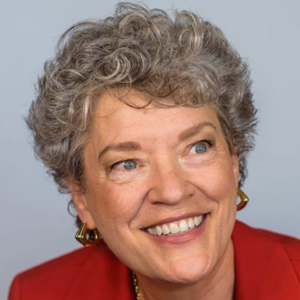 Meggin McIntosh, the PhD of Productivity, is an award-winning professor who now works with academics who prefer overjoyed to overwhelmed. She is a former university professor and administrator and currently a coach, author, and workshop leader. People who are overwhelmed and would prefer to be overjoyed instead, are the people I’m fortunate enough to connect with.
 Jake Poinier made the leap into freelance writing and editing in 1999 after a decade of positions in the publishing industry, giving him key insights from both sides of the desk. As the founder and owner of Boomvang Creative Group, he has worked with a diverse array of Fortune 500 and small businesses, consumer and trade magazines, and independent authors. Jake is committed to helping freelancers improve their businesses and shares his knowledge and experiences frequently as a speaker at industry conferences, through webinars, and on his blog.
 Mary E. DeMuth helps people to turn their trials into triumphs. She mentors new authors through the publishing process and has written two tutorials on book proposals (one for fiction and another for nonfiction). An expert in Pioneer Parenting, Mary enables Christian parents to navigate our changing culture when their families were not good faith examples to follow. Her parenting books include Authentic Parenting in a Postmodern Culture (Harvest House, 2007), Building the Christian Family You Never Had (WaterBrook, 2006), and Ordinary Mom, Extraordinary God (Harvest House, 2005). Mary also inspires people to face their trials through her real-to-life novels, including Watching the Tree Limbs (nominated for a Christy Award) and Wishing on Dandelions (NavPress, 2006). A pioneer parent herself, Mary and her husband, Patrick, reside in Texas with their three children. They recently returned from breaking new spiritual ground in Southern France, where they planted a church.