

Member's Library I am what the librarians have made me . . . B. K. Sandwell
  • About
    • About NAIWE
    • Board of Experts
    • Books Published by NAIWE Experts
    • FAQs
    • Advertising
  • Member’s Area
    • Member’s Library
    • Member Website Development
    • Benefit Links and Passcodes
    • Manage Your Account
    • The Member’s Edge
    • NAIWE Media
    • On-Demand Training (Discount)
  • Training
    • Upcoming Webinars
    • On-Demand Training (Discount)
  • Find a Professional
  • News & Events
    • Blog
    • The Edge
    • The Member’s Edge
    • The Edge Writers Guidelines
    • Conference
    • Podcasts
    • Summer Challenge
    • Words Matter
      • Words Matter Week
      • How to Participate
      • Media
  • Post a Job
  • Contact
  • Member Sites

Beyond Writing: How Expanding Your Services Can Strengthen Your Freelance Business

Wednesday, July Post a comment

When I first started freelancing in 2012, I spent about 80 percent of my time marketing and 20 percent of my time writing. Over time, that ratio flipped. As my client base grew, I spent most of my days doing the work itself rather than looking for the next project.

For many years, writing alone was enough to meet my business goals. But over the last few years, I’ve watched the marketplace change dramatically. Artificial intelligence has altered client expectations. Marketing budgets have tightened. Many organizations are investing more heavily in video, social media, and other forms of content rather than relying exclusively on long-form blogs, newsletters, and articles.

Like many writers and editors, I found myself asking an important question: How do I continue building a sustainable business in a changing environment?

My answer wasn’t to stop writing. It was to expand the ways I help clients solve problems. Writing is still a piece of that puzzle, but an increasingly smaller role in my business overall. It’s had an interesting effect: while it was hard to pivot, I also now have more of my “writing brain” left over for my own creative pursuits and publishing projects. Ultimately, that’s a win for me.


Why Marketing Writing Services Has Become More Challenging

The challenge facing many independent writers and editors isn’t a lack of talent. It’s that clients are increasingly focused on outcomes rather than deliverables.

A client may think they need blog posts. What they actually want is more website traffic, better lead generation, stronger customer engagement, or increased book sales. Writing remains part of the solution, but it is often no longer the entire solution. As a result, many freelancers are finding themselves competing in a crowded marketplace where writing is viewed as one component of a larger strategy.

That doesn’t mean writing skills are less valuable. In fact, I would argue the opposite. Strong communication skills are more valuable than ever. The difference is that many clients now need help connecting those skills to larger business objectives.


Look for Adjacent Opportunities

One of the biggest mistakes I see freelancers make is trying to diversify into whatever seems new, trendy, or profitable.

A better approach is to look for adjacent services that naturally connect to the work you already do and enjoy.

In my own business, diversification often happened because clients kept asking for help with challenges beyond writing. Could I help manage a project? Could I coordinate other freelancers? Could I help build a process? Could I advise on marketing strategy?

Those requests eventually led me into project management, consulting, fractional CMO work, fractional COO work, developmental editing, book coaching, publishing consulting, and content strategy.

The common thread wasn’t that I suddenly became an expert in a completely unrelated field. Instead, I built on skills I was already using every day.

Writers and editors often possess highly transferable skills, including:

  • research
  • organization
  • interviewing
  • communication
  • strategic thinking
  • process improvement
  • project coordination.

Many of us are already managing deadlines, coordinating stakeholders, gathering information, and synthesizing complex ideas. Those abilities translate surprisingly well into consulting, project management, training, coaching, and strategic advisory work.


Start Small Before Making a Major Pivot

If you’re considering adding a new service, resist the temptation to launch an entirely new business overnight. Instead, test it. Offer a small project to an existing client. Take on a short-term engagement. Explore the work before making a major commitment.

Every new service comes with learning curves and blind spots. There are often gaps in our knowledge that don’t become apparent until we work through a few real-world projects. Starting small gives you the opportunity to refine your systems, establish boundaries, improve your processes, and determine whether you actually enjoy the work. That’s an important point (it’s how I learned I really hated running Amazon Ads for other authors, but love doing Facebook ad strategy.)

Just because a service is profitable doesn’t mean it belongs in your business. The goal is not simply to generate more revenue. The goal is to create a business that is sustainable and enjoyable for the long term.


How Additional Services Can Deepen Client Relationships

One unexpected benefit of expanding my services is that I now work with fewer clients, but at a deeper level. Years ago, I might have had 10 to 15 writing clients at any given time. Today, I have only one client whose engagement consists solely of writing. Even that client recently approached me about expanding into project management and operational support.

When you become a trusted advisor rather than a single-service provider, your relationship with clients often changes. For example, I may begin working with an author as a developmental editor. Later, that same client may need help creating a marketing plan, navigating the publishing process, organizing a launch strategy, or coordinating outside vendors.

Similarly, a business client might initially hire me for content creation but later need assistance with project management, operational systems, freelancer coordination, or strategic planning. The result is a stronger relationship built around solving problems rather than delivering a single product.

Many of these relationships also tend to last longer. One of my current fractional CMO engagements is entering its sixth year. I’m harder to “let go” because I represent a big part of their marketing or operational plan.


The AI Opportunity for Writers and Editors

Artificial intelligence is often framed as a threat to writers and editors. While it has certainly changed the landscape, it has also created new opportunities. Nearly every client I work with wants guidance on AI. They want to know when to use it, how to use it, and where its limitations exist.

Because writers understand language, nuance, audience, and quality, we are uniquely positioned to help clients make informed decisions. In many cases, AI can help generate rough draft outlines, frequently asked questions, or ideas. In other situations, particularly when technical expertise, legal accuracy, brand voice, or strategic messaging are involved, human oversight remains essential. Lean into that. People trust me for my advice on this because I can show them where AI’s limits are and what’s at stake. Especially in the publishing world, many new authors don’t know what they should not be doing with AI, so I’ve had a lot of conversations about that with prospective clients who see me as a trusted ally from day one because I steered them away from dangerous waters.

Clients increasingly need someone who can explain the difference between what AI does well and where it really doesn’t belong at all. Same goes for conversations around software vs. people. That advisory role represents a significant opportunity for experienced professionals.


Build Multiple Referral Pathways

One final advantage of expanding your services is that it creates multiple referral channels.

Today, a significant percentage of my business comes through referrals. Some people refer me for fractional leadership work. Others refer me for book coaching, developmental editing, content strategy, or publishing guidance. Because I offer several complementary services, there are more opportunities for people to think of me when a need arises. That doesn’t mean you should offer everything. It means you should thoughtfully consider where your expertise can solve additional problems.


Moving Forward

The future of independent writing and editing doesn’t require abandoning the work you love. For many of us, however, it may require thinking more broadly about how we apply our expertise.

The strongest opportunities often exist just beyond the services we currently offer. By listening to client needs, exploring adjacent skills, and testing new offerings thoughtfully, writers and editors can create more resilient businesses while continuing to build careers centered on communication, creativity, flexibility, and problem-solving.


Laura Pennington Briggs
NAIWE’s Business of Writing Expert

Laura Pennington Briggs is the founder and CEO of the Freelance Coach. A three-time TEDx speaker on how freelancing is changing the economy, Laura has helped over 15,000 freelancers start and scale their businesses. She’s an expert on systems, project and client management, marketing a solopreneur business, delegating to team members, retainers, and developing multiple income streams for writers of all stripes. Laura is the author of five books, including the Six-Figure Freelancer, How to Start Your Own Freelance Writing Business, and award-winning Remote Work for Military Spouses. She’s currently preparing to defend her dissertation for her doctorate in business administration.

Categories: Editorial Services, Freelancing, Laura Pennington Briggs, NAIWE Board of Experts

Am I a Writer or Not?

Thursday, July Post a comment

I was born into a family of artists. On the paternal side, each generation has produced painters, sculptors, photographers, musicians, dancers, and crafters. No writers until me, and none since.
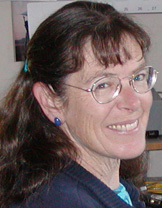
But I didn’t start as a writer. Rather, by elementary school I was illustrating my life in pen and colored pencil, outperforming peers through high school art classes and developing a reputation as an artist. We all expected me to continue into art school and become a professional illustrator.

It took only one semester of college-level training to make it clear I didn’t have what it takes to be a commercial artist. Nor did I want to be one. Art, I realized, was for myself only. I could not, would not, produce it on demand or according to anyone else’s criteria, which left me standing on square one, wondering what to do with my life.

My only employable skills were typing and spelling. These had built up in the background while I was focusing on art, first from a voracious reading habit and then from decades of writing in diaries and journals, plus composing reports in school. In fact, I had already written a novel. It arose from my teenage fantasies that initially were serial illustrations similar to comic strips. Eventually I dropped the pictures and extended the prose, first in longhand and then on a typewriter. To my surprise, I enjoyed the process. It engaged both the creative and technical parts of my brain.

By the time I nixed art as a career, my only realistic options lay in secretarial work or document production. Accident of timing placed me at the launch of the computer age, where my excellent typing and spelling gave me an employment advantage as a word processor. Thus began a long, bumpy journey in which I sought the right niche in publishing or marketing. Meanwhile, I wrote another novel.

From college onward, I lost having my own bedroom, where I used to draw and paint in privacy. The new normal was cohabiting with partners and/or housemates in close quarters, which made it nigh impossible to create art unobserved. But I could write in notebooks, and later type on screens — even save the material to disk, what a bonus! — without anyone seeing what I was doing.  So I spent more time writing and less time drawing, until I quit art altogether with a sad self-portrait on my thirty-fifth birthday.

Meanwhile, multiple writing-related threads wove together. Business documentation brought me into proofreading and typesetting. Personal projects centered on revising and developing my two novels into publishable works. A rising interest in publishing itself brought me into copyediting. Slowly but surely my career coalesced around producing words.

The day came when I was downsized out of a terrific production job that engaged all my skills and interests, leaving me standing on a new square one. Again by accident of timing, I lived where no comparable jobs were in commuting distance — but the internet had arrived, making remote work possible. As well, the publishing industry was being upheaved by corporate buyouts and dumping a lot of editorial staff, who promptly established themselves as freelancers and created online support communities and referral networks. The combination made it the right time for me to risk self-employment.

I could either reactivate my art side and become a designer and compositor, or stick with the language side and become an editor/proofreader/writer/manuscript preparer. An investment in hardware and software was required either way. Not only was it less expensive to kit up as an editor/writer, but also I had learned that while I might have been born an artist, I did not inherit the designer gene. Failure was guaranteed if I went that route.

So I hung out my shingle and took on all the word-related work I could get: short form, long form, fiction, nonfiction — including academic and technical — in both traditional and indie publishing. I wrote articles for magazines. I finally sold both of my novels, though not until after I’d completed a work-for-hire volume in a nonfiction self-help series. That led to blogging. Then I added book reviewing and contest judging. Occasionally I attended conferences and did some teaching or coaching.

By this route I achieved a role in publishing, but . . . what to call myself? My business name and tagline served — “DocuMania: Production Support for Editors, Writers, and Designers” (or “DocuMania Editorial Services,” as circumstances warranted) — but what about individual identity? It happened often enough in social situations that somebody asked what I did for a living, or business introductions required a simple label.

I settled for Editor, because that covered it all: reading, writing, evaluating, discussing, and producing written material, while dealing creatively with other writers’ works. Unlike my own artistic efforts, editing was — and remains — something I could do on demand, any time, any place, any subject, always engaging my technical side even if the creative side was groaning or shut down. It led me at last to my niche: copyeditor, line editor, and assessor of indie novels. These allowed me to occupy the worlds of imagination and expression while helping others with the mechanical elements they’re wobbly with, in a mutual-benefit balance that paid the bills.

Thanks to this positive mix, I was able to write a third novel, and self-publish it because my experience included mastering the basics of that, too.

My success would not have happened without the support of the online editorial community. While some editors began their careers in the pre-computer era so were already established when tools and opportunities expanded, my late start and uncertain direction would have impaired me at an earlier time, especially since I never lived anywhere near a publisher, university press, magazine, or newspaper — or adequate libraries. By the time I joined the crowd online, endless resources and mentors were available, without having to leave my rural homestead.

In hindsight, I realize I needed to go through the artist phase to discover the writer phase, which proved to suit me better. Yet I still consider myself an artist, because editing is a component of writing, and writers are the literary practitioners among the full arts family that includes painters, sculptors, photographers, musicians, dancers, and crafters. Each of these arts involves technique, tools, and technicians as well as passion and creativity. As an Editor, therefore, I am a Writer and an Artist.


Carolyn Haley

Proprietor, DocuMania Editorial Services

Categories: Editorial Services, Motivation & Productivity, Writing

Be Prepared for That Crisis Moment When You Need Business Backup

Tuesday, June 1 Comment

A recent experience with a contractor reminded me of the value of networking when we’re dealing with a crisis.

I had tried to reach the electrician company I’ve used for a couple of projects, asking when they might be able to help with swapping ceiling light fixtures from one room to another. It took more than a week and a second message for the owner to get back to me, and it turned out that he’s been “living on pain pills” in anticipation of hip surgery next month, and his assistant — his only employee — has been kept busy with not just their projects but ones for the assistant’s parents as well. Needless to say, I’m still waiting for my project to be done. (Yes, I could try finding another contractor, but I would prefer to use someone who’s already done good work for me.)

That made me think about what I would do if, heaven forbid, something happened that would prevent me from being able to write, edit, or proofread, whether temporarily or permanently.

Over the years, I’ve had those situations arise, from major surgery that went wrong and created seven months of recuperation to shorter-term ones involving a few days in the hospital to a day of stomach flu or simple exhaustion. Not to mention dealing with losses — my dad, my mom, my husband — which meant handling not just grief but all of the administrative details that follow. Oh, and a couple of long-distance moves as well.

My first step has always been to notify my regular and ongoing clients that I would be out of pocket for a while. For most of those situations, I’ve said and found that I could keep working, just at a lesser level — maybe a little more slowly than usual, or returning projects in a couple of days rather than immediately. Having work to do has been helpful as a distraction from chaos or crisis, and an incentive to get back to normal as quickly as possible. My regular clients have usually been understanding and supportive, and haven’t dropped me over being temporarily (thank goodness) unavailable.

If a prospective client with a big new project reaches out to me while I’m dealing with such situations, I say I might not or won’t be available at that moment and ask if their project can wait until the situation resolves. Most have said they’ll wait until I can work on their material, which is quite gratifying. On the few (luckily) occasions when something couldn’t wait, my connections made through networking stepped in to help.

There’s also the need for a vacation, or at least a short break from our daily routines — we all need some time off at some point, especially those with partners or kids. Whether or how we need to negotiate that time off depends on the type of client or project we have; some deadlines are more flexible than others.

Where does networking come into these scenarios?

If you’ve built up a strong network of colleagues with similar skills and experience, you have a safety net: people you can trust to take on client projects while you handle whatever is affecting your life at the moment. People whose work and ethics can be relied to be at least as good as you are — and who can be trusted not only to do good work on your behalf, but not to steal the clients!

These are relationships that don’t happen overnight. They require time and effort, and paying attention to the posts and perspectives of people we meet through NAIWE and other professional organizations. We have to be visible ourselves, and give something back to an association and colleagues so we’re known as someone who is not just skilled and experienced, but worth working with and helping. That’s networking at work.

For NAIWE members who aren’t actively visible here and might want to be the ones called on when colleagues need backup, now is the time to start showing up — with blog posts, success announcements, presentations, memberships, event attendance, etc. Even asking questions that colleagues might answer, and thus provide useful advice, gives you a presence and positions you as someone with professional curiosity and rigor, willing to learn and share knowledge.

Beyond NAIWE, make sure you’re visible on LinkedIn, have a website of your own, and contribute to social media conversations about what you do and who you are.

As the one with work to hand off, don’t be afraid to ask about colleagues’ training and skill levels, style guide familiarity, etc. Be prepared to vet colleagues who might be good candidates for when you need a break or a hand. Consider developing an editing or proofreading test to have on hand if and when needed, so you don’t have to come up with that under the pressure of a crisis.

Here’s wishing all of my NAIWE colleagues safety and good health — and the presence of mind to protect our businesses by being prepared for emergencies.


Ruth Thaler-Carter
The Networking Expert

Ruth Thaler-Carter has been a full-time freelance writer, editor, proofreader, desktop publisher, and speaker for more than 40 years. She has been published locally, regionally, nationally, and internationally in, and does writing, editing, and proofreading for, publications, associations, nonprofits, websites, service firms, independent authors, and businesses. She sold her first freelance articles when she was still in high school. Often called the Queen of Networking, Ruth is active in about a dozen professional associations, serving as a newsletter editor, webmaster, publication author, speaker/presenter, blogger, program host or planner, and chapter leader. In 2006, Ruth launched the Communication Central Be a Better Freelancer conference — now cohosted with NAIWE — to help aspiring and established freelancers find greater success. Ruth is also owner and editor-in-chief of the An American Editor blog and owner of the Publishing with Flair publishing business. Her honors include member of her high school alumni hall of fame, in part for her publishing work and networking services; Writers and Books Big Pencil Award for teaching adults and contributions to the literary community; EFfie awards for writing, editing, and newsletters; an APEX award for feature writing; the Philip M. Stern Award of Washington (DC) Independent Writers for service to freelancers; and IABC/DC Communicator of the Year and Silver Quills for magazine writing and newsletters.

Categories: NAIWE Board of Experts, Networking, Ruth Thaler-Carter, Work-Life Balance

Stick with Your System

Monday, June 1 Comment

About a month ago, I secured a ghostwriting job with one of my favorite all-time clients. Let’s call him Greg. After years of running marketing and ad agencies, Greg made a shift into a consulting practice for small and medium businesses. The goal of the book is to help popularize the system he’s created, so that entrepreneurs can either implement it themselves or hire him to manage the process.

At some point during one of our interviews, the conversation turned to pricing. It’s my favorite business topic, and one that I’ve written about extensively, including my own book, The Science, Art and Voodoo of Freelance Pricing and Getting Paid.

My go-to strategy, particularly for complex projects, is to use an estimated range: The lower end is what I’d calculate as a firm project bid, but then I also have a higher end that allows for a process that requires more work than I realized without having to renegotiate. As a side benefit, it incentivizes the client to be easy to work with, since they know they can save money if everything goes smoothly.

But when I estimated Greg’s project, I didn’t use a range — and he asked me why. Looking back, I’m not sure why I didn’t.

I suppose it was because I’ve worked with him so long that we have lots of trust and value each other and the relationship. Maybe I was so focused on details in the scope of work that I was too confident in my numbers. If the project runs longer than expected, however, or if the book comes in 40 pages longer than we discussed, he’s not going to quibble about the cost. He pays very well and promptly and has always had my back.

Still, it’s nagging at me that I made a rookie mistake.

The takeaway for me is that you need to stick with your system. It’s a key message in Greg’s book, and apparently one that I needed to be reminded of.


Jake Poinier
The Freelance Expert

Jake Poinier made the leap into freelance writing and editing in 1999 after a decade of positions in the publishing industry, giving him key insights from both sides of the desk. As the founder and owner of Boomvang Creative Group, he has worked with a diverse array of Fortune 500 and small businesses, consumer and trade magazines, and independent authors. Jake is committed to helping freelancers improve their businesses and shares his knowledge and experiences frequently as a speaker at industry conferences, through webinars, and on his blog.

Categories: Freelancing, Jake Poinier, NAIWE Board of Experts

In a Pricing Rut? Try These 3 Strategies

Thursday, June Post a comment

If you want a truly profitable freelance business, pricing and estimating aren’t just a matter of crunching the numbers on your hourly rate or looking up the ranges on an industry association website. We’re accustomed to putting most of our energy into creativity for our writing, editing, and design clients — but when was the last time you devoted some brainpower towards freshening up your pricing methodology?


Different Prices for Different Clients

I recognize that there are freelancers who price everything the same, whether the hourly rate or the calculation for a firm quote. (I won’t argue if that’s what works for their businesses. It’s certainly the simplest route.) Unless you have a truly uniform clientele, however, you’re likely leaving money on the table. To cite an extreme example, it doesn’t really make sense to charge a lawyer or Fortune 500 company the same rate as a local animal shelter. But the principle is also applicable to situations when you can detect that a client is going to be high maintenance with meetings, phone calls, etc.


Seek Out Other Resources

If you’re depending on industry rate sheets and surveys as your primary basis for pricing, you’re overlooking one of the best resources around: solid networking with people who use freelance services, but aren’t necessarily a client. Think graphic designers, marketing and advertising folks, web firms, magazine editors, and even freelancers who subcontract. Caution: This isn’t a shotgun cold-call situation; it needs to be people who you have a relationship with. (And if you don’t have cross-industry relationships, put that on your to-do list!)


Always Be Experimenting

It’s easy to imagine that an annual price increase is sufficient. While that’s a good start, it’s worth trying different strategies with how you present estimates. One example would be what I call the car sales approach — give the client low, medium, and high options, with additional bells and whistles as the price goes up. My favorite is to provide an estimated range rather than a firm price. That gives you more negotiating wiggle room — and it also encourages clients to go easy on the phone calls and rounds of revisions in order to keep their invoice down.


Jake Poinier
The Freelance Expert

Jake Poinier made the leap into freelance writing and editing in 1999 after a decade of positions in the publishing industry, giving him key insights from both sides of the desk. As the founder and owner of Boomvang Creative Group, he has worked with a diverse array of Fortune 500 and small businesses, consumer and trade magazines, and independent authors. Jake is committed to helping freelancers improve their businesses and shares his knowledge and experiences frequently as a speaker at industry conferences, through webinars, and on his blog.

Categories: Freelancing, Jake Poinier, NAIWE Board of Experts

Improving Your Vision

Wednesday, June Post a comment

I attended an academically rigorous high school, where As were hard to come by. My senior year, I taped a handwritten note above my desk that simply said HONOR ROLL. It was a constant reminder of what I wanted to achieve.

Truth be told, I missed the honor roll by one letter grade in the final term. Still, it was the closest I’d ever come to making it . . . and I was confident that putting my goal in writing (and in a place I couldn’t ignore) had pushed me psychologically.

Fast forward to life in the working world. During my early career in magazines, the goals weren’t of my choosing, but they were clear: Brainstorm the topics, assign the articles, hound the writers, edit the copy, get it into the art department’s hands, and stay up late gorging on pizza when it was closing week and we had to send everything to the printer. Rinse, repeat.


Putting Your Goals in a Place They Can’t Be Ignored

As freelancers, it’s on us to determine our goals. At least once a year, I’ll sit down at a local coffee shop for a few hours and write down an unedited list of things I want to achieve over the near and long term. But I made a mistake two years ago: I left the list inside a notebook, which I filed and forgot about for months.

If I’m honest with myself, it’s probably because it’s a bit overwhelming — and maybe counterproductive — to look every day at a piece of paper with 50 or more handwritten goals on it. That’s where a vision board comes in. Much like my honor roll reminder way back when, being able to glance at a poster board helps with inspiration. (If you’re interested in some great info about vision boards, I highly recommend Christine Kane’s process.) For me, it’s an extra step toward keeping the big picture, quite literally, right in front of me.

Obviously, a vision board doesn’t solve everything. You also have to create systems for your freelance business, a broader topic for another day. Nonetheless, for a daily reminder of why I’m doing what I’m doing, investing in a poster board, some magazines, and a glue stick pays significant mental dividends — especially since a vision board is far too big to tuck away and forget!

Here’s to a fantastic, prosperous year — whatever your vision is!


Jake Poinier
The Freelance Expert

Jake Poinier made the leap into freelance writing and editing in 1999 after a decade of positions in the publishing industry, giving him key insights from both sides of the desk. As the founder and owner of Boomvang Creative Group, he has worked with a diverse array of Fortune 500 and small businesses, consumer and trade magazines, and independent authors. Jake is committed to helping freelancers improve their businesses and shares his knowledge and experiences frequently as a speaker at industry conferences, through webinars, and on his blog.

Categories: Business, Jake Poinier, NAIWE Board of Experts

Don’t Feel Obligated to Give an Off-the-Cuff Estimate – with 1 Exception

Friday, June Post a comment

You don’t have to be in business very long before you’ll have a conversation like this:

Prospective client: “What do you charge for X?”

You: “Honestly, it depends on how many words/pages X is.”

Prospective client: “Well, we’re not really sure yet. Can you just give me a ballpark number on what you usually charge for X?”

You: “I’d be able to give you a much more accurate estimate with additional information. Do you have time to answer a couple of questions?”

Prospective client: “Well, we’re still really early in the process and trying to figure out our budget. If you can provide me a basic number, I can take that back to the team.”

It’s a bit like an improv comedy skit, but unfortunately, it’s never funny. At the risk of seeming evasive, you really should never feel obligated to give an off-the-cuff estimate over the phone. If you do, there are three primary negative outcomes and a ton of permutations:

  • You tell prospects a number that’s too low — and then they’re shocked when they get the actual, much higher “real” estimate, once you’ve calculated the scope of work.
  • You give them a number that’s too low — and they want you to stick to it, as if you signed some sort of magical contractual agreement.
  • You provide a number that would be too high for the actual project parameters — and you scare them off without a chance to understand their needs and come to mutually agreeable terms.

Sure, you might happen to guess a number that works for the client, gets you the job, and results in a lucrative project. The odds are heavily against this, however, and it’s generally not worth the risk. You have no written documentation, just a verbal offer: the weakest, least persuasive position to be in. An estimate based on fuzzy information can be hazardous to both your business and your sanity. And there’s no way to price the latter.


What’s the Exception to the Rule?

If an existing client — one you have an excellent relationship with and have done multiple jobs for — asks you to give an over-the-phone quickie quote, there’s no reason to be coy. This individual knows you are an honest businessperson, and he or she is just trying to get some information based on limited facts, not trying to trick you into saying something you’ll regret later.

Even so, you’ll still want to provide a conservative range and offer a disclaimer that you’ll need more information to estimate accurately: “Sara, those types of projects generally run from $900 to $1,400, but as you know it’s going to depend on how long the actual document is, how many interviews I need to do and other factors. Sounds like a great opportunity, so please let me know when you have the details and I’ll turn around a more accurate bid the same day.”


This post was adapted from Jake Poinier’s The Science, Art and Voodoo of Freelance Pricing and Getting Paid, available on Amazon.


Jake Poinier
The Freelance Expert

Jake Poinier made the leap into freelance writing and editing in 1999 after a decade of positions in the publishing industry, giving him key insights from both sides of the desk. As the founder and owner of Boomvang Creative Group, he has worked with a diverse array of Fortune 500 and small businesses, consumer and trade magazines, and independent authors. Jake is committed to helping freelancers improve their businesses and shares his knowledge and experiences frequently as a speaker at industry conferences, through webinars, and on his blog.


Categories: Business, Freelancing, Jake Poinier, NAIWE Board of Experts

In Spite of Barriers, Women Make the Best Leaders

Friday, June Post a comment

Studies show the ideal leader today is ethical, honest, trustworthy, and fair regarding employee expectations. These traits earn the respect of followers and are closely aligned with women leaders.

According to the U.S. Department of Labor, women comprise 47% of the U.S. labor force, yet lag substantially behind men when it comes to representing leadership positions. The good news is even though the gender wage gap has declined in most professions, the number of women climbing the ladder to management ranks has increased. But in spite of these achievements, women still face leadership challenges in the workplace.


Leadership Barriers Women Face

The glass ceiling metaphor and other limited opportunity metaphors like glass door and glass cliff remain as popular today as they did 10 years ago. When things go wrong and the group fails, women leaders are likely to get blamed even if the failure was caused by events that took place before they came on board. Women report having fewer support networks at work, not getting needed information, and not being acknowledged for their efforts.

Women are also more likely to experience burn out and become disillusioned with their jobs and organizations and may end up quitting as a result. Cultural expectations also work against women who aspire to become leaders. Many never seriously consider becoming leaders because the process of socialization has taught them leadership professions are only open to males.

Negative stereotypes and discrimination can lower the self-confidence for some women and make them reluctant to take risks or strive for leadership positions. And since our culture highlights nurturing roles of women, many enter service professions such as teaching, nursing, clerical work, or roles that support the larger organization.


Changes on the Horizon

Fortunately, attitudes toward women in leadership are changing, especially among the younger generation. As more women succeed in management roles, stereotypes will continue to erode. When this happens, women will experience less prejudice and more opportunities.

As global environments become more competitive, management styles are shifting away from old leadership styles to more transformational styles that emphasize communication, teamwork, and responsiveness. These leadership styles will benefit women in today’s workforce.


Gail McShan-Elly is a writer and blogger. She is married and believes greatness is achieved by serving others.

Categories: Business, Gail McShan-Elly, NAIWE Board of Experts, Work-Life Balance

Indexing Basics

Monday, June Post a comment

Indexing is a form of writing — probably the only form of writing in which the goal is to get the reader out of your creation as soon as possible. A criterion of the American Society for Indexing’s (ASI’s) annual indexing competition requires an index to bring together references to similar concepts that are scattered in the text or that are expressed in varying terminology.

Understanding and organizing the information and ideas in a text and creating a helpful index requires a human touch; a computer cannot write a useful index. Indexer Do Mi Stauber gives an example in her book Facing the Text. I’ve emphasized the words a computer would probably index.

The progress of jazz from the margins to the center serves as a powerful and resonant symbol for racial progress, as when Gillespie . . . accompanied a Southern peanut-farmer-turned-president singing “Salt Peanuts” at the White House in 1978.

While all these terms are correct, a main subject is unnamed; only a human being (probably one over 50) could recall the peanut-farmer-turned-president as Jimmy Carter. A computer is incapable of life experience and background knowledge, so places, inferred ideas, and other significant information not plainly stated would be omitted.


Who Should Write an Index?

While the author is the expert on their subject, they are generally too close to the subject and lack familiarity with what makes a good index and the indexing process in general. I’ve seen author-written indexes list dozens of page numbers for one entry with no context. (Professional indexers generally create subheadings once there are five to seven locators under a main entry.) How frustrated would you be when you got to the ninth or thirteenth or twentieth entry and still hadn’t found what you were looking for?

A professional indexer can also be objective, making the index more useful and valuable to readers. This isn’t to say that NO author can or should write the index for their own book, but when it’s not their specialty, the index will take longer and likely not be as useful as if they hired a professional.

That is probably why most indexing is done by freelancers hired by authors, publishers, or book packagers. Many texts benefit from a well-written index, including

  • nonfiction books
  • databases
  • websites
  • corporate materials
  • legal documents
  • catalogs and periodicals
  • e-books


Getting Started

To get started, you need internet connectivity, a computer with good word-processing software, and dedicated indexing software. Why special indexing software? Consider just two ways to index without it.

  1. Indexing in Word requires many steps, is tedious, and doesn’t show a preview as the index builds. Word add-ons, such as IndexConvert and IndexExploit created by Barry Campbell, WordEmbed by James Lamb, and DEXembed by Jack Lyon, make indexing in Word easier and faster, but are still workarounds.
  1. Another way to index is using InDesign, which was intended for graphic designers to create pamphlets, catalogs, and such — not for indexing. Again, several steps are required to create or view entries. So, what’s a better way?


Dedicated Indexing Software

There are currently three main indexing programs. I use SKY because I found it most similar to a PC. Another is Cindex, which to me, seems a hybrid between a PC and DOS-based program. Then there’s Macrex, which is DOS-based.

Fortunately, the UC Berkeley course, Indexing: Theory and Application, requires students to submit a couple of assignments in all three programs to see how they work and which they prefer to use.

How does a dedicated program improve the process? It puts entries into alphabetical order, runs page numbers entered into numerical order, and allows viewing of the index as it builds with each entry. Comparing similar entries and compiling the index is much easier.


Indexing Workflow

To begin, I will receive page proofs for the book — images of the actual pages as they will appear, including final page numbers. I then read the page proofs, making a list of headings and subheadings and the location of each pertinent reference with the aid of my indexing software. As I read, I think of the best place to list concepts and information if I wanted to find them again. I am creating a roadmap of the book for the reader. After completing the index, I edit it for structure, clarity, and consistency. Finally, I format it to the client’s specifications, proofread it several times, and submit it to the client.

But how do I know the amount of space allowed for the index, or whether to capitalize all main headings or only proper nouns? Or if the client wants page numbers in full or abbreviated? Sometimes, I am given specific instructions, but if not, I send a spec sheet to my clients indicating the options available. Most publishers specify at least a few requirements, but whether or not to put a C or D in between the index sections or how to present function words, such as the A in A Tale of Two Cities, is often left up to the clients. Many times, they won’t have a preference and will just ask me to use my judgment.


Embedded Indexes

Besides writing standard back-of-the-book indexes, I also write embedded indexes, which use invisible hyperlinks to take the reader directly to the passage indicated. Embedded indexes are especially useful for e-books. An e-book index that is not clickable is just about worthless since page size and device type usually make the location inaccurate anyway.

Although not ideal for indexing, programs like Microsoft Word, Adobe InDesign, and Quark Xpress can be used to create embedded indexes. But again, there is a better solution, and it’s called Index-Manager.

I upload an InDesign or Word file into Index-Manager, which then opens a copy of the text. I can highlight text — a word, phrase, paragraph, or even a whole section — and anchor its place by embedding a marker. Customer support for Index-Manager is excellent, and the developer offers free training classes every couple of weeks. I highly recommend the program to anyone who wants to write embedded indexes.

Not all indexers embed, but it is a growing field and something to consider. I added it almost as soon as I heard about it, and it’s my favorite way to index.


Benefits of a Freelance Indexing Career

Quality indexes are important to publishers, as well as readers, and the field is only growing. Freelancing allows you to choose your own hours, rates, and projects with very little equipment and cost.

If you are a writer or an editor, you probably already possess most of the skills required to make a good indexer: excellent language and analytic talents, high clerical aptitude and organizing skills, above-average accuracy and attention to detail, and a love of books and reading.


What Can You Earn?

It depends on several factors: how much you want to work, finding enough clients to keep you busy, how you set your prices (usually $2 to $10 per indexable page or more), your level of skill and experience. Newer indexers will initially earn less than experienced indexers. Be sure to talk to current professional indexers before signing up for training or quitting your day job.

A couple of months ago, I indexed a 1,500-page book. Since I only want to work part-time, it took me about five weeks or 100 hours. I earned over $6,000, or $60/hr. The client was a referral from another, related company I had worked with a few months prior. I know many freelancers who earn a full-time wage indexing; it is a viable source of primary income once an indexer is established.


Education Required

Indexing does not require a fancy professional certification, degree, or specific credentials unless a client is looking for someone with subject matter expertise for a technical book. However, some education is vital. Here is a comparison of the two main comprehensive indexing courses in the United States.

To see if indexing is a good fit for you, take Sylvia Coates’ free 8-hour intro course; it sanctioned my indexing plunge, and I enrolled in the unmatched UC Berkeley course. Indexing is a feasible career choice and is something to consider.


Heather Pendley is a freelance indexer and copy editor. She is an ASI Director at Large, the Membership & Social Media Committee VP for SD/PEN, was an EFA 2020–21 Board of Governors Member at Large, and judged ACES 2020 Headline Competition. Heather lives in the San Diego area with her family, which includes two rescue dogs.

Categories: Healther Pendley, Indexing, NAIWE Board of Experts

Shifting from Goals to Intentions: A Helpful Approach for ADHD Writers

Monday, May 1 Comment

When you have ADHD, writing can result in a lot of stress. You may love ‘being’ a writer, brainstorming ideas, even editing, but getting words on the page, staying focused, or organizing your thoughts may be a struggle. And then there is all the productivity advice you’re told should work if you show up consistently and set measurable goals.  Write for two hours every morning. Be consistent. Track your output.

While these strategies can help some people, many of us with ADHD experience them as a cycle of pressure, resistance, and eventually failure.

I know that cycle well. For years, I set measurable targets for myself. Write 1,000 words a day, write for one hour daily. I bought into the idea that they would keep me motivated. And while I did manage to maintain the momentum briefly, I eventually got bored with the routine. I would churn out words for the sake of meeting my goals. My focus shifted from communicating something meaningful to simply hitting the numbers. The work felt mechanical, and, well, hard.

Interest is a major driver of motivation for ADHD brains. When the topic or task loses its sparkle, staying committed can feel almost impossible, even when the deadline is real.

After training as an ADHD coach and integrating that training with my decade of experience as an editor and writing coach, working with writers of all skill levels, I’ve realized that many of my clients were struggling with processes and tools that weren’t designed for how their brains work. Many traditional productivity tools are designed for neurotypical brains. They assume that attention is within the control of the writer, that energy can easily be harnessed, and that there is a consistent relationship between time spent and output produced. ADHD disrupts those assumptions.

My own experience led me to move away from rigid goal-driven writing toward something far more sustainable and enjoyable: intention-based writing.

Goals and intentions may sound similar, but they operate very differently. Goals emphasize outcomes: finish the article by Tuesday, draft 2,000 words in the next 3 hours, and submit by Friday. They provide clarity but can feel very inflexible to an ADHD brain that thrives on novelty, engagement, and intuition. If you struggle with time blindness, difficulty initiating tasks, or fluctuating energy — all common with ADHD — missing a goal can feel like personal failure rather than a mismatch between method and brain.

Intentions focus on process and engagement. They describe how you want to approach the work, not just what you want to produce.

For professional writers, an intention might look like this:

  • Clarify the core message for the audience
  • Explore a topic with curiosity
  • Write a messy first draft
  • Translate complex information into plain language
  • Simply begin and see what insights emerge

The outcome is allowed to evolve.

This distinction matters because ADHD is fundamentally an executive function condition. Executive functions help us start tasks, plan, organize, regulate attention, and manage time. When those systems are struggling, rigid targets can lead to frustration and self-judgement.

Consider what happens when you sit down to write with a specific quota in mind. If getting started feels difficult, the target already feels out of reach. If your attention is hijacked, the clock becomes stressful instead of motivating. If time passes unnoticed, or painfully slowly, the schedule stops reflecting reality. None of this indicates laziness or lack of professionalism. It reflects how the ADHD brain processes effort and reward.

Measurable, like timers and word counts, assume a consistent link between time, effort, and results. ADHD breaks that link. Some days, you may struggle to produce a paragraph despite trying hard. On other days, you may slip into hyperfocus and complete an entire report in one sitting. Intention makes room for this variability rather than penalising it.

There is also an emotional difference. Goals invite evaluation: Did I succeed or fail? Intentions invite reflection: Did I engage with the work in a useful way? That shift alone can reduce self-criticism and make it easier to return to the task tomorrow.

When writers adopt intention-setting, several changes often follow:

  • The work feels less overwhelming
  • Sessions adapt more easily to fluctuating focus and energy
  • Engagement improves because curiosity replaces pressure
  • Self-compassion increases, supporting long-term consistency

Setting intentions doesn’t mean abandoning structure or deadlines. As a professional writer, you still need to deliver. It simply means choosing a day-to-day approach that feels more in line with how you thrive.

A helpful starting question is not “What do I need to produce?” but “How do I want to show up for this work today?” or How can I contribute to this project today?”

The answer might be focused, exploratory, analytical, patient, decisive, or open-minded. From there, translate that quality into a small, concrete action. Instead of aiming for a word count, you might:

  • Outline key points
  • Refine the headline or positioning
  • Research audience pain points
  • Draft messy ideas without editing
  • Dictate notes while walking
  • Rework a single section for clarity

Expand your definition of progress. Acknowledge to yourself that progress doesn’t need to be measured; it can be seen and felt.

My own shift came when I accepted that word counts, and timed writing sessions felt void of meaning to me. I needed writing to feel playful. It took me a while to feel confident enough to reject the idea of setting goals. I questioned whether I would feel overwhelmed without measurable goals. But I reminded myself that without intrinsic motivation to work, I wouldn’t be able to produce anything. So, I took the risk.

The change was gradual. But without performance pressure, curiosity returned. I reorganized ideas, wrote fragments, deleted sections, and followed new angles. Now, when I sit down to write, I feel energized instead of depleted.

If you want to experiment with this approach, try beginning each session by completing the sentence:

Today I intend to…

If you feel like you need a bigger picture of your project, start with an umbrella intention. Pull back, or zoom in as much as you need.

My intention for this project is to be curious, to explore, to produce interesting research, and to write with an authentic voice.

My intention is to allow myself to produce a messy first draft, no judgement when I write.

My intention is to engage with this project in a sensory way this week.

Keep the focus on experience and engagement rather than output. When you have completed your project, or even at the end of a writing session, or the end of each week, briefly reflect on whether the intentions helped. There’s no scorecard — just information you can use to adjust.

For writers with ADHD, productivity is not simply about effort. It’s about alignment between your brain, your motivation, and your environment. Intentions help create that alignment.

If goal-setting has left you feeling like you aren’t being the best writer you can be, the solution may not be trying harder — but trying differently. Start small. Choose one writing session to approach with an intention instead of a target and take notice of small shifts.

Professional writing is demanding enough without turning it into a daily judgment of your output. When you move from a productivity mindset to cultivating engagement, you give yourself a better chance of sustaining both the work and your love of writing.

Feel free to reach out to me for a free Discovery call if you want to continue this conversation!


Kirsten Donaghey is the author of A Novel Approach: Strategies for ADHD Writers. She is a certified ADHD coach and longtime editor and writing coach. A Canadian living in Vienna, she was the founder of a nonprofit writing hub where she organized writing workshops and networking events for local writers. She now works with clients worldwide as a coach and editor, thriving on collaboration and creative solutions. Her own inspiration comes from reading, traveling, hiking, meaningful exchanges, and creating. She specializes in helping writers, creatives, academics, and ADHDers with their projects and daily life.

Categories: Freelancing, Kirsten Donaghey, NAIWE Board of Experts, Writing

  • 1
  • 2
  • 3
  • …
  • 26
  • Next Page »

Recent Posts

  • Beyond Writing: How Expanding Your Services Can Strengthen Your Freelance Business
  • Am I a Writer or Not?
  • Be Prepared for That Crisis Moment When You Need Business Backup
  • Stick with Your System
  • In a Pricing Rut? Try These 3 Strategies

Categories

Meta

  • Log in
  • Entries feed
  • Comments feed
  • WordPress.org

Latest Posts

Beyond Writing: How Expanding Your Services Can Strengthen Your Freelance Business

July 22, 2026

Am I a Writer or Not?

July 16, 2026

Be Prepared for That Crisis Moment When You Need Business Backup

June 30, 2026

Stick with Your System

June 29, 2026

In a Pricing Rut? Try These 3 Strategies

June 25, 2026

Improving Your Vision

June 24, 2026

Contact Us

  • 804-476-4484
  • P.O. Box 412
    Montpelier, VA 23192-0412
Facebook Instagram Linkedin twitter

© NAIWE. All rights reserved. Designed by My House of Design.