
 I was born into a family of artists. On the paternal side, each generation has produced painters, sculptors, photographers, musicians, dancers, and crafters. No writers until me, and none since.
But I didn’t start as a writer. Rather, by elementary school I was illustrating my life in pen and colored pencil, outperforming peers through high school art classes and developing a reputation as an artist. We all expected me to continue into art school and become a professional illustrator.
It took only one semester of college-level training to make it clear I didn’t have what it takes to be a commercial artist. Nor did I want to be one. Art, I realized, was for myself only. I could not, would not, produce it on demand or according to anyone else’s criteria, which left me standing on square one, wondering what to do with my life.
My only employable skills were typing and spelling. These had built up in the background while I was focusing on art, first from a voracious reading habit and then from decades of writing in diaries and journals, plus composing reports in school. In fact, I had already written a novel. It arose from my teenage fantasies that initially were serial illustrations similar to comic strips. Eventually I dropped the pictures and extended the prose, first in longhand and then on a typewriter. To my surprise, I enjoyed the process. It engaged both the creative and technical parts of my brain.
By the time I nixed art as a career, my only realistic options lay in secretarial work or document production. Accident of timing placed me at the launch of the computer age, where my excellent typing and spelling gave me an employment advantage as a word processor. Thus began a long, bumpy journey in which I sought the right niche in publishing or marketing. Meanwhile, I wrote another novel.
From college onward, I lost having my own bedroom, where I used to draw and paint in privacy. The new normal was cohabiting with partners and/or housemates in close quarters, which made it nigh impossible to create art unobserved. But I could write in notebooks, and later type on screens — even save the material to disk, what a bonus! — without anyone seeing what I was doing. So I spent more time writing and less time drawing, until I quit art altogether with a sad self-portrait on my thirty-fifth birthday.
Meanwhile, multiple writing-related threads wove together. Business documentation brought me into proofreading and typesetting. Personal projects centered on revising and developing my two novels into publishable works. A rising interest in publishing itself brought me into copyediting. Slowly but surely my career coalesced around producing words.
The day came when I was downsized out of a terrific production job that engaged all my skills and interests, leaving me standing on a new square one. Again by accident of timing, I lived where no comparable jobs were in commuting distance — but the internet had arrived, making remote work possible. As well, the publishing industry was being upheaved by corporate buyouts and dumping a lot of editorial staff, who promptly established themselves as freelancers and created online support communities and referral networks. The combination made it the right time for me to risk self-employment.
I could either reactivate my art side and become a designer and compositor, or stick with the language side and become an editor/proofreader/writer/manuscript preparer. An investment in hardware and software was required either way. Not only was it less expensive to kit up as an editor/writer, but also I had learned that while I might have been born an artist, I did not inherit the designer gene. Failure was guaranteed if I went that route.
So I hung out my shingle and took on all the word-related work I could get: short form, long form, fiction, nonfiction — including academic and technical — in both traditional and indie publishing. I wrote articles for magazines. I finally sold both of my novels, though not until after I’d completed a work-for-hire volume in a nonfiction self-help series. That led to blogging. Then I added book reviewing and contest judging. Occasionally I attended conferences and did some teaching or coaching.
By this route I achieved a role in publishing, but . . . what to call myself? My business name and tagline served — “DocuMania: Production Support for Editors, Writers, and Designers” (or “DocuMania Editorial Services,” as circumstances warranted) — but what about individual identity? It happened often enough in social situations that somebody asked what I did for a living, or business introductions required a simple label.
I settled for Editor, because that covered it all: reading, writing, evaluating, discussing, and producing written material, while dealing creatively with other writers’ works. Unlike my own artistic efforts, editing was — and remains — something I could do on demand, any time, any place, any subject, always engaging my technical side even if the creative side was groaning or shut down. It led me at last to my niche: copyeditor, line editor, and assessor of indie novels. These allowed me to occupy the worlds of imagination and expression while helping others with the mechanical elements they’re wobbly with, in a mutual-benefit balance that paid the bills.
Thanks to this positive mix, I was able to write a third novel, and self-publish it because my experience included mastering the basics of that, too.
My success would not have happened without the support of the online editorial community. While some editors began their careers in the pre-computer era so were already established when tools and opportunities expanded, my late start and uncertain direction would have impaired me at an earlier time, especially since I never lived anywhere near a publisher, university press, magazine, or newspaper — or adequate libraries. By the time I joined the crowd online, endless resources and mentors were available, without having to leave my rural homestead.
In hindsight, I realize I needed to go through the artist phase to discover the writer phase, which proved to suit me better. Yet I still consider myself an artist, because editing is a component of writing, and writers are the literary practitioners among the full arts family that includes painters, sculptors, photographers, musicians, dancers, and crafters. Each of these arts involves technique, tools, and technicians as well as passion and creativity. As an Editor, therefore, I am a Writer and an Artist.
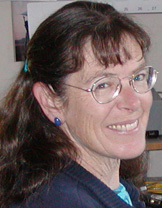 Carolyn Haley
Proprietor, DocuMania Editorial Services
 When you have ADHD, writing can result in a lot of stress. You may love ‘being’ a writer, brainstorming ideas, even editing, but getting words on the page, staying focused, or organizing your thoughts may be a struggle. And then there is all the productivity advice you’re told should work if you show up consistently and set measurable goals. Write for two hours every morning. Be consistent. Track your output.
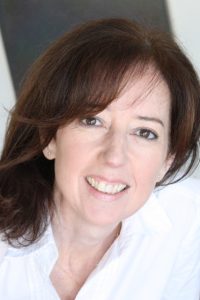 Kirsten Donaghey
 I can’t remember when I first encountered the writing book that changed me. I distinctly remember purchasing my own copy from the Quality Paperback Book Club in the early 1990s and then buying a second copy of it when my first copy walked to parts unknown. I must have lent out the second copy, because the dog-eared version on my shelves now is copy number three.
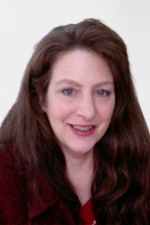 Jeanne Grunert is the president and founder of Seven Oaks Consulting, a business-to-business content marketing agency. She is an award-winning writer and direct marketing expert with over 30 years of writing, marketing, and business experience. Prior to founding Seven Oaks Consulting, Jeanne led marketing for divisions of McGraw-Hill Education, Teachers College Columbia University, The College Board, and retail, publishing, and financial service companies in the New York City area. Known worldwide for her exceptional leadership and communication skills, Jeanne works seamlessly across cultural and corporate barriers to achieve outstanding results. She holds an M.A. in writing and an M.S. in direct and digital marketing (awarded with distinction) from New York University, as well as certifications in social media marketing, content marketing, and adult education. Originally from the New York City area, Jeanne currently resides with her husband, John, and many pets on a 17-acre farm in rural Virginia. When not leading marketing teams through her work at Seven Oaks Consulting, she enjoys gardening, reading, cooking, and writing mystery novels.
 I checked the NAIWE website stats for the first week in July, and member Noelle Barrick’s blog post, “Adventures in Freelance Teaching, or How to Use Cuss Words to Your Advantage” is the top post among the linked NAIWE blogs.
 As a writer and editor of short fiction, I often see new short-story writers trying to do too much in too little space. While longer fiction forms, such as novels, provide numerous opportunities for exploring subjects from multiple angles, the short story is best served by a narrower focus. That’s not to say that a short story writer can’t incorporate multiple storytelling elements, like plot, character, setting, dialogue, etc. Of course, they can! Rather, one should utilize them to spotlight one of the “WH-questions,” (i.e., who, what, when, where, why, and how), setting that interrogative at their story’s heart.
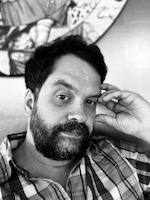 Patrick Barb
 Beta readers, those early readers who stand in for our future audience, can be a valuable tool to employ before finalizing a manuscript for submission or publication. Note that the version of the manuscript you proudly (and maybe anxiously) hand over to them should be the final version or close to it. After all, you don’t want their comments to focus on spelling errors, a glaring plot hole that you promised yourself you’d eventually fix, or anything else that could be taken care of during a normal round of editing or revisions. The point here is to receive early reader feedback, which may include comments on characters they did and didn’t like, areas that felt rushed, and sections that confused them. These comments can then be used to further strengthen your manuscript, and for some, it may even be a suitable replacement for pricier pre-publishing services.
 Jennia Herold D’Lima
 There are many paths to publishing a book — self-publishing, hybrid publishing, and traditional publishing are the main types. But how do you know if you need a literary agent? Here is some information about the publishing landscape, plus five great reasons why you might want to seek a literary agent to help you on your publishing journey.
 At different phases of her publishing career,
  Writing a novel is hard; editing it can be even harder. After weeks, months, or even years of writing, you need to give the writer a vacation and invite your editor to the computer — but where do you start and how do you do it?
 Karin Beery is an award-winning author and editor with experience in traditional and self-publishing, freelance editing, and editing for publishers. She is an active member of Advanced Writers and Speakers Association, Christian Authors Network, and the Christian Proofreaders and Editors Network. Karin’s specialty is substantive fiction editing with an emphasis in romance and women’s fiction.
 February is all about emotions, specifically love because of Valentine’s Day. Emotions are one of the keys to a great novel. Without them, there is no connection between reader and story or reader and author. Emotions are also a core component of the conflict that drives a novel forward.
 Nicole Evelina is a USA Today bestselling author and biographer who writes historical fiction, nonfiction, and women’s fiction. Her six books have won more than 40 awards, including four Book of the Year designations. Nicole was named Missouri’s Top Independent Author by Library Journal and Biblioboard as the winner of the Missouri Indie Author Project in 2018 and has been awarded the North Street Book Prize and the Sarton Women’s Book Award. One of her novels, Madame Presidentess, was previously optioned for film.