
 The author sits down to write their memoir, relying on journals written over a period of years, copious notes, vision boards, and an outline. They open a blank document, ready to begin, pulling from their memory as they write their opening scene. But suddenly they make a daunting realization, one that stops them mid-sentence. July 6 was a Tuesday, right? Or was it a Thursday? And was Grandma Jean the one who knocked the cake over or was it Aunt Susan? Writing comes to a standstill as the author grapples with these questions, unable to proceed due to a fear of sharing anything but the truth.
Does a memoir need to be strictly true and only stick to the facts? Or can it be mostly true? Is it even possible for a memoir to be based only on the truth? As studies into human memory show us, telling the truth and nothing but the truth in a memoir is an unattainable goal. Adding in creative writing elements that depend upon one person’s perspective and interpretations push that goal even further into the sphere of unreality.
When readers pick up your memoir, they are more interested in the theme and the emotional experience tied to your narrative. They already have an expectation that it won’t be completely factual. One reason for this is because creative nonfiction tends to have a novel-like quality when it is read. Real people are represented as characters and may lose some of their real-life nuance, conversations won’t be recalled or shared word for word, and settings and places integral to the story will be filtered through the author’s recollections and perspective. In some cases, details will need to be omitted since they’ve been forgotten or are only vaguely recalled, leading to an incomplete picture.
It may seem obvious that our memories are imperfect. After all, how many of us can remember conversations verbatim we had earlier in the day, let alone years ago? But there are other factors at play that affect the reliability of our memories. One now famous study, led by Samantha Loftus, discovered that human memory is malleable. That is, we can be led to believe something that never happened is a memory from an event in our past. Related studies have shown that not only do we believe these events really occurred, but we tend to be confident in these beliefs. A 2014 study found that even when participants were wrong when it came to identifying someone in a video, many of them stated they were 90 to 100 percent confident in their answer.
These and other memory-related studies help show that complete reliability is an impossibility when it comes to writing a memoir. Memory alone, then, may not be enough to convince the reader that a memoir is based on the truth. How, then, can an author add authenticity to their manuscript? Research can be a helpful tool when it comes to pinning down details or confirming dates. This can often be done from home now that many libraries, newspapers, and historical societies are uploading historical documents for online use.
But what about adding in or confirming personal information? Going through old photos and revisiting key places can sometimes provide these details or back up what one remembers (for instance, the author may remember wearing a blue shirt on a momentous day while photos taken of the event show the shirt was actually yellow). Talking to others who were there or who also remember a person or place can add a new perspective, and in some cases, may fill in gaps the author didn’t even realize were present. For example, if my younger brother were to write a memoir and include a scene at our paternal grandmother’s house, I might remember not only that there was a wool blanket draped across the back of the couch, but also the color scheme, pattern, its general itchiness, and that children were discouraged from eating or drinking near it.
While it might not be possible to share personal viewpoints and lived experiences with the claim that every word and memory is 100 percent factual, this doesn’t need to detract from a memoir’s overall message or theme. Shared truths, stories of redemption and resilience, and tales of a life uniquely lived can still inspire, bring people together, and help someone feel an emotional connection even when accounting for the limitations of human memory.
Qin, Shaozheng, Erno J. Hermans, Hein J. F. van Marle, and Guillén Fernández. “Understanding Low Reliability of Memories for Neutral Information Encoded under Stress: Alterations in Memory-Related Activation in the Hippocampus and Midbrain.” Journal of Neuroscience, March 21, 2012. https://www.jneurosci.org/content/32/12/4032.short.
Wixted, John T., Laura Mickes, and Ronald P. Fisher. “Rethinking the Reliability of Eyewitness Memory.” Sage Journals, May 2, 2018. https://journals.sagepub.com/doi/full/10.1177/1745691617734878.
 Jennia Herold D’Lima is a full-blown logophile. She joined her high school’s newspaper in ninth grade, winning statewide awards for her writing, and expanded her journalism skills by continuing to write and edit throughout her high school years and as a college freshman. While earning her BA in psychology (and minoring in cultural anthropology with a focus on precolonial Mesoamerica) and her MA in applied developmental psychology, her writing and editing naturally skewed toward all things academic. Writing for and publishing in peer-reviewed journals, editing papers for classmates, and writing parenting resource guides honed her research skills. Jennia joined multiple professor-led research groups and completed four internships throughout her academic career. After graduating with a master’s, she worked at a national nonprofit in Washington, DC, and as an assistant researcher at the University of Washington in Seattle. Jennia gradually transitioned to full-time editing. She enjoys traveling, volunteering, and taking creative photos of books and book-related items in those rare moments when she is not reading or editing.
 It’s a murder mystery fantasy romance with a Christian theme perfect for all ages in the general and Christian markets.
 Karin Beery is a published author and editor with experience in traditional and self-publishing, freelance editing, and editing for publishers. She is an active member of Advanced Writers and Speakers Association, Christian Authors Network, and the Christian Proofreaders and Editors Network, as well as a PEN Institute instructor. Her specialty is substantive fiction editing with an emphasis in romance and women’s fiction.
 I recently wrote a feature article about artificial intelligence (AI) and how businesses can use it to their advantage. The inherent trouble with this type of hot topic, however, is that there’s breaking news every day, basically rendering the content obsolete by the time you send it to your editor. In the process of researching the article, I even went straight to the source with questions. (For the record, the AI answers were no more illuminating than anything I found on Google.)
 Jake Poinier made the leap into freelance writing and editing in 1999 after a decade of positions in the publishing industry, giving him key insights from both sides of the desk. As the founder and owner of Boomvang Creative Group, he has worked with a diverse array of Fortune 500 and small businesses, consumer and trade magazines, and independent authors. Jake is committed to helping freelancers improve their businesses and shares his knowledge and experiences frequently as a speaker at industry conferences, through webinars, and on his blog.
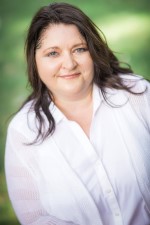 Amy Waters Yarsinske is the author of several best-selling, award-winning nonfiction books, published regionally, nationally, and internationally. Amy’s proposal technique was featured in literary agent/author Peter Rubie’s Telling the Story: How to Write and Sell Narrative Nonfiction; she also did a National Press Club panel with Rubie during the No One Left Behind press tour. She has been a regular contributor with international, national, and regional media, to include continued guest spots on national radio. An American in the Basement: The Betrayal of Captain Scott Speicher and the Cover-up of His Death won the Next Generation Indie Book Award for General Non-fiction in 2014, and No One Left Behind: The Lt. Comdr. Michael Scott Speicher Story earned her literary awards, an incredible press tour, and national/international recognition. With over 30 years in the publishing industry, Amy has published over 85 nonfiction books, most of them spotlighting current affairs, the military, history and the environment with a few biographies and corporate histories interspersed. Amy graduated from Randolph-Macon Woman’s College in Lynchburg, Virginia, where she earned her bachelor of arts in English and economics and the University of Virginia School of Architecture, where she earned her Master of Planning and was a DuPont Fellow and Lawn/Range resident.
 Ah, networking — an eternal topic for independent writers and editors.
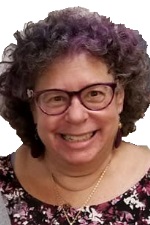 Ruth Thaler-Carter has been a full-time freelance writer, editor, proofreader, desktop publisher, and speaker for more than 30 years. She has been published locally, regionally, nationally, and internationally in, and does writing, editing, and proofreading for, publications, associations, nonprofits, websites, service firms, independent authors, and businesses. She sold her first freelance articles when she was still in high school. Often called the Queen of Networking, Ruth is active in about a dozen professional associations, serving as a newsletter editor, webmaster, publication author, speaker/presenter, blogger, program host or planner, and chapter leader. In 2006, Ruth launched the Communication Central Be a Better Freelancer annual conference, now cohosted with NAIWE — to help aspiring and established freelancers find greater success. Ruth is also owner and editor-in-chief of the An American Editor blog and owner of the A Flair for Writing publishing business. Her honors include member of her high school alumni hall of fame, in part for her publishing work and networking services; Writers and Books Big Pencil Award for teaching adults and contributions to the literary community; EFfie awards for writing, editing, and newsletters; an APEX award for feature writing; the Philip M. Stern Award of Washington (DC) Independent Writers for service to freelancers; and IABC/DC Communicator of the Year and Silver Quills for magazine writing and newsletters.
 Growing up in a minuscule town in eastern Kentucky, I was a good student, a teacher’s pet, and a bookworm.
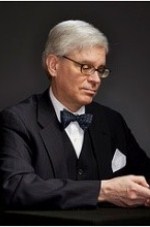 John Early McIntyre has been a professional editor for nearly 40 years, more than 31 of them at The Baltimore Sun, where he has headed the copy desk. John earned an undergraduate degree in English from Michigan State University, where he was elected to Phi Beta Kappa, and a master’s degree in English from Syracuse University, where he was a university fellow. John has taught copyediting at Loyola University Maryland since 1995. A charter member of the ACES: The Society for Editing, he served two terms as its president. John has presented workshops on writing and editing at conferences and publications in the United States and Canada.
 Laura Pennington Briggs is the founder and CEO of the Freelance Coach. A two-time TEDx speaker on how freelancing is changing the economy and the host of the weekly Advanced Freelancing podcast, Laura has helped over 15,000 freelancers start and scale their business. She’s an expert on systems, project and client management, marketing a solopreneur business, delegating to team members, retainers, and developing multiple income streams for writers of all stripes. Laura is the author of five books, including the Six Figure Freelancer and How to Start Your Own Freelance Writing Business. She’s also the founder of Operation Freelance, a national nonprofit providing free entrepreneurship training to military spouses worldwide.
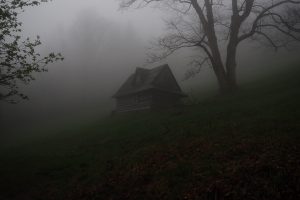 After landing on the moon . . . that could have been a fun location for a murder.
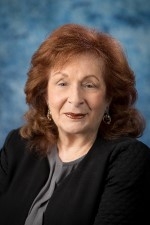 Marcia Rosen (aka M. Glenda Rosen) is an award-winning author of eleven books including her newest one, An Agatha, Raymond, Sherlock and Me Mystery: Murder at the Zoo plus The Senior Sleuths, Dying To Be Beautiful Mystery Series, and The Gourmet Gangster: Mysteries and Menus (menus by her son Jory Rosen). She is also author of The Woman’s Business Therapist and award-winning My Memoir Workbook. For 25 years, she was owner of a successful national marketing and public relations agency. Marcia has frequently been a speaker or program moderator at organization meetings and conferences, bookstores, libraries, and Zoom programs. Topics she has taught and presented over the past twenty years include Encouraging the Writer Within You, Marketing for Authors, Writing Mysteries…Not A Mystery, Writing Your Memoir, and recently Anatomy of Writing a Murder. Many articles on these topics have been published on mystery reader blogs and in newsletters and magazines and her newest articles relating include Location, Location, Location: Murders Have Their Places; Hearing Voices of Past Famous Detectives: Their Impact and Influences; and Writing Mysteries at a Zoo: With Caution. She is a member of Sisters in Crime National and New Mexico (Croak & Dagger), Southwest Writers, New Mexico Book Association, Women Writing the West, Public Safety Writer’s Association, Women’s National Book Association, and National Association of Independent Writers and Editors.
 On Monday, The Baltimore Sun won the Pulitzer Prize for local reporting.
 Finding an attorney when you need to prepare or review a writing or publishing contract is not always easy, especially if you live and work outside most major cities. Often, it isn’t that there are no literary attorneys in a particular state, but that they practice publishing or literary law under other names.
 A publishing consultant as well as a licensed attorney in both California and New York, Denise Gibbon represents and educates authors about contracts, copyright, and other publishing issues.