
Member's Library I am what the librarians have made me . . . B. K. Sandwell
  • About
    • About NAIWE
    • Board of Experts
    • Books Published by NAIWE Experts
    • FAQs
    • Advertising
  • Member’s Area
    • Member’s Library
    • Member Website Development
    • Benefit Links and Passcodes
    • Manage Your Account
    • The Member’s Edge
    • NAIWE Media
    • On-Demand Training (Discount)
  • Training
    • Upcoming Webinars
    • On-Demand Training (Discount)
  • Find a Professional
  • News & Events
    • Blog
    • The Edge
    • The Member’s Edge
    • The Edge Writers Guidelines
    • Conference
    • Podcasts
    • Summer Challenge
    • Words Matter
      • Words Matter Week
      • How to Participate
      • Media
  • Post a Job
  • Contact
  • Member Sites

How Do You Sell More Books?

Thursday, July Post a comment

Let’s take this question from the 30,000-foot view for now and ask the bigger question, how does anyone sell more of anything? It comes from a conversation expressing a need and finding a solution. Whether your need is to have your battery replaced in your car or the need to buy a gallon of milk, you identify the pain point and offer the solution. Not everyone will have the same need, so not everyone will be interested in your book. The key is knowing your target audience and reaching them on an emotional level.

Let’s use the car battery as an example. There are probably dozens of mechanics in your area that can replace your car battery, just as there are probably many books available on the topic or genre that you’ve written about. Garage A has an ad that pops up online that has bullet points about them like *satisfaction guaranteed, *cheapest rates in town, and *award-winning service. None of which address your specific needs. This is salesy business-focused marketing. While they may be true, they are not making an emotional connection to your needs. You can probably get that same service at a number of garages. However, Garage B has a video ad that pops up that says when you have car trouble, they know every hour you can’t drive can mean that you can’t get to work, you can’t pick up your kids from school, and it basically has you held hostage! This is the difference between traditional book marketing like trailers and ads and relationship video marketing.

Let’s face it, no one is going to sell your book better than you, the author! Whether it’s a short TikTok or IG Reelsvideo of you popping on and sharing your thoughts, or a longer YouTube interview video, you begin to build a relationship with your followers. If you consider that 93% of communication is non-verbal, it really makes sense that people seeing your expressions and hearing your voice will make them connect with you on an emotional level. You want them to see themselves in your story. There’s no greater win than when your followers think “you feel that way, I feel that way too,” or “oh, I’m going through that, too.” You want to find common ground and meet them where they are. It’s so important to shift your thinking from being author-focused to others-focused. Why will they care? What’s that common ground we have? You’re overweight? Hey, I’m overweight too. Do you suffer from depression? Hey, I do too. Let’s sit down as friends and chat about it.

As a radio personality for 30 years, I’ve received hundreds of books from authors asking to be interviewed on my shows. They almost always send me copies of their books and randomly placed author one-sheets in the pages. Those one-sheets are always author-focused in my experience. They tell me how many books they’ve written, drop important names of people they’ve been interviewed by, and I’ve even seen how many grandchildren they have! I could never understand why they would share things like this with me, as they had none of the qualities I was looking for in order for them to gain access to my audience. I wanted to know how well they speak? Why will my audience care what they have to say and will my audience feel a connection to their book content? Video can answer all these questions and more for big stage requests like radio, TV, podcast, and speaking opportunities. You’re essentially asking to borrow their audience, and a video link embedded on your one-sheet or press kit is a great way to set yourself apart from other author requests.

That same video can be used for your “small stage” opportunities as well, to demonstrate that you can make that emotional connection. Think about using it on social media, chat rooms, your website, newsletters, email blasts, and your Amazon author page! The key to selling books really is finding common ground and meeting people on a personal level. And in my experience, nothing can do that better than video. It really is an author’s marketing secret weapon!


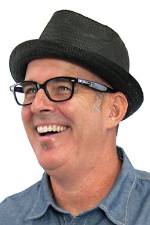
Suzanne Lynn Cheesman has been in radio for the last 25 years, in New Jersey, South Dakota, Minnesota, Missouri, and Florida as well as having hosted her own nationally syndicated show. She now runs a digital media company that helps authors sell more books and build their brand with video and radio interviews. She currently hosts the Triangle Spotlight radio show on WQBQ 1410-AM, a Central Florida radio station that has a coverage area of half a million people. On this show, you can hear authors from around the country and around the world share their heart behind the writing of their books.
Categories: Book Marketing, Suzanne Cheesman, Writing

“Everyone Has a Book in Them”: Ways to Tell if Your Book Should Be Published

Saturday, July Post a comment

One of the most frequent responses people have when they find out I am an author is something along the lines of “Oh, I’ve always wanted to write a book about XYZ.” While that can get annoying, it’s perfectly valid. There’s a reason that the phrase “everyone has a book in them” exists.


Try It Out

But how do you know if you really do have a book in you? The easiest way is to try out writing and see what happens. What do you want to write about? Write down every idea you may wish to cover in your book. If it’s fiction, can you shape it into the rough outline of a plot or at least the beginning of one? If it is nonfiction, can you group your ideas into chapters? Once you have this roadmap, you’re ready to write.

Start small. Don’t freak yourself out by thinking now you have to write this whole book. No, you don’t. At this point, you are just writing for you. Every chapter tells a story. Look at your outline and think about what the story is for your first chapter. Maybe it is how your hero got himself into his current mess or an overview of how you came to be interested/trained in the subject you’re writing about. Concentrate on telling that story right now. The other chapters will come in their order.


What’s the Answer for You?

If you find that this exercise is fun or that it comes easy to you, you may well just have a book in you. Or you may find that what you are writing morphs into something else entirely; you may have a short story, poem, song, or screenplay in you instead. Wherever your muse takes you, follow.

There are a few other ways to tell if you might have a book in your future:

  1. You enjoy writing. For most authors, writing is like breathing; we couldn’t survive without it and get anxious when we aren’t working on one story or another. It’s a truly transportive experience.
  2. You’re passionate about your subject/story. This will come through in your writing and readers will be able to tell. They can also tell when you’re not. Plus, you need to have passion for it because you’ll be with this story for a long time.
  3. You can stick with it. It can take years to write a book, especially when you are just starting out. Not to mention all the edits that go into making it great. If you aren’t the kind of person who can maintain interest for a long period, writing long-form things like books may not be for you.

You do not have to write every day, in spite of what some people say. When the muse is there, grab it. Write early in the morning or late at night after others have gone to bed. Write on your lunch hour, when you have a few spare minutes (even 10–15 will yield you a few words), or when you’re waiting at the doctor’s office. Eventually all those words add up.

And you get better as you go along. If you keep at it, don’t be surprised if by the end of your book, you hate the beginning. That’s because you’ve grown along the way. And it happens to most writers with every single book they write.

My last piece of advice is to read. Read as much as you can in the genre in which you are writing. Believe it or not, you become a better writer the more you read because you begin to see the commonalities in plot and character structure, what works well and what should never happen again. You’ll see turns of phrases you like and descriptions you want to imitate. There is no training ground like the page.

Now, get your butt in a chair and fingers on that keyboard. (After you’ve outlined, of course.)


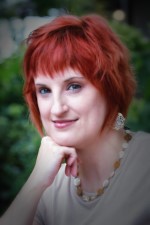
Nicole Evelina is a USA Today bestselling author and biographer who writes historical fiction, non-fiction, and women’s fiction. Her six books have won more than 40 awards, including four Book of the Year designations. Nicole was named Missouri’s Top Independent Author by Library Journal and Biblioboard as the winner of the Missouri Indie Author Project in 2018 and has been awarded the North Street Book Prize and the Sarton Women’s Book Award. One of her novels, Madame Presidentess, was previously optioned for film. She also has four non-fiction books due to be published from 2022–2024.

Categories: Nicole Evelina, Writing

4 Things You Can Do Today to Uplevel Your LinkedIn to Attract More Clients

Tuesday, May Post a comment

If you’re like most writers and editors, you want to have as many avenues for potential clients to connect with you as you can. If you’ve overlooked LinkedIn or just haven’t used it to its full potential, the summer is the perfect time to recommit and start upleveling your approach. LinkedIn has become second only to personal referrals in my freelance business. When I started freelancing 10 years ago, my LinkedIn was a dead zone and only about four years ago did I get really serious about leveraging this platform. Here are my best tips for using LinkedIn today.


#1: Find Other Leaders in Your Industry and Comment on Their Work

This might seem counterintuitive. Why would you follow another editor or content writer and give more LinkedIn juice to their posts? Because this helps to show that you’re an active participant on the platform and gets your name out there, too.

Providing thoughtful comments on a colleague’s posts on LinkedIn makes this more like a network. Remember that other people in your colleague’s network will see your responses, too, which opens new connection opportunities for you and greater exposure overall.

Most people post content on LinkedIn a few times per week. Choose a couple of favorite thought leaders to follow and scope their content. LinkedIn tracks what interests you and shows you similar material on your login feed.


#2: Use Keywords and Hashtags in All Your Content

The LinkedIn algorithm considers many aspects of your profile and posted content when deciding whether your profile will show up for various searches.

Keywords are those terms and phrases your clients might use to describe your work. It’s important when brainstorming these not to limit yourself to only the terms you would use to describe your work in an elevator speech.

For example, an editor might use:

  • Proofreading
  • Developmental editing
  • Professional editor
  • Copyediting/copyeditor
  • Line editing
  • Editing
  • Freelance editor

That’s just the start of a small list that could be expanded significantly based on your niche and the work you do for clients. The same goes for hashtags. Do some research on which hashtags align best with your profile and service offerings.

Hashtags perform best on posted content on the platform, not on your profile. However, you can still sprinkle some hashtags throughout your About section on your LinkedIn profile.


#3: Connect with Five People Every Day

To become a power user of LinkedIn, you don’t need to connect with 50 people a day. In fact, that kind of activity usually gets flagged as spammy and could get you blocked. Small consistent steps are far more effective for growing your connections and network on LinkedIn. LinkedIn starts to take you seriously when you have at least 500 connections on the platform, although you can always continue to connect with more people after you’ve hit that threshold.

Connect with five people every day. Make it simple and do it first thing in the morning. I have been on the LinkedIn app while I’m waiting in line at the grocery store or before an appointment. Send authentic and simple messages to connect, and don’t offer to provide them with services right away.

Here are a few examples of messages I’ve used in the past:

  • “Looking to expand my network of lawyers in the area. Open to connect?”
  • “Love the content you post on LinkedIn. I’d like to be connected here.”
  • “I noticed you’re interested in [insert topic/cause/etc. here]. Me too! Let’s connect.”

If you do attend a local networking event or conference, use this as a supercharged chance to grow your LinkedIn following.


#4: Create a Roadmap of Content to Post

A big reason why most freelancers don’t want to use LinkedIn is because they’re not sure what to write about. Don’t put that pressure on yourself to come up with those ideas on the day you intend to post. Instead, start with a brain dump list of all the topics you could post about. Here are some as a starting point:

  • Best practices for hiring an editor
  • Biggest mistakes people make when working with a freelance writer
  • Common grammar/style mistakes or issues people struggle with
  • The best lessons you’ve learned working for yourself
  • Your perspective on the future of digital marketing (or insert your industry/niche)

Store your content bank in a spreadsheet, Trello board, or Google Doc where you can pull that information up easily when you need it. You’ll thank your past self for the inspiration.

LinkedIn success builds like a snowball, so you might not see results right away, but it really gets easier after you’ve been at it for some time. Make the commitment to small steps on an ongoing basis and you’ll start to see your traction grow.


Laura Pennington Briggs is the founder and CEO of the Freelance Coach. A two-time TEDx speaker on how freelancing is changing the economy and the host of the weekly Advanced Freelancing podcast, Laura has helped over 15,000 freelancers start and scale their business. She’s an expert on systems, project and client management, marketing a solopreneur business, delegating to team members, retainers, and developing multiple income streams for writers of all stripes. Laura is the author of five books, including the Six Figure Freelancer and How to Start Your Own Freelance Writing Business. She’s also the founder of Operation Freelance, a national nonprofit providing free entrepreneurship training to military spouses worldwide.
Categories: Business, Laura Pennington Briggs, Marketing, Networking

Citing Works Used in Blogs, Press Releases, Newsletters

Saturday, May Post a comment

Copyeditors, given their passion for exactness, like to go by the book and feel uneasy if they have to improvise. In copyediting scholarly works, citations, and references are relatively straightforward matters, and all style guides explain in excruciating detail the recommended form for citing sources. If you look up the successive editions of any style guide, you will see that the number of examples it uses to illustrate the format of presenting the full details of a given source — a journal article, a chapter in a book, a web page, an audio recording, and so on — has been steadily rising to keep pace with newer digital forms in which the content is packaged: emails, Facebook posts, WhatsApp posts, Instagram posts and messages, YouTube videos. . . .

The fact that NAIWE’s executive director, April Michelle Davis, suggested that I contribute an article on how to cite blogs, press releases, and newsletters is proof enough that editors need a template for every form of packaging. And that, to my mind, is a demand unlikely to be met no matter how comprehensive a style guide. I will of course dispense some advice on dealing with blogs, press releases, and newsletters as dictated by a couple of style guides, mainly APA (the Publication Manual of the American Psychological Association, 7th ed.) and Chicago (the Chicago Manual of Style, 17th ed.), but I also intend to share with my fellow editors how, once you know the four basic elements of a reference, namely the author, the date, the title, and the source, it is easy to deal with every new kind of source that information technology can throw at us.

As the following examples show, these basic elements continue to make up any reference and continue to retain the sequence in which they are given in a reference. For example, here is how to format the reference, APA style, when the source in question is a blog post:

  • Charlesworth Author Services. (2022, April 16). Understanding author affiliation and accurately mentioning it in different scenarios. https://www.cwauthors.com/article/understanding-and-accurately-mentioning-author-affiliation


Chicago differs in that it adds the word “blog,” in parenthesis, after the title of the blog post, moves the date farther from the author’s name, and places the title of the blog post within quotation marks:

  • Yateendra Joshi, “Using “et al.” for in-text citations in research paper,” Editage Insights (blog), January 16, 2014, https://www.editage.com/insights/using-et-al-for-in-text-citations-in-research-papers?refer-type=article.


For press releases, however, APA makes it a point to identify the genre by inserting the phrase “Press release,” within square brackets, at the end of the title or heading of the press release, as shown in the following made-up example:

  • Institute of Typographic Research. (2021, July 18). Unambiguous characters for captcha texts [Press release]. https://www.ITR.org/Newsroom/announce/glyphs34.htm


Chicago differs in that it uses “news release” and does not enclose it within square brackets:

  • Institute of Typographic Research, “Unambiguous characters for captcha texts,” news release no. ITR07182021, July 18, 2021, https://www.ITR.org/Newsroom/announce/glyphs34.htm


Formatting the reference to an item in a newsletter is straightforward because newsletters are serial publications, usually with volume numbers, issues numbers, and a date (typically the month and the year). Therefore, the reference follows the standard format for an article in a journal. However, items in newsletters are rarely attributed to named authors, and the entity that publishes the newsletter is taken as the author.

However, what is really important — far more than following the stipulated format by using square brackets instead of round brackets (or vice versa, as the case may be) — is that as copyeditors we ensure that readers are given all the necessary information so that

  • the exact source is pinpointed
  • enough information is given (especially the author, the title, and the year) to help readers decide whether they should consult the original article
  • relevant details are supplied to help readers obtain the article in question.

In turn, the necessary information comprises the four basic elements mentioned above, basic because they answer the following questions:

  • Who is the entity responsible for the content (the author)?
  • How recent or dated is the information (the date)?
  • What is the content all about (the title)?
  • How to locate it (the source)?

So long as you keep these basic elements in mind, you will be less worried about not having the exact template for each kind of source — be it a blog, a press release, or a story in a newsletter.


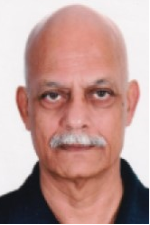
Yateendra Joshi, has been copyediting scientific and technical documents for more than 30 years and helps researchers and academics get published in high-impact-factor journals. Certified as a master editor by the Board of Editors in the Life Sciences — only 30 editors worldwide have been thus recognized so far — and a former researcher himself, Yateen has taught full-semester courses on technical writing, has conducted more than 30 shorter training programs, and as many webinars from March 2020 to December 2021 on successful submissions to high-impact-factor journals. Yateen is a member of the editorial board of Information Design Journal, was elected for the second term (2021–2023) as a member of the council of the European Association of Science Editors, and is a professional member of the Chartered Institute of Editing and Proofreading. His book, Communicating in Style, was favorably reviewed by a dozen international journals and newsletters, and the late John le Carré called it “A gem. Courteous, unfrightening and essential. A perfect companion to Fowler’s A Dictionary of Modern English Usage for today’s communicators.”
Categories: Citations, Editorial Services, Yateendra Joshi

Networking Is Back!

Sunday, May Post a comment

The past few weeks have been so exciting for this super-extrovert because it looks like in-person networking is back, and I’m loving every opportunity to connect, or re-connect, with colleagues in real life. I’ve been on a plane, at a sizable conference, at a couple of local events . . . life is starting to feel almost normal again.

Networking never really went away during the past two years or so of coping with the COVID-19 pandemic, but it’s been conducted remotely, and I’ve really missed getting together in person, both formally and informally. I’m very appreciative of the ways we’ve been able to stay connected through social media and online events, and I don’t see those virtual or remote interactions ending any time soon. It’s just so much more energizing — at least to me — to meet in person again.

Networking over Zoom, email, or social media has its own conventions. We need to know about making our Zoom presence its most effective and professional, which means remembering to wear something appropriate for the event, placing lighting in front of our computers and faces, reducing noise and interruptions as much as possible, using the mute function out of courtesy to other participants (as well as to reduce that noise), and trying to read participants’ faces and voices to understand both intent and spoken words.  It also means showing up as promised — many online events have been free that a lot of people got into the habit of RSVPing and bagging the commitment at the last minute — and doing our best to contribute something positive and constructive to conversations rather than wasting time on irrelevancies.

Now that we’re going back to networking in person, I’ve noticed a few aspects that we might want to keep in mind for that next event, whether it’s an organization chapter session or large-scale conference.


  • Remember the process.

Networking is a two-way process. Colleagues are usually more than willing to provide advice, resources, and shoulders to lean on, but expect to see some response as well. For every time you use your network to get something, try to give something back.


  • Look your best!

We can get away with minimal “dress for success” efforts for Zoom and other virtual platforms, but for in-person events, it’s time to make the effort to look professional. That doesn’t have to mean a three-piece suit or stockings and high heels, but it also doesn’t mean T-shirts and jeans, at least for most of the events we’re likely to attend. I tend to prefer dressing up a bit to dressing down, so you won’t see me in anything super-informal or sloppy, but I’ve had to stop myself before heading out the door to put on earrings and a dash of lipstick.

It also doesn’t hurt to keep a few breath mints at your door, in your car, and in your pockets and briefcase or other bags. Now that we’re breathing on people again, we want those breaths to be fresh and enjoyable!


  • Take along a mask.

Most of the in-person events I’ve attended recently have not required that the attendees wear masks, but I take them along anyhow. Some venues still require them, and we don’t always know the people we’ll meet well enough to assume that they’ve taken basic precautions.


  • Carry those cards.

Business cards remain important. Even when a lot of attendees seem to use their phones to record the contact information of newly met colleagues, I still prefer to get and give business cards, and many people seem to agree — every meeting I’ve attended so far this year has included being asked for, and asking others for, business cards. I’d rather go home with all of my cards still in hand than be the person who says, “Oh, it’s been so long since I’ve been to an in-person meeting that I forgot all about business cards.” I keep a stash of cards in every jacket pocket, briefcase, and handbag, and in my car, so I don’t become that person.

I also use business cards with nametags, especially ones hanging from lanyards. You know how those hanging tags can flip over when you aren’t paying attention to them? I tuck a business card on the other side of the nametag so if it does flip over, people still see my name and affiliation rather than a blank surface. If I’m wearing something without pockets, I put a few cards in the nametag holder so I don’t have to fumble around when someone asks for one.

Your card is part of your marketing strategy. Don’t leave home without it!


  • Show up.

In-person events cost money, either for the venue or the refreshments, if not both. If you sign up for an event, show up unless there’s a really, really good reason not to. The host, whether an individual or an organization, is counting on you and probably wasting money on you if you’re a last-minute cancellation.


  • Speak up.

Getting together in person might mean refreshing your “elevator speech” skills. Take some time at home to practice introducing yourself.


  • Keep hands off.

Figure out a smooth escape from shaking hands or unsolicited hugs if you or the people around you are not yet comfortable with physical contact, and don’t be the one who tries to hug everyone else. Yes, it’s great to be back together in person, but even mild physical contact still can feel risky.


  • Use business planning as networking activity.

For me, an important part of networking is to take a few moments early in a new year to think about what did and didn’t work for my writing and editing business in the past one, and what I might do more or better in the new one. Doing so plays into my networking strategy (yes, I have a strategy!) because sharing those thoughts could help colleagues enhance their professional efforts for the year.

These are some of my resolutions for my editorial business in 2022; I hope they are useful to my NAIWE colleagues:

  • Remain or become more visible in at least one professional membership organization to enhance credibility and expand networking.
  • Update membership profiles, and look for new organizations to join and network in.
  • Review style guides and check for any updates, revisions, additions, and other changes that might affect work for various clients — and share them with colleagues as part of networking activity.
  • Learn a new skill or service to offer to existing clients; something new about the topic area of a client; or an entirely new topic to write about, edit, or proofread (or index, photograph, illustrate, or otherwise work on) to expand my business.
  • Create or refresh my website to reflect recent projects, client testimonials, new skills or training, and whatever else will make me look good to past, current, and prospective clients.
  • Draft a few potential posts to use for my own blog or as a guest on colleagues’ blogs; being a guest blogger is a great way to network.
  • Seek new clients on a regular basis, through cold queries, responding to membership association opportunities, social media resources, etc.
  • Make networking an active, constant part of every business day, or at least every week, by giving something back to colleagues or communities.
  • Save toward retirement! And think about colleagues to hand off work to when I’m ready for that life moment.
  • Update or change all passwords.
  • Establish or refresh a connection with a family member, friend, or colleague to back up passwords and access to phone, email, social media, banking, and other important accounts — just in case.


Here’s wishing my NAIWE colleagues a successful approach to networking together as — we hope — the world starts to tilt back toward being able to interact in person.


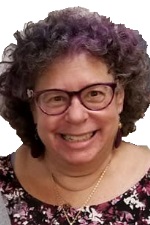
Ruth Thaler-Carter has been a full-time freelance writer, editor, proofreader, and desktop publisher for more than 30 years. She has been published locally, regionally, nationally, and internationally in, and does writing, editing and proofreading for, publications, associations, nonprofits, websites, service firms, and businesses. She sold her first freelance articles when she was still in high school. Often called the Queen of Networking, Ruth is active in about a dozen professional associations, serving as a newsletter editor, webmaster, publication author, speaker/presenter, blogger, program host or planner, and chapter leader. In 2006, Ruth launched the Communication Central “Be a Better Freelancer”® annual conference to help aspiring and established freelancers find greater success and connections with colleagues. Ruth is also owner and editor-in-chief of the An American Editor blog and owner of the A Flair for Writing publishing business. She received the Philip M. Stern Award of Washington (DC) Independent Writers for service to freelancers; the Writers and Books Big Pencil Award for teaching adults and contributions to the literary community; EFfie awards for writing, editing, and newsletters; and the APEX award for feature writing. She was also an IABC/DC Communicator of the Year.

Categories: Networking, Ruth Thaler-Carter

Science Writers Not Certain Enough, Study Claims

Sunday, April Post a comment

Writing about scientific findings and data? You may not be coming through so strongly, according to a new report. But before you worry about your writing, consider the source of the insights: It’s from a computer model.

A University of Michigan report says journalists often understate the claims of scientific papers.

The authors evaluated studies and news articles using a computer model.

They say that journalists tend to downplay the certainty of study findings. For instance, instead of using a specific number in the study, they’ll use words like “roughly” with the figure—as in, instead of writing “82.73 percent,” reporters may write “nearly 83 percent.” They may write that a study’s findings “indicate” something instead of saying it’s “definitely” so.


Real Reporting on Science

So, what’s the deal—are we going too light when reporting on studies?

Maybe some of us do. Publications and writers differ. Some have higher scientific writing standards, and some have different audiences.

As a health writer who covers medical studies often, I contend our writing on the whole is fine just the way it is. In my experience, a journalist has to be careful when covering science. After all, that great study—as robust as the design and findings may be—is still just one study. So you can’t exactly claim that something is “definitely” so based on one study.

Also, as reporters, it’s our job to report the facts. When writing for some publications, the writer may have more leeway to explain how the study may or may not fit into the big picture of things. But for the most part, depending on the type of article you’re writing, it’s just “report on the facts clearly” instead of doling out a bunch of interpretive insights. (I definitely prefer to let the reader make up their mind on something, anyway.) Some publications don’t want you to get into too much detail or make claims. Some articles are not a deep dive solely on the latest study.

One reason they may think our language isn’t as definitive is because publications are generally careful about science reporting. The publication can get a bad rep if that new egg study says eggs are “totally bad” when they can just report the findings of one study that claims eggs are bad.

I have editors who don’t want an entire article detailing a study and instead just want to springboard it into a larger piece, so the study may only get a paragraph of coverage. Also, style guides may dissuade the reporter from using highly technical numbers. And when you’re writing for a consumer audience, you’re often told to stick to a certain reading grade level to ensure all people can understand the content.


Materials Matter

The authors also looked at “journal impact factor,” which is their way to measure the quality of the science. They say reporters didn’t seem to be influenced by the journal where a study originated.

They may have a point there, because health writers know that the study design and authors are just one part of what makes it strong—where it’s published is another, because certain journals have more rigorous review processes.

There are a lot of differing factors that can play into how much certainty a writer exudes in an article that features a study. One thing is for certain: Their model may give us insights on what science writing is, but ultimately, the prose best written is interpreted by humans. And as writers, we can always improve upon our craft.


Kristen Fischer is a copywriter and journalist living at the Jersey Shore. She worked as a reporter and copyeditor for Gannett before launching her full-time freelance business in 2005. Her work has been published in Parents, New Jersey Monthly, Prevention, Woman’s Day, SheKnows, and Healthline.

Categories: Kristen Fischer, Writing

Trivia question: How should we refer to someone from Ecuador?

Wednesday, March Post a comment

A farmer on a horse looks at the Tungurahua volcano eruption on December 10, 2010, in Banos, Cordillera, central Ecuador. (Photo by Kseniya Ragozina)[/caption]

As a freelance copy editor, I follow the guidelines of The Associated Press Stylebook in perhaps a third of my professional work. I also edit using The Chicago Manual of Style, the Publications Manual of the American Psychological Association, other style manuals, or no preferred style manual at all in some cases. The AP’s book is always close at hand, though, because it is one of the most useful reference books available for carefully considered questions of language, culture and current events.

There is a little-known field on the website of The Associated Press Stylebook that lets users outside AP offer suggestions for updates for the style guide. I’ve dug my way through various layers to find it, and I’ve offered my thoughts on various minor questions of language and usage. The most recent was one of the more inconsequential, I thought, but it was also a relative no-brainer. AP Stylebook took my suggestion, even thanked me in a tweet. So, now, those who follow AP Style should say Ecuadorian rather than Ecuadorean, as was previously advised.

This seems trivial, and it certainly is. But setting style and sticking with it provides readers with clarity and signals to them we care about getting things right. Despite AP’s preference over the decades, Ecuadorean never was used as much as Ecuadorian, and Ecuador’s English-language tourism website uses Ecuadorian.

This illustrates a strength of the AP Stylebook over other reference sources — it responds quickly when it needs to. It was updated almost immediately after I brought Ecuadorian to the Stylebook editors’ attention. Every spring, the book publishes anew with scores of changes and additions. Between editions, the online version updates as needed. Some recent additions include advice on reggaeton, the musical style, and on the United States–Mexico–Canada Agreement, the successor to the North American Free Trade Agreement (the initialism USMCA is acceptable on first reference with a definition, but spelling it out is preferred).

I’ve had many writers and copy editors tell me they avoid the AP Stylebook because they don’t edit for news. But I wonder why they would ignore a reference book created with thoughtful advice on how we use language. If we don’t edit in AP Style, we don’t need to follow the advice, but on pesky issues of language, I prefer all the advice I can get.


Mark Allen is an editor, writer, and teacher focused on helping people communicate with clarity and honesty. He has trained hundreds of editors and writers on a variety of topics, including the latest and most important elements in the Associated Press Stylebook and the Chicago Manual of Style. Mark has led conversations about copyediting and writing at conferences and workshops in Detroit, St. Louis, Las Vegas, New Orleans, Philadelphia, Portland, Columbus, Chicago, Pittsburgh, New York City, and York, England. He was the first freelancer elected to the executive board of ACES: The Society for Editing, and Mark currently teaches advanced copyediting for UC San Diego Extension’s copyediting certificate program.
 

Categories: Editorial Services, Mark Allen, Style Manuals

Passive Voice, Static Voice—What’s All The Fuss About?

Friday, March Post a comment

As writers, we naturally write the way we write naturally. But readers can’t hear the cadence of the words playing out in our heads as our fingers fly across the keys. Readers’ minds merely decipher the little black marks on the page or the pixels on the screen. So “Mom was calling every week; Dad was emailing every day” cannot possibly convey the sense of urgency the author wants to impart because the reader can’t feel it—it’s over, it’s way in the past, it’s a “was.” It’s passive.

Ah, but suppose the line read: “Mom called every week; Dad emailed every day,” with no extra “it’s all over” verb standing between the doer and the deed? Now the reader feels the author’s irritation and can sympathize, snicker, or simply roll their eyes. It’s active.

And “static writing is . . . ?” I hear you ask. Extra words, albeit not necessarily “to be” verbs, that stretch out the sentence or obfuscate its meaning. “I extracted a sample of both of their DNA from the inside of their mouths.”

The line is static: it has no life, it has no energy, it just relays flat, lifeless information. Maybe that’s okay for a textbook or dissertation, but for commercial writing? Ugh.

But suppose the line read: “I extracted DNA samples from inside both their mouths.” Doesn’t that sing a little sweeter? It provides the same information without holding the reader hostage for an extra six words and so pumps the material forward. It’s active.

And that, in 200 little words, is what the passive/static voice fuss is all about!


Claudia Suzanne is a consummate ghostwriter/teacher, understanding what authors need in order to successfully complete their book dream, and she has a finely honed talent for communicating what she knows to her students and clients. Popularly dubbed “The Einstein of Ghostwriting,” Claudia has entertained and informed tens of thousands of writers, editors, journalists, and aspiring authors at countless writer and professional meetings, conferences, radio and BlogTalk radio broadcasts, webinars, and podcasts. Claudia was an invited expert on Penguin’s Author Solutions Expert Video series and a featured entrepreneur in Orange County Business Journal and Norwegian Business Daily. Her signature title, This Business of Books: A Complete Overview of the Industry from Concept through Sales, earned her a 2018 Author of Influence Award from Connected Women of Influence.

Categories: Claudia Suzanne, Ghostwriting, Voice, Writing

Why Do I Teach Ghostwriting Certification Training?

Friday, March Post a comment

That’s what one of my students asked me a couple week ago.

“It can’t make you much money,” she said. “Not for the amount of time and work you put in over the three months.”

She’s right; it doesn’t. I spend three hours a week teaching each class—in the fall, that’s going to go up to four hours/week. My students tell me they put in between 6 and 10 hours on their homework every week—homework that I then have to go over, comment on, discuss, and correct. If I add up everyone’s tuition and divide by the number of hours I put in, I’m making . . .

Damn little.

So why do I teach Ghostwriter Certification Training? Not sure. Let me muse as I write.

If we go back to the beginning, I started teaching the basics of the book business and a little bit about ghostwriting back in 1993, I think. Maybe 1996. Don’t remember. My motive then was to pass on some information and sell my book, This Business of Books: A Complete Overview of the Industry from Concept through Sales, then in its 3rd edition.

Maybe I was looking for referrals. Maybe I just wanted to share. I honestly cannot remember. But I found I enjoyed teaching. It was fun. It was stimulating. It was educational for me. And people paid me a little bit of money. A win/win.

Over the years, the class ebbed and flowed. I taught sometimes, didn’t the rest. Tried to put together Professional Book Writing School, but life got in my way. Remember, I spent over two decades struggling with serious health problems, which I have now, Baruch Ha’Shem, completely overcome. But during most of the past two decades, I was inconsistent and intermittent with my work habits, my clients, and my teaching.

Looking back, it’s amazing to me how much I managed to get done by just bulldozing through. When faced with allegedly insurmountable odds, some people take it easy, some people rely on the medical community, and some people give up. I just put my head down and worked. Not fast, not always well, but through the best and the worst of it, I worked.

And then I was facing the end.

It was 2000 and I had one of those “life-changing” episodes during a downward health spiral that told me I was coming to the end of my days. But I had a client! How could I transition to the next world and leave my client up in the air? So I handed the client over to one of my interns and started pricing funerals.

I won’t keep you in suspense—I didn’t die. In fact, with the help of my beautiful sister-by-love, Bera Dordoni, N.D. (Bastis Foundation), I began the long journey back to perfect and total health. But it was an eye-opening experience and I realized I had to write a book. And so I did.

And I rewrote it.

And rewrote it.

And so and so forth and scooby dooby do.

The final edition of said book, Secrets of a Ghostwriter: World’s First Step-by-Step Guide to the Theory, Skills, and Politics of Ghostwriting, is at long last complete and exhaustively emended by five wonderful, nit-picky editors. And Ghostwriter Certification Training has evolved from a 5-week to a 7-week to a 14-week and soon to be 16-week program that details exactly what the job is, how to do the job, how to find aspiring authors to do the job for, and how to convert those authors into contracted clients.

Which may be the actual reason why I continue to teach Ghostwriter Certification Training. After putting in all this time and effort to develop what Cora Foerstner called “the seminal text” on the subject and honing the program to the point that I’m confident it’s turning out skilled, competent ghostwriters, how can I stop?

But I warn you now, the price is going up. Because yeah—I don’t make enough money at this right now!


Claudia Suzanne is a consummate ghostwriter/teacher, understanding what authors need in order to successfully complete their book dream, and she has a finely honed talent for communicating what she knows to her students and clients. Popularly dubbed “The Einstein of Ghostwriting,” Claudia has entertained and informed tens of thousands of writers, editors, journalists, and aspiring authors at countless writer and professional meetings, conferences, radio and BlogTalk radio broadcasts, webinars, and podcasts. Claudia was an invited expert on Penguin’s Author Solutions Expert Video series and a featured entrepreneur in Orange County Business Journal and Norwegian Business Daily. Her signature title, This Business of Books: A Complete Overview of the Industry from Concept through Sales, earned her a 2018 Author of Influence Award from Connected Women of Influence.

Categories: Claudia Suzanne, Ghostwriting, Writing

Copyright Registration and the Author

Tuesday, March Post a comment

Did you know that your work is automatically covered by U.S. copyright law as soon as you set it in a fixed format?

According to Title 17 of the U.S. Code, all works are protected under copyright law from the moment they are placed in a fixed, tangible medium and can be perceived either directly (on paper, canvas, or other “solid” medium) or with the aid of a machine or device (computer, e-reader, or electronic music player). What does this mean? Essentially, you do not have to register your work with the Copyright Office to have some measure of protection. U.S. copyright law exists to help protect content creators and to help “promote innovation” in the sciences, technology, and creative arenas nationwide.

That said, you might want to formally register your work, as there are a number of benefits to this:

  • It establishes a public record of the copyright claim.
  • If registered within five years of creation, it provides “prima facie” evidence of the validity of the copyright and the facts stated in the certificate.
  • If registered within three months of creation or prior to infringement of the work, it will allow for statutory damages to be awarded to the copyright owner in an infringement suit.

And, perhaps most importantly:

  • Registration allows an infringement suit to be brought forward in court. In the coming year, individual creators will be able to take advantage of the newly minted Copyright Small Claims Board for suits with damages up to $30,000 instead of going to federal court.

You might be thinking, “Well, can’t I just mail my manuscript to myself via the U.S. Postal Service and therefore, as a government agency, I’m covered under copyright law?” Unfortunately, all that this will do is prove the date you mailed it to yourself. There are no legal benefits to sending a manuscript to yourself in the mail, as the U.S. Postal Service is not an agency of the U.S. Copyright Office.

Note that you also do not have to pre-register your new book with the U.S. Copyright Office before you publish it as you have some protections from the moment you put pen to paper or cursor to document program. You may certainly choose to do so if you feel that your work may be infringed before you publish, but it is not necessary. Pre-registration also does NOT replace the registration once you have published your work, so it will not save you any time later on.

Not only is the process of registering copyright easy, but it’s relatively inexpensive. For example, for a simple registration (let’s say a book, with one author or artist), the fee is just $45 for registering online on the U.S. Copyright Office’s online registration portal. The Copyright Office has also made it easier to register a group of unpublished works at one time, which is especially helpful if you have a batch of poems or titles that you haven’t yet published and want to protect.

Perhaps the best part of the online registration portal is that you can register works on your own without a lawyer. The Copyright Office has some very useful tutorials to show you just what to do, and if there are any questions regarding your application, a copyright examiner will reach out to you with clarifying questions and help you complete your registration.


Mary Jo (“MJ”) Courchesne is the owner and principal consultant of Gryphon Publishing Consulting. A publishing veteran with more than 20 years of experience in trade, academic, and direct-response publishing, she has spent nearly two decades specializing in licensing, subsidiary rights, and permissions. MJ is a frequent and polished presenter on licensing and copyright. When it comes to intellectual property, she firmly believes that everyone from authors to publishers to corporations should know their rights. To that end, MJ has instructed on copyright and permissions in the George Washington University’s Masters in Publishing program for the last 15 years. She currently serves on the Board of Experts for the National Association of Independent Writers and Editors and is a member of the Independent Book Publishers Association and the Society of Children’s Books Writers and Illustrators. MJ has also held memberships with other publishing organizations such as the American Society of Picture Professionals and Washington Publishers.

Categories: Copyright, MJ Courchesne, Writing

  • « Previous Page
  • 1
  • …
  • 8
  • 9
  • 10
  • 11
  • 12
  • …
  • 26
  • Next Page »

Recent Posts

  • Beyond Writing: How Expanding Your Services Can Strengthen Your Freelance Business
  • Am I a Writer or Not?
  • Be Prepared for That Crisis Moment When You Need Business Backup
  • Stick with Your System
  • In a Pricing Rut? Try These 3 Strategies

Categories

Meta

  • Log in
  • Entries feed
  • Comments feed
  • WordPress.org

Latest Posts

Beyond Writing: How Expanding Your Services Can Strengthen Your Freelance Business

July 22, 2026

Am I a Writer or Not?

July 16, 2026

Be Prepared for That Crisis Moment When You Need Business Backup

June 30, 2026

Stick with Your System

June 29, 2026

In a Pricing Rut? Try These 3 Strategies

June 25, 2026

Improving Your Vision

June 24, 2026

Contact Us

  • 804-476-4484
  • P.O. Box 412
    Montpelier, VA 23192-0412
Facebook Instagram Linkedin twitter

© NAIWE. All rights reserved. Designed by My House of Design.