
Member's Library I am what the librarians have made me . . . B. K. Sandwell
  • About
    • About NAIWE
    • Board of Experts
    • Books Published by NAIWE Experts
    • FAQs
    • Advertising
  • Member’s Area
    • Member’s Library
    • Member Website Development
    • Benefit Links and Passcodes
    • Manage Your Account
    • The Member’s Edge
    • NAIWE Media
    • On-Demand Training (Discount)
  • Training
    • Upcoming Webinars
    • On-Demand Training (Discount)
  • Find a Professional
  • News & Events
    • Blog
    • The Edge
    • The Member’s Edge
    • The Edge Writers Guidelines
    • Conference
    • Podcasts
    • Summer Challenge
    • Words Matter
      • Words Matter Week
      • How to Participate
      • Media
  • Post a Job
  • Contact
  • Member Sites

The Writing Book That Changed Me: If You Want to Write by Brenda Ueland

Saturday, May Post a comment

I can’t remember when I first encountered the writing book that changed me. I distinctly remember purchasing my own copy from the Quality Paperback Book Club in the early 1990s and then buying a second copy of it when my first copy walked to parts unknown. I must have lent out the second copy, because the dog-eared version on my shelves now is copy number three.

It happens to this book. You lend it out, and it disappears. Be prepared. Other writers have told me the same thing. “Oh, Brenda Ueland’s book? I lend that one out all the time. But sometimes, it doesn’t come back.”

It grabs hold of you, this book. At first, it seems disconnected, almost rambling. Quotations float in and out from William Blake, Wordsworth. However, once Brenda’s ideas about creativity and the source of creativity grab you, they don’t let go.

The book is If You Want to Write by Brenda Ueland, and it is the writing book that changed me.


Who Was Brenda Ueland?

She had two simple rules for living: to tell the truth, always, and not to do anything she didn’t want to do.

Born in Minneapolis to immigrant parents in 1891, she attended Barnard and became a freelance writer and journalist. Her prolific output of articles, stories, plays, and, eventually, her most famous work, If You Want to Write, accompanied a Bohemian lifestyle and unconventional ideas for her time. She led a writing class, and her book is based on the lessons she taught her students. She died in 1985, leaving many of us whom she had never met feeling like her students, too.

I’m one of her students.


The Best Book Ever Written About Creative Writing

Carl Sandburg once called If You Want to Write the best book ever written about creative writing, and if it’s not too bold of me to say so, I agree with him.

The book’s premise can be summed up as:

  • Everyone is creative
  • Everyone has something important to say
  • Writing should come from one’s honest, unforced self

When I first read this book, I felt a spark of excitement and recognition. Why, I’m like one of her students. Trying to write in fancy ways rather than simply, plainly telling the truth of my experience.


Finally, I Can Be Myself

I had teachers tell me to write like Hemingway, Dickens, Melville, Poe; I studied Milton, Shakespeare, and Dante. I loved all these writers, but trying to force me to write like them was ridiculous.

I needed someone to let me be me, to write like me, and that someone was Brenda.

Throughout the book, she provides examples of why we should write freely and without reservation, honestly and truthfully sharing what we see and feel. We should focus like children, creating a play — didn’t you write and perform plays as children? I did. She describes the “happy absorption” of children deep in the creative flow, and I remembered times in my childhood feeling that flow, that happy absorption, whether it was coloring the paper backdrop for our neighborhood performance of Rumpelstiltskin in third grade that we gave in the basement playroom of my house, or building cardboard houses for my Barbie dolls.

I wanted to tap into that creative flow, to have that happy feeling when writing. Writing had felt that way to me throughout high school. I often stayed up late, typing away on my mother’s Royal portable, writing horror and science fiction novels and short stories. As I grew older, majored in English, and told my college professors of my ambition to be a writer, they did their best to give me advice: write like Hemingway! Write like Joyce Carol Oates! Write like XYZ!

The more I was told to write like someone else, the more stilted and uncomfortable my prose became. I wrote stories I hated because my teacher for a short story workshop asked me to stop writing all those silly paranormal stories and focus on “true literary fiction.” As far as I could tell from the examples she shared with me, true literary fiction was a nebulous story with unlikeable characters and no real resolution, people wandering around drinking tea or having conversations I didn’t understand.

Everyone told me to write like someone else . . . but no one suggested I learn to better express myself to write like me.


Teaching Writing Lessons and Life Lessons

Brenda Ueland gave me permission to write like me. Throughout her book, she not only exhorts the reader to write their true feelings, but she shares examples of how writers improved their pieces once they shed the self-conscious, “I’m trying to be Shakespeare” feeling.

More than teaching me how to free myself from everyone else’s expectations about my writing, this book changed my view of the people around me. As I entered the marketing profession and eventually became a manager, Brenda’s views about writers became my views about people, period.

Brenda’s maxims that “Everyone is creative. Everyone has something important to say” became part of my management approach. With every marketing team I have managed through my career, I treat everyone with deep respect, seeing each one as creative and with something important to say or contribute. This has built stronger teams, better communication, and greater outputs. It’s as if people can sense it. I don’t say it aloud. It’s become part of how I treat others: with dignity and respect. If we are all channels of creativity, and each of us has something important to say, we are each worthy of the highest regard.


A Constant Companion on the Writing Journey

For over forty years, this book has been my constant companion. Every few months, I pick it up for a shot of inspiration. I read a few passages. I think about Brenda encouraging the little servant girls, shopkeepers, and everyone else in her classes in the 1930s to write from their hearts, to let their spirits soar free. If there is only one book you add to your writing library, make it this one. It’s not for everyone, but if it is for you, it will resonate quickly and deeply. It is truly a book that changed my writing life and my inner life, and a book I’m grateful to have discovered early in my career.

I sit at a sleek computer now, instead of that battered old olive-green Royal typewriter. I will always try to write with “microscopic truthfulness” thanks to this book. And when I do, my work is better for it.
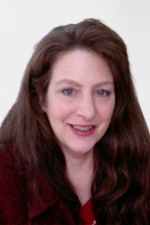
 

Jeanne Grunert is the president and founder of Seven Oaks Consulting, a business-to-business content marketing agency. She is an award-winning writer and direct marketing expert with over 30 years of writing, marketing, and business experience. Prior to founding Seven Oaks Consulting, Jeanne led marketing for divisions of McGraw-Hill Education, Teachers College Columbia University, The College Board, and retail, publishing, and financial service companies in the New York City area. Known worldwide for her exceptional leadership and communication skills, Jeanne works seamlessly across cultural and corporate barriers to achieve outstanding results. She holds an M.A. in writing and an M.S. in direct and digital marketing (awarded with distinction) from New York University, as well as certifications in social media marketing, content marketing, and adult education. Originally from the New York City area, Jeanne currently resides with her husband, John, and many pets on a 17-acre farm in rural Virginia. When not leading marketing teams through her work at Seven Oaks Consulting, she enjoys gardening, reading, cooking, and writing mystery novels.

Categories: Fiction, Freelancing, Jeanne Grunert, NAIWE Board of Experts, Nonfiction, Writing

How Finding Your Freelance Micro Niche Leads to Maximum Marketing Potential

Friday, August Post a comment

Not since the advent of the internet — or perhaps the printing press — have writers experienced as much turmoil as they have in recent years. The launch of ChatGPT in November 2022 has spawned myriad “writing platforms” that purport to write copy in the blink of an eye. As this new technology has entered the market, Google has rolled out update after update, which has caused many websites that hired writers to craft search engine–optimized copy to slow their hiring or reduce writing quotas. The result is a shrinking freelance market at a time when writers need more and better-paying gigs just to keep pace with inflation.


What’s a Freelancer To Do?

Amid these signs of woe — shrinking freelance markets, AI platforms wooing clients with the promise of cheap and fast material for their websites — there are signs of hope. Writers and editors who are weathering the storm of change the best are the ones who have chosen and focused on a profitable micro-niche strategy.

What is a micro niche? How do you find your micro niche? And why is this a profitable marketing strategy during times of industry upheaval? Let’s unpack the concept of a micro niche and how you can benefit from this marketing concept.


What Is a Micro Niche?

A niche in marketing refers to a specialized segment of the market for a particular kind of product or service. It’s essentially a distinct, specialized group of customers with specific needs, preferences, and characteristics that differ from the broader market. For example, instead of targeting the general market for shoes, a niche could be high-performance running shoes for marathon runners.

A micro niche is an even more specialized subset within a niche market. It’s a very narrow, highly targeted segment with unique needs or preferences that may not be adequately addressed by broader niche offerings. Micro niches often cater to very specific demographics, interests, or behaviors within a larger niche. For instance, within the niche market of high-performance running shoes, a micro niche could be minimalist running shoes specifically designed for barefoot runners who prefer a natural feel.

Writers may have a niche, such as writing mystery novels. But they can also have a micro niche, such as writing cozy mystery novels or sci-fi mystery novels, and so on. A nonfiction writer may have a business niche with a micro niche in insurance.

An editor may have a niche of editing for websites, and a micro niche as an expert search engine optimization editor, or an editor of technical articles, and so on.

The more you can stake a claim to a micro niche, the less prone your business will be to marketplace shocks.

Here’s why micro niches work in today’s AI-driven world and how you can find and develop your own micro niche for maximum profitability.


Why Are Micro Niches Profitable for Freelance Writers and Editors?

Many new freelance writers and editors think that if they specialize in an area, they will lose business opportunities; they will shut out potentially lucrative opportunities if they stake a claim to a specific niche. “But I can write about anything!” is usually the cry of a newly minted freelance writer when faced with the task of selecting a niche and further defining a micro niche.

While it is certainly possible for you to write about almost anything (and let’s face it, we all have our limits!), will someone hire us if we have too broad or too general a background?

Niches and micro niches enable writers to really dig deep into their subject matter and develop a strong personal brand for being an expert at writing about that niche. Whether your micro niche is origami (from a crafting niche) or CRM software (from an IT or technology niche), defining a profitable subcategory of a broader category and focusing considerable time and attention helps freelancers develop a profitable business because of the following marketing factors.

  1. Competitive Edge

Because few writers think in terms of micro niches or extreme areas of specialty, you’ll stand out among applicants for a specific writing gig. Your clips will be highly focused on the micro niche too, demonstrating superior knowledge and experience in the niche over the competition.


  1. Attracting Organic Search Traffic

If you build your website around a micro niche, you’ll also have less competition for keywords. Long-tail keyword phrases are often ideal for micro niches. They may have low search volume (under 100 per month), but the competition is also low, which means that you’ll have a much better chance of ranking your web pages on the first page of search results for the terms. This not only improves your organic search traffic but also adds to your competitive edge.


  1. Personal Branding

Micro niches enable you to build a personal brand around your specific niche. This helps you stand out among other freelancers faster and easier, which in turn helps you market your services.


  1. Charge Higher Fees

Have you ever noticed that specialists command higher fees than generalists? The same goes for freelancers. The more you specialize in your micro niche, the higher your fees, because by specializing, you have built up your expertise in an area and thus shortened the time it will take for your client to achieve their ideal project. You’re saving clients time by deepening your experience in a subject, and in turn, many are willing to compensate you better for that increased knowledge.


  1. Offer Specialized Services

We’re all in the publishing industry, but within the profession, there are often additional services that clients need that we can provide. When you focus on a micro niche, you may discover some unusual but highly profitable services you can offer in addition to your services. Again, because you have specialized in a micro niche, the competition for the specialized and profitable services should be less, so you can more easily add new profit lines to your business with less effort.


Finding a Profitable Micro Niche

Now comes the hard part: finding a profitable micro niche. How do you find a micro niche to specialize in?

There are several ways you can find a micro niche. I like to think about finding a micro niche as overlapping circles, like a Venn diagram. Where the circles overlap is your niche.

To find your micro niche, begin at the top of the diagram and work around it to find the areas that overlap. You can create a similar diagram with paper and pencil and jot your responses inside the circles to see where they overlap, where all four overlap is a strong indication of a possible micro niche to explore.

  1. Your Interests

Any micro niche you pursue should interest you. Why work at something you find boring? You’re in this for long-term success, so choose something that sparks your imagination and piques your curiosity. Brainstorm a list of 10 possible areas of interest.


  1. Your Experience

Consider your experience. What industries or topics have you written or edited for? Make a list of 10 industries. Sort the list according to “I have the most experience” to “I have the least experience.” You can go back many years on this one. It can include full-time work, freelance work, or volunteer work. You want to cast the net as wide as possible to encompass all sorts of work to build this part of the diagram.


  1. Market Demand

Now, take the list of interest from #1 and the list of experience from #2, and cross-reference them. Use a highlighter or another visual aid to mark anything that appears in both 1 and 2. Perhaps you have an interest in computers and have written several articles on the subject. That’s an intersection and one to note. Keep going until you have at least three that touch on the interest and experience segments.

Once you have your matching of interests and experience, it’s time to hit the search engines and assess marketplace demand. I tackle this in several ways:

  • General searches to uncover market size and growth trends
  • Business publications that cover industry topics
  • “Help Wanted” ads and ads on job boards like Indeed.com, FlexJobs, etc.

Areas of high market demand are industries that are growing at a rapid pace, have highly specific topics that are difficult to hire a generalist for, or require credentials for authenticity. Examples may include technology (or very specific technology, such as writing about CRM systems, AI, or music production technology), medicine (which may prioritize writers with experience or medical credentials like an M.D. or R.N.), veterinary or pet topics (which may require hands-on experience with specific species, like a dog groomer who writes about dogs or an avid equestrian covering tack and horse care).

Which, if any, of the interest and experience topics also have high market demand?


  1. Happy Clients!

Now it’s time to review your past clients or jobs. Who left glowing testimonials for you? Thanked you profusely for the work? Or where you saw a marked difference in sales, website traffic, or other quantifiable metrics?

Happy clients give us important feedback on our freelance work. They point us in the direction of potential niches. And, if you have happy clients already in one niche, it’s a small marketing step to ask them to write a testimonial you can publish on your website or use them as a reference for landing future gigs.

Look through your emails, your files, or however you organize your work, and find your happy clients. Is there a pattern of the type of business, industry, or work in which you excel?


It is the intersection of these four areas that points you to a potentially profitable micro niche, one in which you have a good chance of excelling and loving as you embrace it for your business.


What If You Can’t Find a Micro Niche?

What if, after going through these four steps, there is no point of intersection in your work? Perhaps your happy clients aren’t in those industries that interest you, or you’ve done your market research and found that the industry is shrinking. What then?

  • Decide what you can compromise on. Look through each of the four circles and decide which area you can compromise on. For example, perhaps you need to earn a certain income and are willing to write about topics that do not interest you. If the market size and potential appear to be strong, you may wish to pursue that micro niche even if the topics are not of great interest. Determine what, if anything, you can compromise on and restart your search.
  • Think outside the box. Use tools like Answer the Public to brainstorm avenues to explore. I enjoy writing about business, but I focus on technology and engineering companies as my market niches. Why? Because business issues are what drive companies to seek solutions from tech platforms and engineers — and I can bridge the gap between their technical writers (who focus on their products) and marketing writers (who know how to market the products but may not be good at telling the stories driving sales). Brainstorm other ways in which your interests or strengths may be applied to new industries.
  • Consider testing a niche or two. You may have some that align in two of the four circles (interest/happy clients, happy clients/market demand). Test the market for 6 – 12 months. Can you land enough gigs in that industry to consider it a micro niche? What about prices? Can you develop your online personal brand as the go-to source for articles on this topic?


Problems and Pitfalls in Micro Niches

There are some problems and pitfalls when it comes to selecting micro niches. I’ve reviewed the ones that occur when completing the initial exercise to select a micro niche. However, even after you’ve chosen a micro niche and focused on it for a while, you may still encounter a few of the following problems.

  • The niche appeared profitable — but you find it isn’t. This usually means returning to the market research stage, as something went awry during your research. Perhaps you misunderstood the data, or the data was misleading.
  • There isn’t enough sustainable demand. This can happen when a temporary increase in demand is mistaken for a long-term trend. During the pandemic, for example, online searches for gardening information rose as more people were at home and had time to work on their lawns and gardens. However, when the pandemic was over and people returned to work, demand fell. Consider larger macroeconomic trends when conducting market research.

What if, after spending months or years developing your brand reputation in a particular niche, you find you’re bored to tears and want to try another? Or a former client returns and asks you to work on a project, but it’s not in your niche?

Selecting and pursuing a micro niche doesn’t mean limiting yourself! It simply means focusing your marketing efforts on a particular micro niche to build momentum in this field and generate positive income and inbound leads. If you receive an opportunity in another area, and you wish to pursue it, there’s no “law of marketing” that says don’t go for it!


Identifying a market and focusing promotional efforts on that market is an important skill for freelancers to master. Hopefully, this discussion will set you on the path to building a strong reputation in your chosen micro niche.


Jeanne Grunert is the president and founder of Seven Oaks Consulting, a business-to-business content marketing agency. She is an award-winning writer and direct marketing expert with over 30 years of writing, marketing, and business experience. Prior to founding Seven Oaks Consulting, Jeanne led marketing for divisions of McGraw-Hill Education, Teachers College Columbia University, The College Board, and retail, publishing, and financial service companies in the New York City area. Known worldwide for her exceptional leadership and communication skills, Jeanne works seamlessly across cultural and corporate barriers to achieve outstanding results. She holds an M.A. in writing and an M.S. in direct and digital marketing (awarded with distinction) from New York University, as well as certifications in social media marketing, content marketing, and adult education. Originally from the New York City area, Jeanne currently resides with her husband, John, and many pets on a 17-acre farm in rural Virginia. When not leading marketing teams through her work at Seven Oaks Consulting, she enjoys gardening, reading, cooking, and writing mystery novels.
Categories: Jeanne Grunert, Nonfiction, Writing

Memory and Your Memoir

Friday, September Post a comment

The author sits down to write their memoir, relying on journals written over a period of years, copious notes, vision boards, and an outline. They open a blank document, ready to begin, pulling from their memory as they write their opening scene. But suddenly they make a daunting realization, one that stops them mid-sentence. July 6 was a Tuesday, right? Or was it a Thursday? And was Grandma Jean the one who knocked the cake over or was it Aunt Susan? Writing comes to a standstill as the author grapples with these questions, unable to proceed due to a fear of sharing anything but the truth.

Does a memoir need to be strictly true and only stick to the facts? Or can it be mostly true? Is it even possible for a memoir to be based only on the truth? As studies into human memory show us, telling the truth and nothing but the truth in a memoir is an unattainable goal. Adding in creative writing elements that depend upon one person’s perspective and interpretations push that goal even further into the sphere of unreality.

When readers pick up your memoir, they are more interested in the theme and the emotional experience tied to your narrative. They already have an expectation that it won’t be completely factual. One reason for this is because creative nonfiction tends to have a novel-like quality when it is read. Real people are represented as characters and may lose some of their real-life nuance, conversations won’t be recalled or shared word for word, and settings and places integral to the story will be filtered through the author’s recollections and perspective. In some cases, details will need to be omitted since they’ve been forgotten or are only vaguely recalled, leading to an incomplete picture.

It may seem obvious that our memories are imperfect. After all, how many of us can remember conversations verbatim we had earlier in the day, let alone years ago? But there are other factors at play that affect the reliability of our memories. One now famous study, led by Samantha Loftus, discovered that human memory is malleable. That is, we can be led to believe something that never happened is a memory from an event in our past. Related studies have shown that not only do we believe these events really occurred, but we tend to be confident in these beliefs. A 2014 study found that even when participants were wrong when it came to identifying someone in a video, many of them stated they were 90 to 100 percent confident in their answer.

These and other memory-related studies help show that complete reliability is an impossibility when it comes to writing a memoir. Memory alone, then, may not be enough to convince the reader that a memoir is based on the truth. How, then, can an author add authenticity to their manuscript? Research can be a helpful tool when it comes to pinning down details or confirming dates. This can often be done from home now that many libraries, newspapers, and historical societies are uploading historical documents for online use.

But what about adding in or confirming personal information? Going through old photos and revisiting key places can sometimes provide these details or back up what one remembers (for instance, the author may remember wearing a blue shirt on a momentous day while photos taken of the event show the shirt was actually yellow). Talking to others who were there or who also remember a person or place can add a new perspective, and in some cases, may fill in gaps the author didn’t even realize were present. For example, if my younger brother were to write a memoir and include a scene at our paternal grandmother’s house, I might remember not only that there was a wool blanket draped across the back of the couch, but also the color scheme, pattern, its general itchiness, and that children were discouraged from eating or drinking near it.

While it might not be possible to share personal viewpoints and lived experiences with the claim that every word and memory is 100 percent factual, this doesn’t need to detract from a memoir’s overall message or theme. Shared truths, stories of redemption and resilience, and tales of a life uniquely lived can still inspire, bring people together, and help someone feel an emotional connection even when accounting for the limitations of human memory.


Qin, Shaozheng, Erno J. Hermans, Hein J. F. van Marle, and Guillén Fernández. “Understanding Low Reliability of Memories for Neutral Information Encoded under Stress: Alterations in Memory-Related Activation in the Hippocampus and Midbrain.” Journal of Neuroscience, March 21, 2012. https://www.jneurosci.org/content/32/12/4032.short.

Wixted, John T., Laura Mickes, and Ronald P. Fisher. “Rethinking the Reliability of Eyewitness Memory.” Sage Journals, May 2, 2018. https://journals.sagepub.com/doi/full/10.1177/1745691617734878.


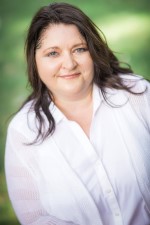
Jennia Herold D’Lima is a full-blown logophile. She joined her high school’s newspaper in ninth grade, winning statewide awards for her writing, and expanded her journalism skills by continuing to write and edit throughout her high school years and as a college freshman. While earning her BA in psychology (and minoring in cultural anthropology with a focus on precolonial Mesoamerica) and her MA in applied developmental psychology, her writing and editing naturally skewed toward all things academic. Writing for and publishing in peer-reviewed journals, editing papers for classmates, and writing parenting resource guides honed her research skills. Jennia joined multiple professor-led research groups and completed four internships throughout her academic career. After graduating with a master’s, she worked at a national nonprofit in Washington, DC, and as an assistant researcher at the University of Washington in Seattle. Jennia gradually transitioned to full-time editing. She enjoys traveling, volunteering, and taking creative photos of books and book-related items in those rare moments when she is not reading or editing.
Categories: Jennia D'Lima, Nonfiction, Writing

Writing Narrative Nonfiction

Tuesday, May Post a comment

With over three decades in publishing, there have been a number of opportunities to talk about writing narrative nonfiction via lecture series, documentaries, televised media appearances, and invitations to lecture, but few have afforded me the platform to write about it. Thank you, NAIWE, for the opportunity to do so here. The construct of this genre is inclusive of just about anything dubbed “nonfiction,” regardless of writing an investigative or historical narrative, biography, military, or current affairs. Gauging interest in this topic, it is clear we will have much to discuss in my August webinar; there is an incredible body of material to cover.

Let me preface the advice to follow with a little personal background: From the time I was very young, my schoolteacher mother rightly predicted I was going to write books; I loved to read and write from early childhood. No matter what else I would accomplish in academia and as an urban designer/historic preservationist and naval officer/intelligence advisor, I wrote books until there were so many projects, which would come to include print articles, documentaries, and film interest, the choice was pretty clear that writing and working in associated media was a full-time occupation. One particular highlight to mention here is a book offshoot that turned into a compelling six-part series above the fold in the Virginian-Pilot newspaper and was subsequently submitted by the same for a Pulitzer Prize. The same book subject was several years later optioned for adaptation to a full-length feature film; that project is still in the works. This short blurb about how I came to write full-time is important because writing from experience and long-time interest matters; it provides the underpinning for your best work and adds credibility to what you may/may not successfully publish. Over the years, I have written investigative, military/aviation, historical, environmental books as well as a few biographies, art, and corporate histories. Along the way, I made connections that have lasted many years and continue to provide learning experiences, opportunities across the media spectrum, and, importantly, made colleagues good friends, one of who remains the first and best literary agent I have ever had, hands down.

Whether you’re just getting started or are somewhat experienced writing nonfiction, inclusive of biographies, which clearly interests many of you, your plan of action must include mapping the beginning, middle, and end of the narrative, to include following Chicago Manual of Style throughout and the proper citation of endnotes and construction of your bibliography (full or select). Recently, one of my publishers asked me to do some book doctoring; the author of a lengthy work — most assuredly not a writer — presented the publisher with subject matter that is timely and worth the extra effort. The edit started with his bibliography, which is the underpinning of your work and the source of what becomes chapter endnotes. In the case of this particular work, the sources must be verified/updated and formatted to Chicago Manual of Style. The book qualified as a book doctoring effort when it came to me with incomplete sentence structure, poor format, and time-intensive reformatting and verification of the author’s sourcing and premises. In other words, the author had not done his homework. The arc of the book’s narrative from beginning to end is muddled. The strength of the book — and its ultimate success — is premised on the arc from start to finish holding the attention of your targeted audience. Be relatable, and never shy away from employing the tenets of good narrative or literary nonfiction, a true story written in the style of a fiction novel. Writing narrative nonfiction thus requires that your research and other queries on your subject are rock solid. If this entails a biographical work, the best advice is to get into every facet and phase of the subject’s life, work, and contribution that would make a publisher want to engage you as one of their authors. Become the subject matter expert.

Just like any other genre, nonfiction book submissions require a marketing plan. More often than not, my current editing gig included, writers will gloss over or gaffe this off. That is a mistake. Publishers want compelling narratives, and even if the subject has been covered in prior works, they want something unique to distinguish/promote your book. While publishers like new and unchartered subject matter, they approach it cautiously and demand the author show command of the subject matter by profession/experience, and often are far more receptive of such proposals from well-known public personalities, politicians, and celebrities. As part of the submission process, publishers across the spectrum ask the author to complete a marketing sheet. What other books have been published similar to yours? The top-tier publishers will ask for a list of perhaps 10 other books on or close to your proposed work. They want you to couch how your book would stand out against the pack. They want you to make the argument that you should be published. Put in the heavy lifting on this part of your submission to any publisher interested in learning more about your project. This will also later help you as you work with the publisher to promote and market your work.

Though it can be discussed further in my August webinar, publishers generally require only an introduction and a couple of chapters of your nonfiction book in the initial submission process. Publishers want to gauge your style of writing and command of the subject matter in this preview of the entire work. You are also required to submit a breakdown of sections/chapters — a synopsis of each — and a breakdown of the demographics of your target audience. All of this is important. Again, never brush it off.

Importantly, you must also secure permissions (if necessary) to use material gleaned from living contributors/interviewees and for use of illustrative material/artwork from lending institutions and libraries and persons party to your narrative. Publishers will require you to have secured those permissions per their contracts with you and if this is not done prior to meeting their first round of submission requirements, you are jeopardizing the publication of your book/article and, at the very least, delaying it. The author of the book is responsible for all of the aforementioned, and publishers will ask that you submit a copy of those permissions as needed. This is particularly important legwork when your book and/or you as the author and subject matter expert are moving between multimedia enterprises with your project.

Of the many lessons learned over the years, perhaps the most time consuming but important is the promotion of my work. Yes, publishers have marketing, sales, and public relations staff to put toward your book, but that staff is stretched thin across a broad spectrum of books being pushed out the door by the publishing house; they have limited windows of opportunity to work on your project. You are the best promoter of your book. With the advent of social media, webinars, and podcasts you have greater opportunities to make your project resonate with your audience. Look for in-person speaking engagements via community groups/clubs that meet regularly, book clubs, historical societies/associations, and a host of other venues that will afford you the opportunity to discuss your project. Consider also the power of AM talk radio from national to local markets. Publishers’ marketing and public relations can also be supplanted by the author — predicated on the scope of the book and its global/national interest — hiring a media/marketing expert to schedule mainstream and cable interviews and coordinate newspaper and magazine coverage and documentary film opportunities. After the publisher’s marketing and public relations departments completed their initial campaign for one of my books, I hired longtime publishing marketing executive Maryann Palumbo to execute a forty-five-day campaign; we did 189 events in that time frame, including multiple televised interviews (usually several on the same day), print media, and national radio. We hit everything in the international, national, and regional media stream. This incredibly aggressive and successful campaign remains as legendary as its architect. Maryann watched every televised interview, providing immediate feedback, and stayed on top of every radio or print interview. She became a friend, someone who offered her expertise beyond the campaign. She retired in 2016 and sadly passed away in 2022. As always, I come back to the importance of relationships we build along the way. Maryann and those like her make us better — and more successful — writers.


Amy Waters Yarsinske is the author of several best-selling, award-winning nonfiction books, published regionally, nationally, and internationally. Amy’s proposal technique was featured in literary agent/author Peter Rubie’s Telling the Story: How to Write and Sell Narrative Nonfiction; she also did a National Press Club panel with Rubie during the No One Left Behind press tour. She has been a regular contributor with international, national, and regional media, to include continued guest spots on national radio. An American in the Basement: The Betrayal of Captain Scott Speicher and the Cover-up of His Death won the Next Generation Indie Book Award for General Non-fiction in 2014, and No One Left Behind: The Lt. Comdr. Michael Scott Speicher Story earned her literary awards, an incredible press tour, and national/international recognition. With over 30 years in the publishing industry, Amy has published over 85 nonfiction books, most of them spotlighting current affairs, the military, history and the environment with a few biographies and corporate histories interspersed. Amy graduated from Randolph-Macon Woman’s College in Lynchburg, Virginia, where she earned her bachelor of arts in English and economics and the University of Virginia School of Architecture, where she earned her Master of Planning and was a DuPont Fellow and Lawn/Range resident.
Categories: Amy Waters Yarsinske, Nonfiction, Writing

Truth vs. Accuracy in Fiction

Monday, June Post a comment

As a writing coach at the Agile Writer Workshop, I meet a lot of people who want to write a memoir or an autobiography. They usually have a story to tell, and it’s usually pretty personal. I always encourage them to write a memoir rather than an autobiography.  Autobiographies are usually reserved for famous or infamous people. These new writers often have a harrowing story, or they’ve lived through a difficult time, and their friends tell them “you should write a book.”
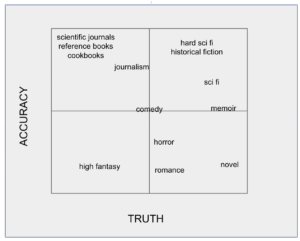
At the top of their list is to tell everything, exactly as it happened. What they don’t realize is that memoirs are never about accuracy, but about truth.

Memoirs have to be entertaining and they have to focus on just one element of the subject’s life. For example, one great memoir that came out of Agile Writers was about a woman who lived with alopecia (a debilitating loss of hair). As much as she wanted to tell every experience she had, just as it happened, some events had to be deleted or changed, and some individuals were combined into a single character. And some conversations had to be interpolated.

This is done to streamline the story and make it flow better. A memoir, it turns out, is not an accurate retelling of events. Instead, it is a telling of the truth of the events.


Accuracy

There are times when one must tell the events exactly as they happened. In the case of relating the news, the writer must focus on accuracy. If you’re a journalist, for example, the accurate relating of events is a requirement of the job. A journalist who is exposed for telling a half-truth or worse, making up facts, is likely to lose their job.

You also need accuracy in reference books. If you’re writing a scientific paper and make up facts or get your data wrong, you ruin your credibility. Cookbooks, travel guides, dictionaries, and encyclopedias all require accuracy.

In these cases, accuracy trumps everything.


Truth

But how does truth differ from accuracy? It turns out that novels, movies, and memoirs have a lot in common. We can look to them for examples of how truth and accuracy differ.

When telling a news story, what is important is getting the facts straight. But often the why of the story is less important. The backstory of the individuals, their hopes, dreams, and desires are secondary to getting to the facts.

But novels and memoirs are about people and relationships. The reader of a romance novel, for example, will not likely fact-check a scientific or historical fact. Or if they do, it’s not likely to affect their enjoyment of the story.

However, if the lead character of a novel is presented as beneficent and then kicks a dog—the writer has broken with the truth of the story. Either the hero of the story is good—or they’re not. (Of course, it might be part of the story that our hero isn’t as good as we think, but that’s not the point here.) This is truth. It breaks the truth of the story for our hero to be evil.

There are other truths. How does the world the novelist creates compare to the experience of the reader? If, as the writer, you present a world where everyone is happy and gets what they need and life is ideal—your story may not ring true.

So, in the novel or memoir, accuracy doesn’t matter nearly as much as truth.


When You Need Both

But the world is not evenly and cleanly divided between truth and accuracy.


Historical Fiction

If you’re writing a historical novel, you have an obligation to get your historical facts right. In this case, both accuracy and truth are important. Readers of historical fiction look for accuracy in the events of the story and will call out bad facts.

And still the truth of the story must come out. The characters and their relationships must convey the truth of the story and relate to the reader’s own worldview. And the inner consistency of the story must be intact or the truth of the universe you’ve created will shatter.

A good case study in truth and accuracy is Gone with the Wind. In its heyday, it was loved not only for the truth of the story, but its historical accuracy. The depiction of the antebellum South was presented as an accurate portrayal of life on the plantation. Today, we know that Gone with the Wind presented a view of Southern life that was biased and so the accuracy has suffered over time.

Still, the truth of the story remains. The story of a woman who was left to run a plantation and survived against all odds. Likewise, the final scene where her love interest tells her to go to hell is a strong truth.


Science Fiction

Likewise, hard science fiction must adhere to the known facts of current science. If you have a story about life on the moon and you ignore the fact that the moon has one-sixth the gravity of Earth, you will be excoriated by your readers and your critics. And still, the truth of the story must come to the fore, or the reader will put the book down before the last page.

Despite its psychedelic nature, 2001, A Space Odyssey is strongly rooted in scientific accuracy. The depiction of life in space still stands up more than 50 years later. And when we watch this film, we feel the strength of the truth of the story. The fight of a man against a machine is a truth that rings true for people in the 1960s, and even today.


Conclusions

If you’re writing a work of fiction, be it memoir or novel, you’re in the business of telling the truth, not necessarily being accurate. It’s acceptable, even expected that you will sacrifice accuracy to expose the truth of the story. Don’t be confined to the actual streets in a city, the exact timeline of your personal events, or the contents of every conversation you’ve had. Reach for the truth and your readers will be set free.


Greg Smith is a writing coach, editor, and publisher. He founded the Agile Writer Workshop in 2011 with the mission of finding a method to help beginning writers complete a first draft in 6 months. The Agile Writer Method is based on the writings of experts in mythology, screenwriting, psychology, and project management. His seminars on the Agile Writer Method have informed and delighted thousands of writers, scholars, and university students. Agile Writer authors have written over 50 first draft novels and 10 published novels. Greg is a developmental editor for novelists and memoirists. He also coaches authors through the self-publishing maze. Greg runs the popular Agile Readers Book Club where new writers can get a beta read from a dozen or more readers.

Categories: Greg Smith, Nonfiction, Writing

Recent Posts

  • Beyond Writing: How Expanding Your Services Can Strengthen Your Freelance Business
  • Am I a Writer or Not?
  • Be Prepared for That Crisis Moment When You Need Business Backup
  • Stick with Your System
  • In a Pricing Rut? Try These 3 Strategies

Categories

Meta

  • Log in
  • Entries feed
  • Comments feed
  • WordPress.org

Latest Posts

Beyond Writing: How Expanding Your Services Can Strengthen Your Freelance Business

July 22, 2026

Am I a Writer or Not?

July 16, 2026

Be Prepared for That Crisis Moment When You Need Business Backup

June 30, 2026

Stick with Your System

June 29, 2026

In a Pricing Rut? Try These 3 Strategies

June 25, 2026

Improving Your Vision

June 24, 2026

Contact Us

  • 804-476-4484
  • P.O. Box 412
    Montpelier, VA 23192-0412
Facebook Instagram Linkedin twitter

© NAIWE. All rights reserved. Designed by My House of Design.