
Member's Library I am what the librarians have made me . . . B. K. Sandwell
  • About
    • About NAIWE
    • Board of Experts
    • Books Published by NAIWE Experts
    • FAQs
    • Advertising
  • Member’s Area
    • Member’s Library
    • Member Website Development
    • Benefit Links and Passcodes
    • Manage Your Account
    • The Member’s Edge
    • NAIWE Media
    • On-Demand Training (Discount)
  • Training
    • Upcoming Webinars
    • On-Demand Training (Discount)
  • Find a Professional
  • News & Events
    • Blog
    • The Edge
    • The Member’s Edge
    • The Edge Writers Guidelines
    • Conference
    • Podcasts
    • Summer Challenge
    • Words Matter
      • Words Matter Week
      • How to Participate
      • Media
  • Post a Job
  • Contact
  • Member Sites

Location, Location, Location: Mysteries Have Their Place!

Friday, March Post a comment

After landing on the moon . . . that could have been a fun location for a murder.

The Egyptian Pyramids, Eiffel Tower, or White House? They would be great locations for a good murder. In fact, they have been.

Major cities, small towns, and many made-up villages have become the location for a murder mystery and, especially, several very successful mystery series.

There were plenty of murders in cities along Rt. 66. John Steinbeck named it the Mother Road. I think of it as the Murder Road.

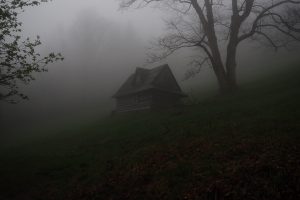
Location was once considered everything in business . . . before technology. Location is still essential in a good mystery. Location is place, and the place is as much a character in mysteries as the people.

Murder on the Orient Express — what a great location for a murder, moving and stopped. As was the apartment in Rear Window, and another apartment in the haunting film, Laura. In and around London there were many murders with Sherlock Holmes and Dr. Watson and a fascinating one on an English Country Estate in Godsford Park.

We lovers of mysteries know that murders and other crimes have occurred on all sorts of moving vehicles, in different rooms in small homes and large estates, and possibly even in our own backyards?  Well, hopefully not!

The lover of mystery books enjoys envisioning the place where a story takes them, and in movies and on television, the place often becomes central to the appeal and importance of the story. It helps the viewer to become caught up in it, perhaps even feel a part of it.  Some plots are dark and frightening and provide an extra sense of anticipation for lovers of thrillers like the type written by Stephen King, and his locations add to the suspense.

The art of a murder mystery and investigation includes a private detective or the police or, in a cozy mystery, an amateur sleuth. The dialogue needs to create suspense with some foreshadowing and fake clues that are followed and soon ignored. Finally, the arc of the murder mystery begins with the chase of the real villains, who are caught — dead or alive — of course.

But, what about a location, where murder and mayhem terrorize the residents. Doors are locked and there are whispers and secrets behind those closed doors. Questions remain.  Who killed their neighbor’s wife in the alley next to the post office? Who stabbed the old man as he walked across the bridge late at night? Who pushed the young man off his apartment balcony? Why did the murderer run his or her car over the victim on a country road? Were there witnesses to any of these murders? Ah, where are they possibly located?

As a mystery writer, I believe location plays a huge part in the plot and ultimately when and where the murder is solved.  Two escaped murderers hide in a location fitting of the plot designed to build up a sense of suspense and anticipation.

We as readers and viewers also enjoy explosive endings. There are gunfights and car chases up and down city streets. There are threats and demands until the final moments of capture. The movie Witness ended in an Amish barn. In the book The Name of the Rose, written by one of my favorite authors, Umberto Eco, the murders and the ending take place in an Abbey in the 1300s. In Hitchcock’s North by Northwest, the finale is on Mt. Rushmore. Another favorite of mine is Sue Grafton’s Alphabet Series taking place somewhere along the California coast. And, in historical fiction, the landscape fits the century and the plot.

Location, location, location. The book ends. The film is finished. Surely calm prevails, the dark sky is lighter, and all is right again. Or is it?

 

Marcia Rosen (aka M. Glenda Rosen) is an award-winning author of eleven books including her newest one, An Agatha, Raymond, Sherlock and Me Mystery: Murder at the Zoo plus The Senior Sleuths, Dying To Be Beautiful Mystery Series, and The Gourmet Gangster: Mysteries and Menus (menus by her son Jory Rosen). She is also author of The Woman’s Business Therapist and award-winning My Memoir Workbook. For 25 years, she was owner of a successful national marketing and public relations agency. Marcia has frequently been a speaker or program moderator at organization meetings and conferences, bookstores, libraries, and Zoom programs. Topics she has taught and presented over the past twenty years include Encouraging the Writer Within You, Marketing for Authors, Writing Mysteries…Not A Mystery, Writing Your Memoir, and recently Anatomy of Writing a Murder. Many articles on these topics have been published on mystery reader blogs and in newsletters and magazines and her newest articles relating include Location, Location, Location: Murders Have Their Places; Hearing Voices of Past Famous Detectives: Their Impact and Influences; and Writing Mysteries at a Zoo: With Caution. She is a member of Sisters in Crime National and New Mexico (Croak & Dagger), Southwest Writers, New Mexico Book Association, Women Writing the West, Public Safety Writer’s Association, Women’s National Book Association, and National Association of Independent Writers and Editors.
Categories: Marcia Rosen, Mysteries, Setting, Writing

Writing Mysteries and Murders at a Zoo (With Caution and Care for the Animals)

Wednesday, March Post a comment

New Mexico is a land of amazing sunrises and sunsets with a sky constantly changing colors and forms, mountains framing the background, and a desert that stretches across the mesa often giving the land a mystical feeling. Known as the land of enchantment, it still has its share of mysteries, ancient and new. As a mystery writer, I find it intriguing and exciting to involve this land as an important character in my new mystery. Place is often as important a character as the people in a novel.
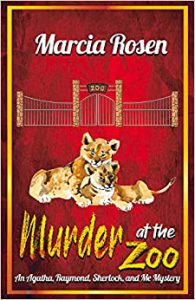
But at a zoo? Well, yes, with much caution and caring for the animals. Please don’t worry about the animals in my stories. They are well-cared-for and loved. In Murder At The Zoo, two lion cubs are born: Imani (meaning faith) and Sabrina. They are “adorable and not the least bit camera shy.” Mom and Dad, Kamali and Kasi, are very proud and protective parents. A baby zebra is born and there is a contest to name him. In fact, after the two main characters in the book, the veterinarian and detective, watch the foal being born, Miranda, the veterinarian, tells Bryan, the detective, with a grin, “We just had a baby.” The poor guy is a bit freaked at that comment. Miranda and Bryan alternate between flirting and fighting off romantic feelings. Murder keeps getting in their way.

The zoo veterinarian and the charming police detective become romantically involved as they work toward solving a series of murders. Their romance certainly has a hefty fair share of friction and interruptions, since Miranda’s father is a gangster — even though he claims to be retired. What could possibly go wrong? Plenty! There are also a number of other interesting, crazy, and unusual characters, as well as a fair share of humor to encourage you to smile a bit.

Writing any murder mystery book is akin to putting together a puzzle with a thousand pieces. When the mystery begins with a murder at a popular zoo, there is bound to be a need to also add a lot of positive animal experiences. And I make sure to do that.

The good characters are interesting and appealing, so the question becomes, How does the author present the bad guys and surprise the reader? A good mystery tries to lead the reader astray a bit by placing suspicion and blame on various suspects. It’s important to have the reader involved and interested in your story, so they attempt to solve the crimes along with you. Don’t make it too easy. Still, murders at a zoo?


Excerpt:

“Miranda, get to the zoo! Visitors are pointing at a human arm in the lions’ enclosure.”

“Hmmm. This is intriguing. A body in the lions’ den. What are the facts?”

“Agatha, Raymond, facts if you please,” Sherlock demanded.

 “All of you shut up!”

It was not the first time Miranda shouted to the voices in her head. Sometimes they seemed so real to her. She had read nearly every book of every famous mystery writer and had seen movies made from them many times. She was often absorbed and obsessed by the stories and the characters.

Miranda loved their ways of thinking, analyzing problems, finding solutions, and delving into the dark spaces hidden in humanity: Raymond Chandler’s tough Detective, Philip Marlowe, who always found a dame he could lust after and distrust and Agatha Christie’s Hercule Poirot, Miss Marple, and her Tommy and Tuppence. Their gossip and ways of finding clues and uncovering secrets swirled in her head, while the famous Sherlock Homes demanded facts and attention to the tiniest of details.

There were other geniuses of mysteries who stopped by to give Miranda their “two cents” at times, especially when Agatha, Raymond, and Sherlock were disagreeing with each other.

Miranda was sure they would have plenty to say about the murder at the zoo.

End of Excerpt


Why would I choose a zoo as a place for a murder mystery? Why would anyone? Well really, why murder anyone, anywhere for that matter? Even when the murders take place at a zoo, you eventually have to get the bad guys to talk or confess or have someone give them up. Along the way, you are also on the chase with your characters through conflict, danger, and mystery. In addition, this book provides an opportunity to give a positive voice to all the wonderful reasons for the existence of zoos.

In Agatha, Raymond, Sherlock & Me: Murder at the Zoo, these characters are often telling the veterinarian what to think or do. In Sherlock Holmes and the London Zoo Mystery (W. Lane; 1986), it is an entertaining story that recaptures the atmosphere of Arthur Conan Doyle’s original Sherlock Holmes’ tales and includes the familiar figures of Sherlock Holmes, Dr. Watson, and Inspector Lestrade. The book also features several real-life characters, including Abraham Bartlett (Superintendent of London Zoo, 1859–1897), the famous African elephant Jumbo, Matthew Scott (Jumbo’s keeper), and P.T. Barnum.

Ultimately, you want to be able to explain your characters’ motivations for their criminal behavior. Common sources are anger, hate, power, money, and, of course, revenge. Revealing truths, secrets, and lies with stories of betrayal and vengeance and surprise endings can leave your readers wanting more. Your first sentence, your first paragraph, should grab your reader . . . maybe even by the throat, like a good murder!

Many years ago, we had a lassie collie who thought she was a lap dog, and my son and she adored each other. It’s good for children to grow up with pets and learn to care for them. It’s also wonderful for adults to have the love of an animal who doesn’t judge them. Right?


Excerpt:

Bryan whispered to Isabella, walked out, and came back in with the most special gift of all. Handing Miranda the leash to an Australian Shepherd puppy he said, “Your new watch dog.” And giving her a big kiss, he whispered, “You know, I love you.”

The detective and the veterinarian were too busy to deal with the “I love you” issue for now but . . . eventually.

Of course, the voices had to have their say.

“Yes, you can trust him.” Agatha was such a romantic.

“Well, we agree!” chimed in Sherlock and Raymond.

“What are you going to name her?”

With a mischievous grin Miranda said, “Agatha.”

End of Excerpt


End Note

The main benefits of zoos include conservation, education, and research programs that are designed to preserve and protect wild populations of animals, as well as educate.

Some fun facts about zoos:

  • There are more than 2,800 zoos and aquariums all over the world.
  • Every year, more than a hundred million people visit zoos. This number exceeds the total attendance of all big-league basketball, football, and baseball games.
  • There are 350 zoos in the United States.
  • The first public zoo in the United States was opened in 1874 in New York and was called the Central Park Zoo.
  • April 8th is National Zoo Lover’s Day.


A clever, intriguing, and gripping new cozy mystery filled with exciting twists and turns, bizarre murders, and fascinating characters, including several dead authors who seem to speak to Veterinarian Miranda Scott. A fan since childhood of Agatha Christie, Raymond Chandler, and Sherlock Holmes, their voices seem to live in her head frequently telling her what to do . . . and not do. Especially when it comes to solving mysteries. Murders, deceit, revenge, a gangster father, and godfather also often get in the way of a fine romance!


Marcia Rosen (aka M. Glenda Rosen) is an award-winning author of eleven books including her newest one, An Agatha, Raymond, Sherlock and Me Mystery: Murder at the Zoo plus The Senior Sleuths, Dying To Be Beautiful Mystery Series, and The Gourmet Gangster: Mysteries and Menus (menus by her son Jory Rosen). She is also author of The Woman’s Business Therapist and award-winning My Memoir Workbook. For 25 years, she was owner of a successful national marketing and public relations agency. Marcia has frequently been a speaker or program moderator at organization meetings and conferences, bookstores, libraries, and Zoom programs. Topics she has taught and presented over the past twenty years include Encouraging the Writer Within You, Marketing for Authors, Writing Mysteries…Not A Mystery, Writing Your Memoir, and recently Anatomy of Writing a Murder. Many articles on these topics have been published on mystery reader blogs and in newsletters and magazines and her newest articles relating include Location, Location, Location: Murders Have Their Places; Hearing Voices of Past Famous Detectives: Their Impact and Influences; and Writing Mysteries at a Zoo: With Caution. She is a member of Sisters in Crime National and New Mexico (Croak & Dagger), Southwest Writers, New Mexico Book Association, Women Writing the West, Public Safety Writer’s Association, Women’s National book Association, and National Association of Independent Writers and Editors.

Categories: Marcia Rosen, Mysteries, Writing

Writing Mysteries . . . Is It A Mystery?

Monday, January Post a comment

Your first sentence, your first paragraph, should grab your reader . . . maybe even by the throat, like a good murder!

Writing a mystery book or series is akin to putting together a puzzle with a thousand pieces. Where should you begin? Do you start the puzzle with the corner and edge pieces, providing details on the main characters including the heroes and criminals? Or do you start in the middle, revealing upfront the murder and complexity of the story plot?

Whether you start with corners, or centerpieces, what matters is sticking with your structure and then pacing the plot. You need to keep it moving forward by creating suspense with clues and mysterious happenings.

In the television mystery series Columbo, the murder always took place at the beginning of the story. The seemingly flustered but persistent detective follows various suspects and clues to eventually catch the murderer. In other television mysteries, you follow the path of an ordinary citizen — writer, baker, doctor, librarian, or florist — who is captivated by certain events and incidentally gets involved in solving crimes. These amateurs just can’t seem to help themselves, even when following the clue leads them to danger.

From these types of mysteries known as cozies to film noir with gangsters and hard-boiled detectives to terrifying thrillers, mysteries have long appealed to the reader and viewer. As a writer, you can choose your own style, your own way of creating characters and stories of murders and mayhem, and your own way of presenting clues and suspects leading toward solving the crime. Yet, there are certain elements essential to a good mystery, which can take the reader on a fascinating ride through a criminal’s mind and the minds of those who reach into that mind to catch them.

Yes, everyone has a right to remain silent! Even you . . . right to the end. Of course, you eventually have to get the bad guys to talk or confess or have someone give them up. Along the way, you are also on the chase with your characters through conflict, danger, and mystery. However, your intent is to capture your readers!

You want your readers to become involved and interested in your story so they follow the clues you leave, and they attempt to solve the crimes along with you. Don’t make it too easy: there should be a number of possible suspects. Enhance the plot with character conflict and red herrings that might confuse and steer the reader away from the real murderer. The bad guy can also lead the reader astray by placing suspicion and blame on someone else.

A good mystery story includes an intriguing plot, interesting characters (often with unique characteristics), descriptive places and locations that set a mood, interesting and controversial dialogue, clues (real and false) leading to the bad guys (and gals), and a bit of humor. Be clear about your point of view. Is it from the perspective of the main character as in Sue Grafton novels or a third person as in Raymond Chandler mysteries?

Ultimately, you want to be able to explain your characters’ motivation for their criminal behavior. Common sources are anger, hate, power, money, and, of course, revenge. Revealing truths, secrets, and lies with stories of betrayal and vengeance with surprise endings leave your readers wanting more — especially in a series!

Although you might think it strange, I suggest you ask yourself what your motivation is for writing or wanting to write mysteries. In my mystery series, The Senior Sleuths, the actions of my senior characters, Dick and Dora, often reflect my truths about life and relationships.


Marcia Rosen (aka M. Glenda Rosen) is an award-winning author of eleven books including her newest one, An Agatha, Raymond, Sherlock and Me Mystery: Murder at the Zoo plus The Senior Sleuths, Dying To Be Beautiful Mystery Series, and The Gourmet Gangster: Mysteries and Menus (menus by her son Jory Rosen). She is also author of The Woman’s Business Therapist and award-winning My Memoir Workbook. For 25 years, she was owner of a successful national marketing and public relations agency. Marcia has frequently been a speaker or program moderator at organization meetings and conferences, bookstores, libraries, and Zoom programs. Topics she has taught and presented over the past twenty years include Encouraging the Writer Within You, Marketing for Authors, Writing Mysteries…Not A Mystery, Writing Your Memoir, and recently Anatomy of Writing a Murder. Many articles on these topics have been published on mystery reader blogs and in newsletters and magazines and her newest articles relating include Location, Location, Location: Murders Have Their Places; Hearing Voices of Past Famous Detectives: Their Impact and Influences; and Writing Mysteries at a Zoo: With Caution. She is a member of Sisters in Crime National and New Mexico (Croak & Dagger), Southwest Writers, New Mexico Book Association, Women Writing the West, Public Safety Writer’s Association, Women’s National book Association, and National Association of Independent Writers and Editors.

Categories: Marcia Rosen, Mysteries, Writing

Recent Posts

  • Beyond Writing: How Expanding Your Services Can Strengthen Your Freelance Business
  • Am I a Writer or Not?
  • Be Prepared for That Crisis Moment When You Need Business Backup
  • Stick with Your System
  • In a Pricing Rut? Try These 3 Strategies

Categories

Meta

  • Log in
  • Entries feed
  • Comments feed
  • WordPress.org

Latest Posts

Beyond Writing: How Expanding Your Services Can Strengthen Your Freelance Business

July 22, 2026

Am I a Writer or Not?

July 16, 2026

Be Prepared for That Crisis Moment When You Need Business Backup

June 30, 2026

Stick with Your System

June 29, 2026

In a Pricing Rut? Try These 3 Strategies

June 25, 2026

Improving Your Vision

June 24, 2026

Contact Us

  • 804-476-4484
  • P.O. Box 412
    Montpelier, VA 23192-0412
Facebook Instagram Linkedin twitter

© NAIWE. All rights reserved. Designed by My House of Design.