

Member's Library I am what the librarians have made me . . . B. K. Sandwell
  • About
    • About NAIWE
    • Board of Experts
    • Books Published by NAIWE Experts
    • FAQs
    • Advertising
  • Member’s Area
    • Member’s Library
    • Member Website Development
    • Benefit Links and Passcodes
    • Manage Your Account
    • The Member’s Edge
    • NAIWE Media
    • On-Demand Training (Discount)
  • Training
    • Upcoming Webinars
    • On-Demand Training (Discount)
  • Find a Professional
  • News & Events
    • Blog
    • The Edge
    • The Member’s Edge
    • The Edge Writers Guidelines
    • Conference
    • Podcasts
    • Summer Challenge
    • Words Matter
      • Words Matter Week
      • How to Participate
      • Media
  • Post a Job
  • Contact
  • Member Sites

Remember Your Editor When You Write

Saturday, June Post a comment

A funny thing happened on the way to editing a large manuscript for a friend and book publisher . . . A case of first impressions — not good ones — ended the editing effort before the end of the first chapter . . . section . . . it was hard to tell. The submission had come from someone who was not a writer but the publisher was anxious to acquire the subject matter for publication. This meant, for me, a book doctoring job more than an edit, but it was proposed as a straight edit, sight unseen, and thus the rate to do the edit was less than half the lowest going rate, largely as a favor to the publisher, who happens to be otherwise quite visionary and aggressive in what he chooses to publish. But the manuscript was in bad shape on arrival and impossible to follow. Even after being informed of the problems, the publisher wanted me to take a shot at a fix. When it takes months to plow through one “chapter” of the book of undefined scope, it is not an editing gig. This book forced me to wear two hats: developmental and copy editor — in basic terms — a book doctor with a patient on life support.

So how did it go with the author? After offering detailed feedback and many recommendations — the fixes — via the publisher, not great. While most authors are typically overwhelmed by criticism and more or less grateful for the inputs, this was not the case and the author responded defensively; it was anger. Trying to cure a manuscript as bad as this one was is a daily headache. To get this reaction from the author, who clearly believed that nothing was wrong with the work submitted, was stressful. In my experience, this writer reaction to critique is rare. The publisher was also dismayed at the reaction.

To attest to how bad this was from the start, after months of trying to whip the manuscript into shape, it was only fair to inform the publisher that while developmental editing and rewriting entire sections would continue, there was no way the publisher’s money could be accepted for the effort. To that point, the rate agreed to with the publisher, again, was well below the going rate for book doctoring. This was a $15,000 to $25,000 job — easy. The publisher knew this after seeing pages of comments from me regarding the manuscript. Reports to the publisher on a regular basis are important because the publisher is your partner in the effort to get a writer on track.

So, what stood out and what can you take away from it: Two things stood out immediately:

  • the overall submission lacked proper construction. There was no proper introduction and no narrative arc — a proper beginning, middle, and end — to the work. This submission struck me as a body of research that required division into at least FIVE+ books. To organize the book for writer feedback, an order of the book was crafted by me to make the point the material carved out to a single book should flow and a template would achieve this.
  • An edit of the entire body of research — in excess of 600,000 words — yes, you read that correctly, was not possible. Rewriting heavily in the first chapter/section to demonstrate proper use of subject reference, sentence structure, and narrative flow ate up the limited budget for the edit gig.


Other problems drew quick attention and criticism: When you make a statement on your book or devise a premise to some of the research material, you must cite at least two and preferably three sources to corroborate the assumption/finding. No spurious or conspiracy theory is needed/required. Just document thoroughly and be accurate in your endnotes and bibliography (which, in this edit job, required an entire verification of EVERY source and proper formatting) as to where you gleaned the information. From the introduction to the blurb for the book cover, the author must make it clear why the author’s narrative — your “take” — on these subjects should be published and thus read. What makes it stand out. If you don’t know, the publisher and editor can’t do it for you. Convince us. Make your argument. The author of this aforementioned work had not done the heavy lifting. Citing others’ works one after the other without much original thought on the subject matter isn’t what publishers of full-length manuscripts need to see; they need more than aggregation. Think like and of your editor when you write; it can save your manuscript from costly delays in the pre-publication phase and make you a better writer.
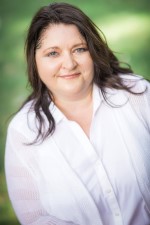
 

Amy Waters Yarsinske is the author of several best-selling, award-winning nonfiction books, published regionally, nationally, and internationally. Amy’s proposal technique was featured in literary agent/author Peter Rubie’s Telling the Story: How to Write and Sell Narrative Nonfiction; she also did a National Press Club panel with Rubie during the No One Left Behind press tour. She has been a regular contributor with international, national, and regional media, to include continued guest spots on national radio. An American in the Basement: The Betrayal of Captain Scott Speicher and the Cover-up of His Death won the Next Generation Indie Book Award for General Non-fiction in 2014, and No One Left Behind: The Lt. Comdr. Michael Scott Speicher Story earned her literary awards, an incredible press tour, and national/international recognition. With over 30 years in the publishing industry, Amy has published over 85 nonfiction books, most of them spotlighting current affairs, the military, history and the environment with a few biographies and corporate histories interspersed. Amy graduated from Randolph-Macon Woman’s College in Lynchburg, Virginia, where she earned her bachelor of arts in English and economics and the University of Virginia School of Architecture, where she earned her Master of Planning and was a DuPont Fellow and Lawn/Range resident.

Categories: Amy Waters Yarsinske, Editorial Services, Writing

Writing Narrative Nonfiction

Tuesday, May Post a comment

With over three decades in publishing, there have been a number of opportunities to talk about writing narrative nonfiction via lecture series, documentaries, televised media appearances, and invitations to lecture, but few have afforded me the platform to write about it. Thank you, NAIWE, for the opportunity to do so here. The construct of this genre is inclusive of just about anything dubbed “nonfiction,” regardless of writing an investigative or historical narrative, biography, military, or current affairs. Gauging interest in this topic, it is clear we will have much to discuss in my August webinar; there is an incredible body of material to cover.

Let me preface the advice to follow with a little personal background: From the time I was very young, my schoolteacher mother rightly predicted I was going to write books; I loved to read and write from early childhood. No matter what else I would accomplish in academia and as an urban designer/historic preservationist and naval officer/intelligence advisor, I wrote books until there were so many projects, which would come to include print articles, documentaries, and film interest, the choice was pretty clear that writing and working in associated media was a full-time occupation. One particular highlight to mention here is a book offshoot that turned into a compelling six-part series above the fold in the Virginian-Pilot newspaper and was subsequently submitted by the same for a Pulitzer Prize. The same book subject was several years later optioned for adaptation to a full-length feature film; that project is still in the works. This short blurb about how I came to write full-time is important because writing from experience and long-time interest matters; it provides the underpinning for your best work and adds credibility to what you may/may not successfully publish. Over the years, I have written investigative, military/aviation, historical, environmental books as well as a few biographies, art, and corporate histories. Along the way, I made connections that have lasted many years and continue to provide learning experiences, opportunities across the media spectrum, and, importantly, made colleagues good friends, one of who remains the first and best literary agent I have ever had, hands down.

Whether you’re just getting started or are somewhat experienced writing nonfiction, inclusive of biographies, which clearly interests many of you, your plan of action must include mapping the beginning, middle, and end of the narrative, to include following Chicago Manual of Style throughout and the proper citation of endnotes and construction of your bibliography (full or select). Recently, one of my publishers asked me to do some book doctoring; the author of a lengthy work — most assuredly not a writer — presented the publisher with subject matter that is timely and worth the extra effort. The edit started with his bibliography, which is the underpinning of your work and the source of what becomes chapter endnotes. In the case of this particular work, the sources must be verified/updated and formatted to Chicago Manual of Style. The book qualified as a book doctoring effort when it came to me with incomplete sentence structure, poor format, and time-intensive reformatting and verification of the author’s sourcing and premises. In other words, the author had not done his homework. The arc of the book’s narrative from beginning to end is muddled. The strength of the book — and its ultimate success — is premised on the arc from start to finish holding the attention of your targeted audience. Be relatable, and never shy away from employing the tenets of good narrative or literary nonfiction, a true story written in the style of a fiction novel. Writing narrative nonfiction thus requires that your research and other queries on your subject are rock solid. If this entails a biographical work, the best advice is to get into every facet and phase of the subject’s life, work, and contribution that would make a publisher want to engage you as one of their authors. Become the subject matter expert.

Just like any other genre, nonfiction book submissions require a marketing plan. More often than not, my current editing gig included, writers will gloss over or gaffe this off. That is a mistake. Publishers want compelling narratives, and even if the subject has been covered in prior works, they want something unique to distinguish/promote your book. While publishers like new and unchartered subject matter, they approach it cautiously and demand the author show command of the subject matter by profession/experience, and often are far more receptive of such proposals from well-known public personalities, politicians, and celebrities. As part of the submission process, publishers across the spectrum ask the author to complete a marketing sheet. What other books have been published similar to yours? The top-tier publishers will ask for a list of perhaps 10 other books on or close to your proposed work. They want you to couch how your book would stand out against the pack. They want you to make the argument that you should be published. Put in the heavy lifting on this part of your submission to any publisher interested in learning more about your project. This will also later help you as you work with the publisher to promote and market your work.

Though it can be discussed further in my August webinar, publishers generally require only an introduction and a couple of chapters of your nonfiction book in the initial submission process. Publishers want to gauge your style of writing and command of the subject matter in this preview of the entire work. You are also required to submit a breakdown of sections/chapters — a synopsis of each — and a breakdown of the demographics of your target audience. All of this is important. Again, never brush it off.

Importantly, you must also secure permissions (if necessary) to use material gleaned from living contributors/interviewees and for use of illustrative material/artwork from lending institutions and libraries and persons party to your narrative. Publishers will require you to have secured those permissions per their contracts with you and if this is not done prior to meeting their first round of submission requirements, you are jeopardizing the publication of your book/article and, at the very least, delaying it. The author of the book is responsible for all of the aforementioned, and publishers will ask that you submit a copy of those permissions as needed. This is particularly important legwork when your book and/or you as the author and subject matter expert are moving between multimedia enterprises with your project.

Of the many lessons learned over the years, perhaps the most time consuming but important is the promotion of my work. Yes, publishers have marketing, sales, and public relations staff to put toward your book, but that staff is stretched thin across a broad spectrum of books being pushed out the door by the publishing house; they have limited windows of opportunity to work on your project. You are the best promoter of your book. With the advent of social media, webinars, and podcasts you have greater opportunities to make your project resonate with your audience. Look for in-person speaking engagements via community groups/clubs that meet regularly, book clubs, historical societies/associations, and a host of other venues that will afford you the opportunity to discuss your project. Consider also the power of AM talk radio from national to local markets. Publishers’ marketing and public relations can also be supplanted by the author — predicated on the scope of the book and its global/national interest — hiring a media/marketing expert to schedule mainstream and cable interviews and coordinate newspaper and magazine coverage and documentary film opportunities. After the publisher’s marketing and public relations departments completed their initial campaign for one of my books, I hired longtime publishing marketing executive Maryann Palumbo to execute a forty-five-day campaign; we did 189 events in that time frame, including multiple televised interviews (usually several on the same day), print media, and national radio. We hit everything in the international, national, and regional media stream. This incredibly aggressive and successful campaign remains as legendary as its architect. Maryann watched every televised interview, providing immediate feedback, and stayed on top of every radio or print interview. She became a friend, someone who offered her expertise beyond the campaign. She retired in 2016 and sadly passed away in 2022. As always, I come back to the importance of relationships we build along the way. Maryann and those like her make us better — and more successful — writers.


Amy Waters Yarsinske is the author of several best-selling, award-winning nonfiction books, published regionally, nationally, and internationally. Amy’s proposal technique was featured in literary agent/author Peter Rubie’s Telling the Story: How to Write and Sell Narrative Nonfiction; she also did a National Press Club panel with Rubie during the No One Left Behind press tour. She has been a regular contributor with international, national, and regional media, to include continued guest spots on national radio. An American in the Basement: The Betrayal of Captain Scott Speicher and the Cover-up of His Death won the Next Generation Indie Book Award for General Non-fiction in 2014, and No One Left Behind: The Lt. Comdr. Michael Scott Speicher Story earned her literary awards, an incredible press tour, and national/international recognition. With over 30 years in the publishing industry, Amy has published over 85 nonfiction books, most of them spotlighting current affairs, the military, history and the environment with a few biographies and corporate histories interspersed. Amy graduated from Randolph-Macon Woman’s College in Lynchburg, Virginia, where she earned her bachelor of arts in English and economics and the University of Virginia School of Architecture, where she earned her Master of Planning and was a DuPont Fellow and Lawn/Range resident.

Categories: Amy Waters Yarsinske, Nonfiction, Writing

Recent Posts

  • Beyond Writing: How Expanding Your Services Can Strengthen Your Freelance Business
  • Am I a Writer or Not?
  • Be Prepared for That Crisis Moment When You Need Business Backup
  • Stick with Your System
  • In a Pricing Rut? Try These 3 Strategies

Categories

Meta

  • Log in
  • Entries feed
  • Comments feed
  • WordPress.org

Latest Posts

Beyond Writing: How Expanding Your Services Can Strengthen Your Freelance Business

July 22, 2026

Am I a Writer or Not?

July 16, 2026

Be Prepared for That Crisis Moment When You Need Business Backup

June 30, 2026

Stick with Your System

June 29, 2026

In a Pricing Rut? Try These 3 Strategies

June 25, 2026

Improving Your Vision

June 24, 2026

Contact Us

  • 804-476-4484
  • P.O. Box 412
    Montpelier, VA 23192-0412
Facebook Instagram Linkedin twitter

© NAIWE. All rights reserved. Designed by My House of Design.