
You glance across a crowded room and lock eyes. You are inspired, beguiled. Suddenly, “love-at-first-sight” makes sense and you feel the spark of a love affair blossoming with . . . the BOOK of your dreams?…
Ok, that might be taking the metaphor a bit too far, but work with me on this. The ultimate goal of your book’s cover is to grab your readers’ attention and tell them in an instant, “Take me HOME, I’m just what you need! Pay no attention to all those other books, I’m the one!”
Think of it like your favorite little black dress that shows off your curves, and accentuates your . . . assets.
Let’s face it, there are really only two reasons to write a book:
- To say you did, and
- To sell it.
Unless you only wrote your book so your grandmother could read it, and your target audience is your crazy cousin Emma, Auntie Eileen, and Uncle George, the cover does matter. Let me say that again, in case you missed it in all the humor: If you want to sell your book, your cover DOES matter, a LOT.
So, let’s assume you wrote your book to actually sell a few copies. The key then is that you must:
Treat your writing as a business,
your book as a product
and the cover as its packaging.
The cover is your most important marketing tool, and as such, must be properly packaged to be visually appealing to your target market.
A successfully designed book cover, like that little black dress, will give hints about its content, convey the tone of your book, and entice readers into actually picking up your product to read your meticulously written and diligently edited words. Metaphorically, you’ve just been asked out for a first date. Only then can your inner beauty be discovered.
Let’s have a look at some examples and see what they tell you about what’s under the covers . . . (Ok, I’ll stop.)
Ponder on this cover package for a moment.
What does the color story tell you about what’s inside? It’s fresh, clean, green grass, blue sky. How does it make you feel? Cheerful, hopeful?
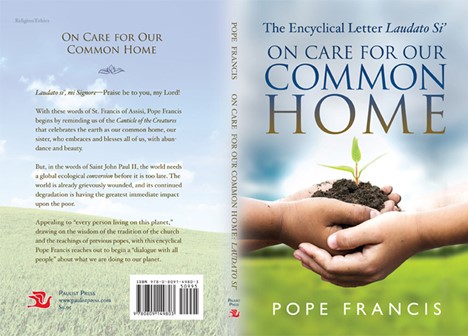
What’s under the cover, you ask? A letter from Pope Francis about caring for our common home, Earth.
The cover I created for the Pope’s Encyclical Letter is designed to make you think about our environment, ecology, and children’s future. The fresh greens, calming blues, and flesh tones are used intentionally to evoke a feeling of newness and concepts of youth, growth, and springtime rebirth.
What about these next two? How do they make you feel?


The color red in both of these images tells us they might be about death, but the fonts also tell us a story too. Notice that the bold modern font on The End Of Snow tells us that the story is based in modern day. If you zoom in close, you’ll also notice the texture of the font feels like a blizzard.
With Rebel Nation, we can surmise from the font that it has something to do with history. The rebel flag also gives a historical clue, but why is there a modern day rifle site? Hmmm, intriguing.
In the case of these next two, the softer font tells us this is a more feminine story. But what else can we discover about these two? Do they belong together? What clues tell you this?


With a sequel, it’s important to have consistency in the overall look and feel from one book to the next so your readers (or searchers) will know these stories belong together. This is known as “branding.” Typically, the color story will likely match and text treatment is usually similar.


Notice the repeating elements. The spherical object at the top of the design space, the light source just below, the city-scape in the foreground, and the similar text treatment. All these elements let us know that these are part of a sequel.
Another important thing to note is that there should be a strong contrast between the text and the image behind so that your words are legible.

 And, you should always keep in mind that the cover will be displayed on digital browsers at a thumbnail size, so it is important the elements are minimal. Including every detail from your story only serves to make your cover busy and confusing and gives away too much, too soon. Remember our little black dress and keep it simple and classic.
One final little tid bit of advice I always give new authors is, if you are beginning to write a book, start saving from day one so that when it’s complete, you’ll have a tidy little nest egg to invest in what it takes to make your product look professional.
Because it matters. A lot.
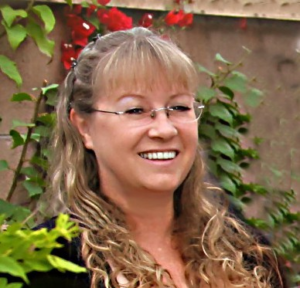 Tamian Wood, winner of numerous print and cover design awards, uses art, photography, typography, and digital collage techniques to create book covers that sell. She works with several publishers and a growing number of indie authors. Tamian’s most famous client to date is Pope Francis, whose Encyclical Letter won first place for cover design. With over 25 years in the design trenches, she is also a partner member in good standing with the Alliance of Independent Authors (ALLi) and a co-judge for a monthly cover design contest at Discovering Diamonds Historical Fiction Review site. Tamian has a weekly featured post (Critique Corner) at the Writers of Non-Fiction Facebook group. And she is the director of the LinkedIn group, Authors’ Resource. Tamian holds degrees in computer science and graphic design technology and is a proud member of Phi Theta Kappa National Honour Society.
 A funny thing happened on the way to editing a large manuscript for a friend and book publisher . . . A case of first impressions — not good ones — ended the editing effort before the end of the first chapter . . . section . . . it was hard to tell. The submission had come from someone who was not a writer but the publisher was anxious to acquire the subject matter for publication. This meant, for me, a book doctoring job more than an edit, but it was proposed as a straight edit, sight unseen, and thus the rate to do the edit was less than half the lowest going rate, largely as a favor to the publisher, who happens to be otherwise quite visionary and aggressive in what he chooses to publish. But the manuscript was in bad shape on arrival and impossible to follow. Even after being informed of the problems, the publisher wanted me to take a shot at a fix. When it takes months to plow through one “chapter” of the book of undefined scope, it is not an editing gig. This book forced me to wear two hats: developmental and copy editor — in basic terms — a book doctor with a patient on life support.
 At a recent meeting of one of my local professional organizations, the value of such affiliations was clear.
 Have you ever gotten an email from someone claiming to be a Nigerian prince and promising you millions of dollars? Did you assume he was telling the truth, or did you question his authenticity?
 Karin Beery is a published author and editor with experience in traditional and self-publishing, freelance editing, and editing for publishers. She is an active member of Advanced Writers and Speakers Association, Christian Authors Network, and the Christian Proofreaders and Editors Network, as well as a PEN Institute instructor. Her specialty is substantive fiction editing with an emphasis in romance and women’s fiction.
 In fields as competitive as freelance writing and editing, setting yourself apart as one of the best is crucial to maintaining a thriving business. Once clients discover your high-quality work, they are going to spread the news. Not only that, but they’ll be willing to pay what you’re worth, especially once they’ve had one or two encounters with your less-than-professional colleagues. If you incorporate these 12 disciplines into your writing or editing life, you’re sure to deliver an excellent product every single time.
 Rachel E. Bradley
 Each of us has our own unique story. Our memories can evoke a wide range of emotions. They can bring a smile and remind us of a time when we were particularly happy. Other memories can bring tears, especially when they are memories of a broken heart.
 Marcia Rosen (aka M. Glenda Rosen)
 You hear about the amazing memoir everyone’s reading, that book at the top of the New York Times best-seller list for months, but you don’t really want to read it. Best-selling memoirs can throw you off track with your own writing
 Suzanne Sherman is an author, book and magazine editor, and writing and publishing coach and consultant. She specializes in memoir and nonfiction and offers a weekly memoir writing class on Zoom. Her latest book is Girlhood in America: Personal Stories 1910-2010.
 Oftentimes, a year may go by without very many remarkable copyright cases. However, this year, several cases have come to the fore that authors should know about.
 Mary Jo (“MJ”) Courchesne
 Are you familiar with the marketing term “branding?” Branding is the art and science of creating and building an instantly recognizable persona that sums up the heart of the company’s features, products, services, and benefits.
 Jeanne Grunert
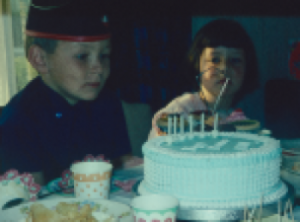 The author sits down to write their memoir, relying on journals written over a period of years, copious notes, vision boards, and an outline. They open a blank document, ready to begin, pulling from their memory as they write their opening scene. But suddenly they make a daunting realization, one that stops them mid-sentence. July 6 was a Tuesday, right? Or was it a Thursday? And was Grandma Jean the one who knocked the cake over or was it Aunt Susan? Writing comes to a standstill as the author grapples with these questions, unable to proceed due to a fear of sharing anything but the truth.
 Jennia Herold D’Lima is a full-blown logophile. She joined her high school’s newspaper in ninth grade, winning statewide awards for her writing, and expanded her journalism skills by continuing to write and edit throughout her high school years and as a college freshman. While earning her BA in psychology (and minoring in cultural anthropology with a focus on precolonial Mesoamerica) and her MA in applied developmental psychology, her writing and editing naturally skewed toward all things academic. Writing for and publishing in peer-reviewed journals, editing papers for classmates, and writing parenting resource guides honed her research skills. Jennia joined multiple professor-led research groups and completed four internships throughout her academic career. After graduating with a master’s, she worked at a national nonprofit in Washington, DC, and as an assistant researcher at the University of Washington in Seattle. Jennia gradually transitioned to full-time editing. She enjoys traveling, volunteering, and taking creative photos of books and book-related items in those rare moments when she is not reading or editing.