
With over three decades in publishing, there have been a number of opportunities to talk about writing narrative nonfiction via lecture series, documentaries, televised media appearances, and invitations to lecture, but few have afforded me the platform to write about it. Thank you, NAIWE, for the opportunity to do so here. The construct of this genre is inclusive of just about anything dubbed “nonfiction,” regardless of writing an investigative or historical narrative, biography, military, or current affairs. Gauging interest in this topic, it is clear we will have much to discuss in my August webinar; there is an incredible body of material to cover.
Let me preface the advice to follow with a little personal background: From the time I was very young, my schoolteacher mother rightly predicted I was going to write books; I loved to read and write from early childhood. No matter what else I would accomplish in academia and as an urban designer/historic preservationist and naval officer/intelligence advisor, I wrote books until there were so many projects, which would come to include print articles, documentaries, and film interest, the choice was pretty clear that writing and working in associated media was a full-time occupation. One particular highlight to mention here is a book offshoot that turned into a compelling six-part series above the fold in the Virginian-Pilot newspaper and was subsequently submitted by the same for a Pulitzer Prize. The same book subject was several years later optioned for adaptation to a full-length feature film; that project is still in the works. This short blurb about how I came to write full-time is important because writing from experience and long-time interest matters; it provides the underpinning for your best work and adds credibility to what you may/may not successfully publish. Over the years, I have written investigative, military/aviation, historical, environmental books as well as a few biographies, art, and corporate histories. Along the way, I made connections that have lasted many years and continue to provide learning experiences, opportunities across the media spectrum, and, importantly, made colleagues good friends, one of who remains the first and best literary agent I have ever had, hands down.
Whether you’re just getting started or are somewhat experienced writing nonfiction, inclusive of biographies, which clearly interests many of you, your plan of action must include mapping the beginning, middle, and end of the narrative, to include following Chicago Manual of Style throughout and the proper citation of endnotes and construction of your bibliography (full or select). Recently, one of my publishers asked me to do some book doctoring; the author of a lengthy work — most assuredly not a writer — presented the publisher with subject matter that is timely and worth the extra effort. The edit started with his bibliography, which is the underpinning of your work and the source of what becomes chapter endnotes. In the case of this particular work, the sources must be verified/updated and formatted to Chicago Manual of Style. The book qualified as a book doctoring effort when it came to me with incomplete sentence structure, poor format, and time-intensive reformatting and verification of the author’s sourcing and premises. In other words, the author had not done his homework. The arc of the book’s narrative from beginning to end is muddled. The strength of the book — and its ultimate success — is premised on the arc from start to finish holding the attention of your targeted audience. Be relatable, and never shy away from employing the tenets of good narrative or literary nonfiction, a true story written in the style of a fiction novel. Writing narrative nonfiction thus requires that your research and other queries on your subject are rock solid. If this entails a biographical work, the best advice is to get into every facet and phase of the subject’s life, work, and contribution that would make a publisher want to engage you as one of their authors. Become the subject matter expert.
Just like any other genre, nonfiction book submissions require a marketing plan. More often than not, my current editing gig included, writers will gloss over or gaffe this off. That is a mistake. Publishers want compelling narratives, and even if the subject has been covered in prior works, they want something unique to distinguish/promote your book. While publishers like new and unchartered subject matter, they approach it cautiously and demand the author show command of the subject matter by profession/experience, and often are far more receptive of such proposals from well-known public personalities, politicians, and celebrities. As part of the submission process, publishers across the spectrum ask the author to complete a marketing sheet. What other books have been published similar to yours? The top-tier publishers will ask for a list of perhaps 10 other books on or close to your proposed work. They want you to couch how your book would stand out against the pack. They want you to make the argument that you should be published. Put in the heavy lifting on this part of your submission to any publisher interested in learning more about your project. This will also later help you as you work with the publisher to promote and market your work.
Though it can be discussed further in my August webinar, publishers generally require only an introduction and a couple of chapters of your nonfiction book in the initial submission process. Publishers want to gauge your style of writing and command of the subject matter in this preview of the entire work. You are also required to submit a breakdown of sections/chapters — a synopsis of each — and a breakdown of the demographics of your target audience. All of this is important. Again, never brush it off.
Importantly, you must also secure permissions (if necessary) to use material gleaned from living contributors/interviewees and for use of illustrative material/artwork from lending institutions and libraries and persons party to your narrative. Publishers will require you to have secured those permissions per their contracts with you and if this is not done prior to meeting their first round of submission requirements, you are jeopardizing the publication of your book/article and, at the very least, delaying it. The author of the book is responsible for all of the aforementioned, and publishers will ask that you submit a copy of those permissions as needed. This is particularly important legwork when your book and/or you as the author and subject matter expert are moving between multimedia enterprises with your project.
Of the many lessons learned over the years, perhaps the most time consuming but important is the promotion of my work. Yes, publishers have marketing, sales, and public relations staff to put toward your book, but that staff is stretched thin across a broad spectrum of books being pushed out the door by the publishing house; they have limited windows of opportunity to work on your project. You are the best promoter of your book. With the advent of social media, webinars, and podcasts you have greater opportunities to make your project resonate with your audience. Look for in-person speaking engagements via community groups/clubs that meet regularly, book clubs, historical societies/associations, and a host of other venues that will afford you the opportunity to discuss your project. Consider also the power of AM talk radio from national to local markets. Publishers’ marketing and public relations can also be supplanted by the author — predicated on the scope of the book and its global/national interest — hiring a media/marketing expert to schedule mainstream and cable interviews and coordinate newspaper and magazine coverage and documentary film opportunities. After the publisher’s marketing and public relations departments completed their initial campaign for one of my books, I hired longtime publishing marketing executive Maryann Palumbo to execute a forty-five-day campaign; we did 189 events in that time frame, including multiple televised interviews (usually several on the same day), print media, and national radio. We hit everything in the international, national, and regional media stream. This incredibly aggressive and successful campaign remains as legendary as its architect. Maryann watched every televised interview, providing immediate feedback, and stayed on top of every radio or print interview. She became a friend, someone who offered her expertise beyond the campaign. She retired in 2016 and sadly passed away in 2022. As always, I come back to the importance of relationships we build along the way. Maryann and those like her make us better — and more successful — writers.
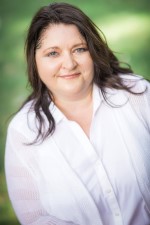 Amy Waters Yarsinske is the author of several best-selling, award-winning nonfiction books, published regionally, nationally, and internationally. Amy’s proposal technique was featured in literary agent/author Peter Rubie’s Telling the Story: How to Write and Sell Narrative Nonfiction; she also did a National Press Club panel with Rubie during the No One Left Behind press tour. She has been a regular contributor with international, national, and regional media, to include continued guest spots on national radio. An American in the Basement: The Betrayal of Captain Scott Speicher and the Cover-up of His Death won the Next Generation Indie Book Award for General Non-fiction in 2014, and No One Left Behind: The Lt. Comdr. Michael Scott Speicher Story earned her literary awards, an incredible press tour, and national/international recognition. With over 30 years in the publishing industry, Amy has published over 85 nonfiction books, most of them spotlighting current affairs, the military, history and the environment with a few biographies and corporate histories interspersed. Amy graduated from Randolph-Macon Woman’s College in Lynchburg, Virginia, where she earned her bachelor of arts in English and economics and the University of Virginia School of Architecture, where she earned her Master of Planning and was a DuPont Fellow and Lawn/Range resident.
 After landing on the moon . . . that could have been a fun location for a murder.
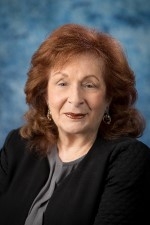 Marcia Rosen (aka M. Glenda Rosen) is an award-winning author of eleven books including her newest one, An Agatha, Raymond, Sherlock and Me Mystery: Murder at the Zoo plus The Senior Sleuths, Dying To Be Beautiful Mystery Series, and The Gourmet Gangster: Mysteries and Menus (menus by her son Jory Rosen). She is also author of The Woman’s Business Therapist and award-winning My Memoir Workbook. For 25 years, she was owner of a successful national marketing and public relations agency. Marcia has frequently been a speaker or program moderator at organization meetings and conferences, bookstores, libraries, and Zoom programs. Topics she has taught and presented over the past twenty years include Encouraging the Writer Within You, Marketing for Authors, Writing Mysteries…Not A Mystery, Writing Your Memoir, and recently Anatomy of Writing a Murder. Many articles on these topics have been published on mystery reader blogs and in newsletters and magazines and her newest articles relating include Location, Location, Location: Murders Have Their Places; Hearing Voices of Past Famous Detectives: Their Impact and Influences; and Writing Mysteries at a Zoo: With Caution. She is a member of Sisters in Crime National and New Mexico (Croak & Dagger), Southwest Writers, New Mexico Book Association, Women Writing the West, Public Safety Writer’s Association, Women’s National Book Association, and National Association of Independent Writers and Editors.
 Finding an attorney when you need to prepare or review a writing or publishing contract is not always easy, especially if you live and work outside most major cities. Often, it isn’t that there are no literary attorneys in a particular state, but that they practice publishing or literary law under other names.
 A publishing consultant as well as a licensed attorney in both California and New York, Denise Gibbon represents and educates authors about contracts, copyright, and other publishing issues.
 I read a book that says writers can — and even should — write just about anywhere and everywhere. We should write in cafes, restaurants, and coffee shops; on buses, boats, trains, and planes; and where beauty surrounds us in museums, art galleries, and places of worship.
 No author wants to be sued, but since self-publishing has become so common, writers who work-for-hire are particularly vulnerable.
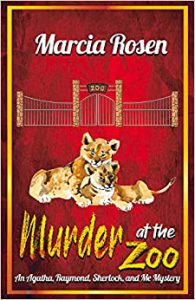 New Mexico is a land of amazing sunrises and sunsets with a sky constantly changing colors and forms, mountains framing the background, and a desert that stretches across the mesa often giving the land a mystical feeling. Known as the land of enchantment, it still has its share of mysteries, ancient and new. As a mystery writer, I find it intriguing and exciting to involve this land as an important character in my new mystery. Place is often as important a character as the people in a novel.
 Leslie Truex
 The audiobook market is one of the fastest-growing segments of the publishing industry. According to the Audio Publishers Association, it grew an estimated 24.5% from 2017 to 2018. This included self-published authors and small publishers who access numerous marketing actions and opportunities to create and an awareness and enhance sales. And think of the millions of people who drive to and from work each day many listen to audiobooks. They are just one audience since people can listen anywhere, anytime. Following are the major elements involved in producing and marketing an audiobook.