
 I was born into a family of artists. On the paternal side, each generation has produced painters, sculptors, photographers, musicians, dancers, and crafters. No writers until me, and none since.
But I didn’t start as a writer. Rather, by elementary school I was illustrating my life in pen and colored pencil, outperforming peers through high school art classes and developing a reputation as an artist. We all expected me to continue into art school and become a professional illustrator.
It took only one semester of college-level training to make it clear I didn’t have what it takes to be a commercial artist. Nor did I want to be one. Art, I realized, was for myself only. I could not, would not, produce it on demand or according to anyone else’s criteria, which left me standing on square one, wondering what to do with my life.
My only employable skills were typing and spelling. These had built up in the background while I was focusing on art, first from a voracious reading habit and then from decades of writing in diaries and journals, plus composing reports in school. In fact, I had already written a novel. It arose from my teenage fantasies that initially were serial illustrations similar to comic strips. Eventually I dropped the pictures and extended the prose, first in longhand and then on a typewriter. To my surprise, I enjoyed the process. It engaged both the creative and technical parts of my brain.
By the time I nixed art as a career, my only realistic options lay in secretarial work or document production. Accident of timing placed me at the launch of the computer age, where my excellent typing and spelling gave me an employment advantage as a word processor. Thus began a long, bumpy journey in which I sought the right niche in publishing or marketing. Meanwhile, I wrote another novel.
From college onward, I lost having my own bedroom, where I used to draw and paint in privacy. The new normal was cohabiting with partners and/or housemates in close quarters, which made it nigh impossible to create art unobserved. But I could write in notebooks, and later type on screens — even save the material to disk, what a bonus! — without anyone seeing what I was doing. So I spent more time writing and less time drawing, until I quit art altogether with a sad self-portrait on my thirty-fifth birthday.
Meanwhile, multiple writing-related threads wove together. Business documentation brought me into proofreading and typesetting. Personal projects centered on revising and developing my two novels into publishable works. A rising interest in publishing itself brought me into copyediting. Slowly but surely my career coalesced around producing words.
The day came when I was downsized out of a terrific production job that engaged all my skills and interests, leaving me standing on a new square one. Again by accident of timing, I lived where no comparable jobs were in commuting distance — but the internet had arrived, making remote work possible. As well, the publishing industry was being upheaved by corporate buyouts and dumping a lot of editorial staff, who promptly established themselves as freelancers and created online support communities and referral networks. The combination made it the right time for me to risk self-employment.
I could either reactivate my art side and become a designer and compositor, or stick with the language side and become an editor/proofreader/writer/manuscript preparer. An investment in hardware and software was required either way. Not only was it less expensive to kit up as an editor/writer, but also I had learned that while I might have been born an artist, I did not inherit the designer gene. Failure was guaranteed if I went that route.
So I hung out my shingle and took on all the word-related work I could get: short form, long form, fiction, nonfiction — including academic and technical — in both traditional and indie publishing. I wrote articles for magazines. I finally sold both of my novels, though not until after I’d completed a work-for-hire volume in a nonfiction self-help series. That led to blogging. Then I added book reviewing and contest judging. Occasionally I attended conferences and did some teaching or coaching.
By this route I achieved a role in publishing, but . . . what to call myself? My business name and tagline served — “DocuMania: Production Support for Editors, Writers, and Designers” (or “DocuMania Editorial Services,” as circumstances warranted) — but what about individual identity? It happened often enough in social situations that somebody asked what I did for a living, or business introductions required a simple label.
I settled for Editor, because that covered it all: reading, writing, evaluating, discussing, and producing written material, while dealing creatively with other writers’ works. Unlike my own artistic efforts, editing was — and remains — something I could do on demand, any time, any place, any subject, always engaging my technical side even if the creative side was groaning or shut down. It led me at last to my niche: copyeditor, line editor, and assessor of indie novels. These allowed me to occupy the worlds of imagination and expression while helping others with the mechanical elements they’re wobbly with, in a mutual-benefit balance that paid the bills.
Thanks to this positive mix, I was able to write a third novel, and self-publish it because my experience included mastering the basics of that, too.
My success would not have happened without the support of the online editorial community. While some editors began their careers in the pre-computer era so were already established when tools and opportunities expanded, my late start and uncertain direction would have impaired me at an earlier time, especially since I never lived anywhere near a publisher, university press, magazine, or newspaper — or adequate libraries. By the time I joined the crowd online, endless resources and mentors were available, without having to leave my rural homestead.
In hindsight, I realize I needed to go through the artist phase to discover the writer phase, which proved to suit me better. Yet I still consider myself an artist, because editing is a component of writing, and writers are the literary practitioners among the full arts family that includes painters, sculptors, photographers, musicians, dancers, and crafters. Each of these arts involves technique, tools, and technicians as well as passion and creativity. As an Editor, therefore, I am a Writer and an Artist.
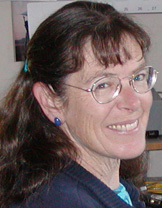 Carolyn Haley
Proprietor, DocuMania Editorial Services
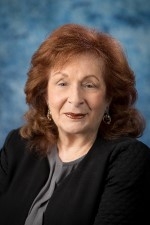 Marcia Rosen (aka M. Glenda Rosen) is an award-winning author of eleven books including her newest one, An Agatha, Raymond, Sherlock and Me Mystery: Murder at the Zoo plus The Senior Sleuths, Dying To Be Beautiful Mystery Series, and The Gourmet Gangster: Mysteries and Menus (menus by her son Jory Rosen). She is also author of The Woman’s Business Therapist and award-winning My Memoir Workbook. For 25 years, she was owner of a successful national marketing and public relations agency. Marcia has frequently been a speaker or program moderator at organization meetings and conferences, bookstores, libraries, and Zoom programs. Topics she has taught and presented over the past twenty years include Encouraging the Writer Within You, Marketing for Authors, Writing Mysteries…Not A Mystery, Writing Your Memoir, and recently Anatomy of Writing a Murder. Many articles on these topics have been published on mystery reader blogs and in newsletters and magazines and her newest articles relating include Location, Location, Location: Murders Have Their Places; Hearing Voices of Past Famous Detectives: Their Impact and Influences; and Writing Mysteries at a Zoo: With Caution. She is a member of Sisters in Crime National and New Mexico (Croak & Dagger), Southwest Writers, New Mexico Book Association, Women Writing the West, Public Safety Writer’s Association, Women’s National book Association, and National Association of Independent Writers and Editors.
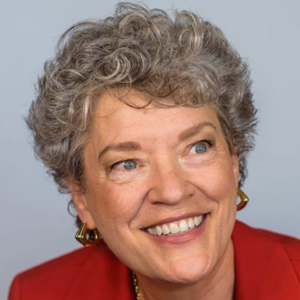 Meggin McIntosh, the PhD of Productivity, is an award-winning professor who now works with academics who prefer overjoyed to overwhelmed. She is a former university professor and administrator and currently a coach, author, and workshop leader. People who are overwhelmed and would prefer to be overjoyed instead, are the people I’m fortunate enough to connect with.