
As freelance writers and editors grow more successful, they often find themselves becoming scattered and busy with tasks that aren’t directly related to writing or editing. Christine Kane points out that clinging to off-target tasks steals time from what you’re really meant to be doing, and suggests that outsourcing or hiring help is a major step in becoming more productive and profitable.
 Back when I had a lawn, I used to mow it myself. I was a tried-and-true DIY gal. I prided myself on it.
Only problem: I freakin’ couldn’t stand mowing the lawn. I dreaded it all week. Even when I was happy once it was finished, I started dreading it again the very next day!
At that time, I was beginning to uplevel my life and business. I began seeing my time differently. I realized that the simple act of writing a song like “Right Outta Nowhere” could pay me—in the long run—WAY more than the money I saved by mowing my own lawn.
In other words, I learned how to value my work. I learned how to act on that value. Was it scary? Yes. But when I finally hired someone to mow my lawn every week, I learned all about success and the value of my time. In other words, I got over myself and my fear of lack.
These days I’ve taken it to a much bigger level, and I have a team working for me.
I now teach my clients new ways of valuing their time as they expand into more success in their own lives. They always end up realizing the ROI (return-on-investment) of getting help!
Here are 7 telltale signs that it might be time for you to get some support, too:
- You don’t have enough time to do the thing you’re best at.
What are you good at? What do you want to be good at? How much time do you actually spend doing that thing?
If you’re running around getting menial tasks done – and you have no time to pursue your passion, or engage in your high-pay-off, high-delight activities – then ask yourself why.
Even if you let go of one item (like cleaning your house) you’re telling the Universe the value of your time. (And you know what? The Universe always says Yes.)
- You resent people who don’t struggle.
This is a big one.
If you hold resentment for people who live life with joy and ease, this could be a sign that you are waiting for rescue. That just leads to more struggle.
Only YOU are in charge of whether or not you struggle. Rescue yourself and learn what true empowerment feels like.
- You’re worried about the economy.
Waiting for the economy to get better before you’ll hire someone? Why not become a part of the solution and use your money to improve the economy?
While everyone else is pulling back and firing people; you can experience what it’s like to be the change you wish to see in the world!
- No one can do it as good as you.
If you just shouted “Amen Sister!” then please step away from your computer. Go to the bathroom mirror. Look into your eyes and say the following aloud:
“I have a bit of a control issue.”
The belief that no one can do it better than you serves only to keep you in the role of the martyr. Unless you are, say, a brain surgeon, then there are many people who can (and will) do it as good as you. (And I doubt that brain surgeons run around cleaning the floor after surgery!)
- You’re playing not to lose.
Ask any coach or athlete about this.
When you play to not lose, all you’re doing is surviving, relying on yourself, and hoping no one notices you.
When you play to win, you take risks, you keep your mental attitude strong, you rely on the team, you look for the goal. Decide that you want to play to win.
- You’ve used this phrase at least once in the past month: “By the time I show someone how to do it, I could just do it myself.”
This is the mantra of someone who refuses to succeed. It’s the mantra of the struggle-addict.
Learning how to delegate is empowering. Not just for you, but for others as well. Besides, when you show them how to do it once, they can keep doing it so you don’t have to!
- You dread certain things so much that they don’t get done.
It’s okay to not enjoy aspects of your work or your life. This is the exact thing you can hire someone to do.
What items do you dread? No matter what they are, when you get them off your plate, you’ll experience more energy just knowing they’re getting done, and you don’t have to worry about them anymore!
Christine Kane is the Mentor to Women Who are Changing the World. She helps women uplevel their lives, their businesses, and their success. Her weekly LiveCreative eZine goes out to over 12,000 subscribers.
[Editor’s note: I loathe the bookkeeping and accounting parts of having a business, but kept doing it for a long time because I felt I couldn’t afford to outsource it. When I finally did, my productivity shot up, and I began finishing projects that had been lingering for months or even years, which raised my income more than enough to cover the cost of the outside help. Christine’s right– outsourcing is a step up in your career, and you probably need to start doing it.]
 I just got back from a much-needed vacation in the Caribbean. It was the first time in a long time that I barely touched my laptop while out of the office — but that was more a matter of fortunate timing than anything, avoiding the weeks in the month where I have regularly scheduled projects due. Beyond a quick edit to a web page and answering a few emails, the rest of my time was available for snorkeling, catching rays, eating fresh seafood, and reading books with my toes in the sand.
 As a writer and editor of short fiction, I often see new short-story writers trying to do too much in too little space. While longer fiction forms, such as novels, provide numerous opportunities for exploring subjects from multiple angles, the short story is best served by a narrower focus. That’s not to say that a short story writer can’t incorporate multiple storytelling elements, like plot, character, setting, dialogue, etc. Of course, they can! Rather, one should utilize them to spotlight one of the “WH-questions,” (i.e., who, what, when, where, why, and how), setting that interrogative at their story’s heart.
 Patrick Barb
 For many freelancers, LinkedIn is an afterthought — a static resume that rarely gets updated. But used strategically, it can be a powerful engine for visibility, credibility, and clients. I know because I’ve seen it transform freelance businesses, including my own. The trick is to stop treating LinkedIn like a job board and start treating it like a stage for your thought leadership.
 Laura Pennington Briggs
 Beta readers, those early readers who stand in for our future audience, can be a valuable tool to employ before finalizing a manuscript for submission or publication. Note that the version of the manuscript you proudly (and maybe anxiously) hand over to them should be the final version or close to it. After all, you don’t want their comments to focus on spelling errors, a glaring plot hole that you promised yourself you’d eventually fix, or anything else that could be taken care of during a normal round of editing or revisions. The point here is to receive early reader feedback, which may include comments on characters they did and didn’t like, areas that felt rushed, and sections that confused them. These comments can then be used to further strengthen your manuscript, and for some, it may even be a suitable replacement for pricier pre-publishing services.
 Jennia Herold D’Lima
 Are you finding it harder to attract clients to your portfolio or website?
 Jeanne Grunert
 I didn’t think there was anything new I could say about networking, and then I realized that a recent big life change offered opportunities to think about the value of networking and ways to make it happen.
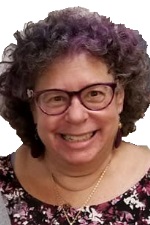 Ruth Thaler-Carter has been a full-time freelance writer, editor, proofreader, desktop publisher, and speaker for more than 40 years. She has been published locally, regionally, nationally, and internationally in, and does writing, editing, and proofreading for, publications, associations, nonprofits, websites, service firms, independent authors, and businesses. She sold her first freelance articles when she was still in high school. Often called the Queen of Networking, Ruth is active in about a dozen professional associations, serving as a newsletter editor, webmaster, publication author, speaker/presenter, blogger, program host or planner, and chapter leader. In 2006, Ruth launched the Communication Central Be a Better Freelancer conference — now cohosted with NAIWE — to help aspiring and established freelancers find greater success. Ruth is also owner and editor-in-chief of the An American Editor blog and owner of the Publishing with Flair publishing business. Her honors include member of her high school alumni hall of fame, in part for her publishing work and networking services; Writers and Books Big Pencil Award for teaching adults and contributions to the literary community; EFfie awards for writing, editing, and newsletters; an APEX award for feature writing; the Philip M. Stern Award of Washington (DC) Independent Writers for service to freelancers; and IABC/DC Communicator of the Year and Silver Quills for magazine writing and newsletters.
 When we begin writing our book, we envision it on the shelves of major bookstores sooner rather than later. We soon learn that’s not the reality of publishing. Once our eyes are opened, we often begin to think self-publishing (indie publishing) is the best option. Maybe. Maybe not.
 Susan K. Stewart
 There are many paths to publishing a book — self-publishing, hybrid publishing, and traditional publishing are the main types. But how do you know if you need a literary agent? Here is some information about the publishing landscape, plus five great reasons why you might want to seek a literary agent to help you on your publishing journey.
 At different phases of her publishing career,
  Apologies in advance for invoking a cliché — it’s time to spring into spring.
 Ruth Thaler-Carter