
On Sunday, I listened to some amazing podcasts about the music industry and how it had to morph and change in light of Napster and the digital sharing age.
I tend to gravitate toward the idea of tribes, of creating a unique community. That takes time, but what happens is that you gain fans gathered around a cause, folks who are zealous to promote your books for you. To me, it typifies this verse: “Let another praise you, and not your own mouth; A stranger, and not your own lips” (Proverbs 27:2).
Giving things away free, in light of creating a tribe, then, makes sense. You are offering a bit of yourself, your heart, for a potential tribe member.
Another strategy to consider is this: the kingdom of God. I love what Randy Alcorn says. He gives away his books as God leads. He keeps several with him when he travels, giving books away to clerks, hotel employees, cab drivers, and housekeepers. He sees it as his way of expanding God’s message to a hurting world.
Being mindful of all that, I’ve navigated “free” by praying, asking God to situationally guide me as I give away books. Sometimes He says not to do it. Sometimes He prompts me to give sacrificially. I am learning to let the pieces rest in His sovereign hands.
Aside: My novel Daisy Chain was offered free on the Kindle store last month. The result is hard to measure, though I have seen a spike in actual book sales. The negative is that folks who get the book for free aren’t thinking as they read it that it will have a Christian worldview, so I got some pretty awful and mean-spirited reviews out of the deal. But on the whole, I think the experiment did give me exposure to a wider audience as I’ve had correspondence with new fans.
In this marketing world, I tend to think in terms of one little decision at a time, and that those little decisions, though they take forever, add up to something bigger over time. The key is to continue to be faithful in little things, not to get discouraged, hold everything loosely, and rest in God’s sovereignty.
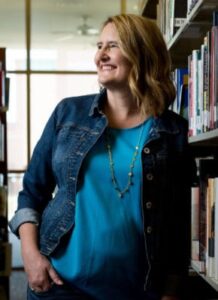 Mary E. DeMuth helps people to turn their trials into triumphs. She mentors new authors through the publishing process and has written two tutorials on book proposals (one for fiction and another for nonfiction). An expert in Pioneer Parenting, Mary enables Christian parents to navigate our changing culture when their families were not good faith examples to follow. Her parenting books include Authentic Parenting in a Postmodern Culture (Harvest House, 2007), Building the Christian Family You Never Had (WaterBrook, 2006), and Ordinary Mom, Extraordinary God (Harvest House, 2005). Mary also inspires people to face their trials through her real-to-life novels, including Watching the Tree Limbs (nominated for a Christy Award) and Wishing on Dandelions (NavPress, 2006). A pioneer parent herself, Mary and her husband, Patrick, reside in Texas with their three children. They recently returned from breaking new spiritual ground in Southern France, where they planted a church.
 Robert Moskowitz is an award-winning independent professional writer who has written and sold millions of words in just about every format over five decades. He instinctively sees the big pictures, breaks each one down into coherent slices, meaningfully prioritizes and sequences those slices, and then executes the tasks inherent in each slice in very productive ways. Put more simply, Robert knows how to succeed as an independent writer, covering all the bases from soliciting assignments to delivering polished work, from pricing jobs to budgeting and managing personal finances, from organizing a conducive office environment to establishing and following sensible guidelines regarding life, work, and productivity. Having done all this, and having paid attention to how he did it, Robert is now in a position to pass along what he knows to others.
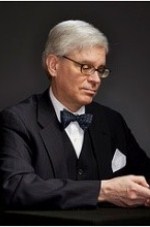 John Early McIntyre has been a professional editor for nearly 40 years, more than 32 of them at The Baltimore Sun, where he has headed the copy desk. John earned an undergraduate degree in English from Michigan State University, where he was elected to Phi Beta Kappa, and a master’s degree in English from Syracuse University, where he was a university fellow. John has taught copyediting at Loyola University Maryland since 1995. A charter member of the ACES: The Society for Editing, he served two terms as its president. John has presented workshops on writing and editing at conferences and publications in the United States and Canada.
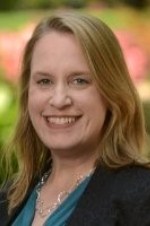 Mary Jo (“MJ”) Courchesne is the owner and principal consultant of Gryphon Publishing Consulting. A publishing veteran with more than 20 years of experience in trade, academic, and direct-response publishing, she has spent nearly two decades specializing in licensing, subsidiary rights, and permissions. MJ is a frequent and polished presenter on licensing and copyright. When it comes to intellectual property, she firmly believes that everyone from authors to publishers to corporations should know their rights. To that end, MJ instructed in the George Washington University’s Masters in Publishing program for 13 years, first for 11 years as adjunct professor for a course titled Editorial Content, Rights, and Permissions and subsequently as lecturer in a course on copyright. She currently serves on the Board of Experts for the National Association of Independent Writers and Editors and is a member of the Independent Book Publishers Association and the Society of Children’s Books Writers and Illustrators. MJ has also held memberships with other publishing organizations such as the American Society of Picture Professionals and Washington Publishers.
 Like most of you, I have a lot of thoughts about recent events that have centered on race and equality. I’ve read many stories about how this is changing the face of media and wondered how it would affect my work.
 Kristen Fischer is a copywriter and journalist living at the Jersey Shore. She worked as a reporter and copyeditor for Gannett before launching her full-time freelance business in 2005. Her work has been published in Parents, New Jersey Monthly, Prevention, Woman’s Day, SheKnows, and Healthline.