

Member's Library I am what the librarians have made me . . . B. K. Sandwell
  • About
    • About NAIWE
    • Board of Experts
    • Books Published by NAIWE Experts
    • FAQs
    • Advertising
  • Member’s Area
    • Member’s Library
    • Member Website Development
    • Benefit Links and Passcodes
    • Manage Your Account
    • The Member’s Edge
    • NAIWE Media
    • On-Demand Training (Discount)
  • Training
    • Upcoming Webinars
    • On-Demand Training (Discount)
  • Find a Professional
  • News & Events
    • Blog
    • The Edge
    • The Member’s Edge
    • The Edge Writers Guidelines
    • Conference
    • Podcasts
    • Summer Challenge
    • Words Matter
      • Words Matter Week
      • How to Participate
      • Media
  • Post a Job
  • Contact
  • Member Sites

More Info Needed? How to Get All You Need the Second Time Around

Monday, December Post a comment

Reporters typically connect with a source once, get what they need, and go on their way to write a story. Sometimes you have to revise a story based on your editor’s suggestions. What happens when you don’t just need to edit, but have to ask a source for additional information? Maybe you realize you didn’t have everything you needed once you start writing the story, or your editor comes back with more questions during the revision process. Either way, returning to a source for more information can be tricky.

Mostly because you want to make sure you get exactly what you need out of your second interaction.

I’ve been there — not too frequently, but it has happened to me. Sometimes the editor raises additional questions when reading your story, or they weren’t clear about what they wanted from the get-go when they assigned it. Writers can equally be to blame, because sometimes we realize what we need — and don’t have — only when we start putting an article together. And sometimes, you simply forgot to ask something or didn’t prod the source for enough details.

Whatever the case, here are some insights to help if you have to conduct a second interview with a source.

  1. Define what you need. Whether your editor is requesting more information, or you are the one inquiring, it’s essential to know exactly the information you’re looking for. This may involve doing more research or more work — or combing through any other interviews — to ensure you know specifically what you need. Writing out bullet points helps pinpoint the concepts that need to be addressed.
  2. Devise exact questions. As you know, the information you get can largely depend on the types of questions you ask. If you need a yes-or-no response, ask a yes-or-no question. But if you need more, be specific in your question. Ask for things like a real-life example of a situation. Explain that you understand the subject but need more information about what that means or does. It can help to “bullet-point out” some concepts and have your questions prepared. While you can always try to go back to a source for information, you want to interrupt them as little as possible. Even if they say they’re there to help, it’s your job to get in and out with what you need.
  3. Consider the interview. Will you be emailing additional questions, or do you need to set up a call or meet in person? Sometimes the conversation of a live interview could lead you off track, so you’ll want to be mindful of time to ensure that your priority questions get answers.
  4. Examine the answers. The source’s responses to those questions may prompt you to ask additional questions. Be prepared to do some digesting on the spot so you can then, in turn, ask any follow-up questions to best understand their answer.
  5. Ask for information. Not understanding something? That’s okay. It’s your job as the reporter to ensure that you do, and most people want everything to be accurate (especially what they say) and will take a moment to explain things. If you are unclear about something, the best thing to do is just ask. Keep in mind that if the source spouts off something like an acronym, you can probably figure it out within the context of the subject you’re talking about by doing a quick internet search. But if you’re really lost, ask.
  6. Double check. When you’ve received the answers to all of your questions, go back and check again to check off everything on the list. Remember, you don’t want to have to go back and forth with a source and your editor will appreciate as few rounds of revisions as necessary.

Writing can be a long process, especially when the editing process includes conducting additional interviews. With a little planning and finesse, you can turn around a draft that has everything it should.

 

Kristen Fischer is a copywriter and journalist living at the Jersey Shore. She worked as a reporter and copyeditor for Gannett before launching her full-time freelance business in 2005. Her work has been published in Parents, New Jersey Monthly, Prevention, Woman’s Day, SheKnows, and Healthline.

Categories: Interviews, Interviews, Kristen Fischer

Journo Sources

Wednesday, December Post a comment

One-third of Americans rely on news platforms they acknowledge are less reliable, mainly social media and peers. The other two-thirds of the public consider their primary news sources trustworthy, mainly print news and broadcast television, according to a new RAND Corporation report.
The report draws from a national survey of 2,543 Americans to examine how reliability, demographics, and political partisanship factor into news choices and how often people seek out differing viewpoints in the news. It is the latest in a series of RAND-funded reports into Truth Decay, the phenomenon defined as diminishing reliance on facts, data, and analysis in American public life.

“A lack of time and competing demands may explain why a third of Americans turn to news sources they deem less reliable, which suggests improving the quality of news content or teaching people how to ‘better consume’ news isn’t enough to address Truth Decay,” said Jennifer Kavanagh, senior political scientist and co-author of the report. “Media companies and other news providers may need to provide more easily accessible and digestible ways for individuals to consume high quality investigative journalism.”

About 44 percent of respondents reported that news is as reliable now as in the past, while 41 percent said it has become less reliable and 15 percent — mostly women, racial and ethnic minorities and those without college degrees — said it is more reliable.

Respondents who lean on print and broadcast platforms were more likely to deem them reliable. Those who rely on social media and peers for news, however, don’t see those platforms as reliable yet still choose to get their news from these sources.

“Our findings suggest that perceived reliability is not the only factor that drives what Americans choose as their go-to news sources,” said Michael Pollard, a sociologist and lead author of the report. “Despite acknowledging that there are more reliable sources for news, people with demands on their time may be limited to using less reliable platforms.”

Asked whether they ever seek out alternate viewpoints when catching up on the news, 54 percent said they “sometimes” do, 20 percent said, “always or almost always,” 17 percent said “infrequently,” and 9 percent said, “never or almost never.”

“Political partisanship was linked to whether or not individuals were willing to seek out different viewpoints,” Pollard said. “For example, those who self-identified as more liberal were more likely than conservatives to report that they ‘never or almost never’ seek differing views.”

The report also identified the four most common combinations of news media types consumed by Americans: print publications and broadcast television; online; radio; and social media and peers.

The survey was conducted via the RAND American Life Panel, a nationally representative, probability-based panel of more than 6,000 participants who are regularly interviewed over the internet. Age was an important predictor of how respondents obtain news. Perhaps unsurprisingly, those who are younger were more likely to get news from social media and peers, while older individuals were more likely to get their news from print publications and broadcast television.

Those who are college-educated were less likely to get their news from social media and peers, instead opting for radio and online sources. Those with less than a college education were more likely to report “never or almost never” seeking out news with alternate viewpoints.

Those who are married were three times more likely than singles to rate their peers as the most reliable source for news. Unmarried people were more likely than married people to report they “always or almost always” seek out sources with differing views.

Past reports in the Truth Decay series have looked at different aspects of the changed media and information landscape, including a linguistic analysis that found increasing subjectivity in “new media” sources compared to more traditional forms of news, as well as an examination of media literacy initiatives in the United States. Future reports will include research into Americans’ trust in public institutions and the prevalence of Truth Decay in Europe.


Kristen Fischer is a copywriter and journalist living at the Jersey Shore. She worked as a reporter and copyeditor for Gannett before launching her full-time freelance business in 2005. Her work has been published in Parents, New Jersey Monthly, Prevention, Woman’s Day, SheKnows, and Healthline.


Categories: Citations, Interviews, Kristen Fischer, Social Media

Getting an Author Interview

Friday, October Post a comment

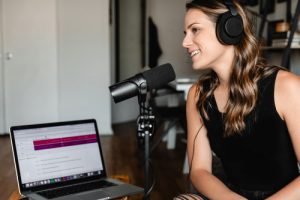
Are you an author that’s tried to get radio, TV, or podcast interviews and had little or no success? You may be doing what every other author is doing. Let me share from the view of the decision maker.

I’ve been on the radio for almost 30 years and had thousands of requests by authors for interviews. Never, ever, no, not once, did I receive any audio or video from an author sharing what type of interviewee they would be. It’s always the same thing, their book in an envelope with a contact one-sheet randomly stuck in between the pages. What I needed was audio of them sharing what value they would be bringing to my audience.

So many of the one sheets are “author focused” meaning they tell me how many books they’ve written, where they went to college, how many interviews they’ve done, I’ve even seen how many grandchildren they have! What?? I need to know that what you’re wanting to present about your book is compelling, relevant, and entertaining. Don’t just tell me it is, SHOW me it is!

When you’re asking to “borrow” someone’s audience, you need to tell them why their listeners or viewers are going to care. What is your news hook? What is the common thread you will have with the audience? You need something in the first 15 seconds that’s going to make someone say “you feel that way, wow, I feel that way too!” They need to see or hear that they are in your conversation, otherwise, they just won’t care.

If you’re an author and don’t have a video interview in your digital “toolbox,” you’re missing out on your single most important marketing asset. An interview with you speaking about your book introduces readers to the heart behind the book, creating an important connection that builds familiarity and trust. This video can be repurposed for social media, newsletters, your Amazon author page, email blasts, and websites. Incorporating the video into your press kit lets decision makers see what type of interviewee you would be when requesting radio, television, and podcast interviews, as well as speaking opportunities.

Anyway, I’m just a little passionate about helping authors build their brand and sell more books with radio and video interviews. So much more to say and so little time.

Would love to hear about your book!


Suzanne Lynn Cheesman has been in radio for over 25 years, in New Jersey, South Dakota, Minnesota, Missouri, and Florida as well as having hosted her own nationally syndicated show. She now runs a digital media company that helps authors sell more books and build their brand with video and radio interviews. She currently hosts the Triangle Spotlight radio show on WQBQ 1410-AM, a Central Florida radio station that has a coverage area of half a million people. On this show, you can hear authors from around the country and around the world share their heart behind the writing of their books.

Categories: Interviews, Marketing, Suzanne Cheesman

5 Tips for Celebrity Interview Success

Friday, July Post a comment

I’ll never forget the day I interviewed Patrick Dempsey. I’ve always been a fan of his, and seeing him soar to fandom thanks to Grey’s Anatomy was the icing on the cake. I couldn’t believe I was going to speak to him!

I knew I had to curb my inner fangirl. After all, professionalism first.

Since then, I’ve had more opportunities to interview celebs; some I’ve been huge fans of, others I didn’t know of until I received the assignment.

I’m getting better at the interview process and have learned from my experiences.

  1. Ask ahead about what not to ask.Sometimes I am covering one aspect of the celebrity’s life, but the publication I’m writing for wants me to ask about other things. Be sure to ask the PR person if there are topics to stay away from — the PR person will likely tell you what to avoid right off the bat anyway.
  2. It’s okay to mention you’re a fan. But you don’t have to do it directly. If you are a fan, it can be helpful to let the celebrity know you’ve followed their work on a show and it may put them at ease to reference a character. I don’t always say that I am a fan in the beginning of the interview, but I don’t think it makes a difference unless you’re on a tight timeline. Be short and sweet if you feel it necessary to bring up your devotion, but don’t overdo it. They want to know they’re talking with an objective source, not just another person hanging on their every word.
  3. You’ll probably be on the clock, and overheard.Most celeb interviews I’ve done over the phone have at least one other press person on the line. The interviews are also extremely brief; as in, the PR person tells me I’ll only have about 10 minutes. In that case, I had to get down to the details ASAP, so I didn’t waste time buttering the person up. I think they respect us and our publications more when we’re strictly professional.
  4. You can break the ice, but you don’t have to.Even if you don’t mention that you’re a fan, or don’t have that to use to break the ice, there are other ways. But don’t waste half your time trying to warm up to the celeb; chances are the celebrity has done dozens of interviews just like yours. They’re used to reciting the same answers (especially when talking about some sort of press campaign) so they’ll want to dive right in. On the plus side, when you do that, you may have more time to establish trust and dig deeper. Remember, you’re probably not doing anything investigative during the interview process, so you likely can’t go that deep anyway.
  5. Write things down.In addition to recording your interview, be sure to write down your questions. Nothing sucks more than clamming up if you’re nervous in general or anxious to be in the presence of someone you admire. Your questions will remind you to stay professional and keep you on point.

Once you have done some celebrity interviews, it does get easier. I’m not at the point where I’m doing sit-down exclusives — I probably still couldn’t, especially with “McDreamy” — but I’m certainly more prepared.


Kristen Fischer is a copywriter and journalist living at the Jersey Shore. She worked as a reporter and copyeditor for Gannett before launching her full-time freelance business in 2005. Her work has been published in Parents, New Jersey Monthly, Prevention, Woman’s Day, SheKnows, and Healthline.

Categories: Interviews, Kristen Fischer

The Importance of Diversifying Sources in Journalism

Wednesday, June Post a comment

Like most of you, I have a lot of thoughts about recent events that have centered on race and equality. I’ve read many stories about how this is changing the face of media and wondered how it would affect my work.

It’s easy, and I think normal, to feel helpless about battling inequality. Many people protested. But what else can we do? After all, many of us do treat people equally and kindly. Many of us do understand that thinking you’re superior to anyone—especially based on race—is completely wrong.

So how can journalists have a positive impact on racial disparities other than by covering what’s happening in our communities and on a national scale?


One Small Step: Selecting Sources

You may not have much choice in what you cover in terms of topics or events, but you may have some choice when it comes to selecting sources. That said, you may not always have much of a say in the source you use for a story. Your editor may tell you who to interview, or the communications team of a company, organization, or institution may pick your source for you. (If you’re a freelancer, you may have a lot more freedom here.)

I cover health news a lot and have to find sources to give comments. I try to find the “best possible” person to target as a source . . . that is, if they have a specific research focus that pertains to the research I’m covering, they’re probably a great source. In those cases, the source is familiar with the intricacies of the topic and can give me an insider’s view on it. Score.

But other times, I just need a general practitioner to weigh in on something, so I don’t need this super-specific source.

Another writer recently mentioned how she was feeling helpless amidst all the turmoil lately. She said that, as a result, she was going to highlight more voices of color in her reporting. What a simple, beautiful way to have an impact, I thought. I love the idea of diversifying our sources when we have a choice in who can highlight. This doesn’t have to be based solely on race, either—maybe it’s just time to mix up our sources! Choose new experts to have on call instead of turning to the same person for a quick comment.

That highlight gives a source a reason to brag on their LinkedIn profile. It looks good for their company. He or she gets a nice “featured” clip in their media folder. A simple mention could impact that source’s career in a variety of possible ways. Let’s spread the power of positive press attention to as many people as possible.


Diversifying Sources

I’m not saying that I’m only going to select black or brown sources. But when I have a little more flexibility or a broader need, I’m going to try to diversify who I choose to approach for a comment. I will definitely look at all the sources in an article to see if it’s a broad representation of men and women of all races. It’s kind of the same thing you would do when you make sure articles with multiple sources don’t feature people from the same institution or corporation.

I don’t want this practice to negatively affect the editorial integrity of an article . . . sometimes you have to interview a specific source or sources that may fit one demographic, and that’s okay. I don’t want to solely highlight people of color because they’re trending or so I can feel better about myself.

I want my source selections to be authentic. I’ve always aimed to diversify sources when possible; now I’m just a little extra mindful that I should, and that, as journalists, we often have the flexibility to do so.

I think the national unrest gives all of us the opportunity to stand up for equality in our own ways. This is going to be mine.


Kristen Fischer is a copywriter and journalist living at the Jersey Shore. She worked as a reporter and copyeditor for Gannett before launching her full-time freelance business in 2005. Her work has been published in Parents, New Jersey Monthly, Prevention, Woman’s Day, SheKnows, and Healthline.

Categories: Interviews, Kristen Fischer, Writing

5 Questions You’re Not Asking Sources, But Should Be Asking

Thursday, May Post a comment

As journalists, our job is not to simply ask questions–but to ask the ones that get original comments and insights that inform the reader! While I don’t cover many topics that are controversial and don’t have to ask gripping questions, I like to throw out a question or two during an interview that my source may not have heard. As such, I get answers that other publications may not be receiving, which gives my work a different angle. Editors love that.

While some organizations only want the news, you may add value to it by asking a question that other reporters may not think to bring up.

Here are a few questions that I try to include during interviews.

  1. What surprised you about this? Sometimes we get so wrapped up covering the who/what/when/where/why of things that we forget to prompt our source to give their personal opinion. Instead of inquiring about what the source thinks, ask them what surprised them about something. I love doing this for medical studies because an author likely knows what the outcome of an experiment will be, but you may get more insight into why findings should matter for a reader if you can tell them what surprised the expert. You can also use other feelings in place of “surprised” for other topics, such as “What angered you about this?” or “What pleased you most about this?”
  1. What is the media getting wrong in the coverage about this? I love this one because it gives you a chance to get it right. This can be a huge win because some sources have been interviewed multiple times and see inaccurate articles being posted with their comments referenced or taken out of context. They may be reluctant to share with you because you’re “the media.” When I can come in and “clean up the mess,” I please the source and the publication I’m writing for.
  1. What don’t you want people to take from this? We often ask sources to explain something or share how they feel about it. This doesn’t let the source speak to the reader who may not be fully comprehending the story or the ramifications of the news. This question addresses it!
  1. What does this mean for people? Got a source that can’t quite seem to break technical information down in layman’s terms? Note the audience of your article and ask the source what it means for that specific group of people. When I write consumer health news, I talk to a lot of researchers and doctors who are wrapped up in the findings and may not be able to translate the details into valuable information for consumers. This question helps you target your audience and get your source to speak to them directly.
  1. Anything you want to add off the record? While I’m all about getting the best comment to quote, sometimes you may understand the perspective of an issue by asking for information off the record. Not only can it help you understand an issue or action taken (or not taken), but it can give you insight to prompt another source who will speak about something on the record. It can also lead you to another story idea!


Kristen Fischer is a copywriter and journalist living at the Jersey Shore. She worked as a reporter and copyeditor for Gannett before launching her full-time freelance business in 2005. Her work has been published in Parents, New Jersey Monthly, Prevention, Woman’s Day, SheKnows, and Healthline.

Categories: Interviews, Kristen Fischer

Recent Posts

  • Beyond Writing: How Expanding Your Services Can Strengthen Your Freelance Business
  • Am I a Writer or Not?
  • Be Prepared for That Crisis Moment When You Need Business Backup
  • Stick with Your System
  • In a Pricing Rut? Try These 3 Strategies

Categories

Meta

  • Log in
  • Entries feed
  • Comments feed
  • WordPress.org

Latest Posts

Beyond Writing: How Expanding Your Services Can Strengthen Your Freelance Business

July 22, 2026

Am I a Writer or Not?

July 16, 2026

Be Prepared for That Crisis Moment When You Need Business Backup

June 30, 2026

Stick with Your System

June 29, 2026

In a Pricing Rut? Try These 3 Strategies

June 25, 2026

Improving Your Vision

June 24, 2026

Contact Us

  • 804-476-4484
  • P.O. Box 412
    Montpelier, VA 23192-0412
Facebook Instagram Linkedin twitter

© NAIWE. All rights reserved. Designed by My House of Design.