
This past weekend I went to Nashville to record the Thin Places’ audio book. This is my first time reading for a book recording, and the whole process proved to be enlightening. Afterward, I realized that if every author read their work aloud, their work would improve dramatically.
Reading the book aloud, I found three errors. Remember that a traditionally published book goes through several phases of editing. The substantive edit is the biggie where the editor tells you your macro problems (leaps of logic, if a novel: story issues, lack of clarity, poor research, etc.). Then the book goes through a line edit where grammar issues are corrected. After that, you read through it again, then you receive the galleys to also proofread. So you’re typically looking at the manuscript at a minimum of four times, not to mention all the editorial eyes on the piece. Thin Places had been through all four of these stages, and yet as I read it aloud, I caught what I considered blaring errors, which I’ve emailed to the publisher. Thankfully, the book is not yet in print, so it’s easily fixable.
- You find your pet words. Who knew I used the word penchant way too much? Or mess? Editors do catch these things, but sometimes they don’t. At this point in the game, I can’t replace my extra words, but I do wish I’d have read it out loud before it was submitted to the publisher.
- You catch awkward sentence structure. Nothing is better than articulating your sentences out loud to catch clunky wording. I stumbled a few times, having to re-read the sentence or paragraph to make it work. Had I read the entire manuscript out loud, I’d have caught these.
- You catch repetitive themes. I realized how much I wrote about how hard it is for me to justify my existence on this earth, how very broken and needy I was/am. How my insecurity bleeds into my life. (Of course, this is dependent on the type of book you’ve written. Since mine is a memoir, these are the kinds of things I found.)
If you truly want to grow, change, and become an excellent writer, I highly recommend reading your work out loud. Sure, you risk your family thinking you’re bonkers, but at least you’ll be a better writer (crazy, yes, but better!)
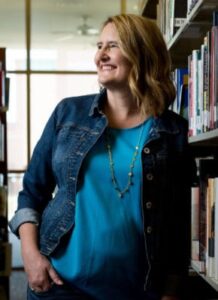 Mary E. DeMuth helps people to turn their trials into triumphs. She mentors new authors through the publishing process and has written two tutorials on book proposals (one for fiction and another for nonfiction). An expert in Pioneer Parenting, Mary enables Christian parents to navigate our changing culture when their families were not good faith examples to follow. Her parenting books include Authentic Parenting in a Postmodern Culture (Harvest House, 2007), Building the Christian Family You Never Had (WaterBrook, 2006), and Ordinary Mom, Extraordinary God (Harvest House, 2005). Mary also inspires people to face their trials through her real-to-life novels, including Watching the Tree Limbs (nominated for a Christy Award) and Wishing on Dandelions (NavPress, 2006). A pioneer parent herself, Mary and her husband, Patrick, reside in Texas with their three children. They recently returned from breaking new spiritual ground in Southern France, where they planted a church.
Leave a Reply