Member's Library I am what the librarians have made me . . . B. K. Sandwell
  • About
    • About NAIWE
    • Board of Experts
    • Books Published by NAIWE Experts
    • FAQs
    • Advertising
  • Member’s Area
    • Member’s Library
    • Member Website Development
    • Benefit Links and Passcodes
    • Manage Your Account
    • The Member’s Edge
    • NAIWE Media
    • On-Demand Training (Discount)
  • Training
    • Upcoming Webinars
    • On-Demand Training (Discount)
  • Find a Professional
  • News & Events
    • Blog
    • The Edge
    • The Member’s Edge
    • The Edge Writers Guidelines
    • Conference
    • Podcasts
    • Summer Challenge
    • Words Matter
      • Words Matter Week
      • How to Participate
      • Media
  • Post a Job
  • Contact
  • Member Sites

How Networking Can Help a Writing Business Get off to a Good Start

Wednesday, April Post a comment

A lot goes into launching a successful writing business, and networking can be one factor in that success. This post focuses on the networking aspect of your writing work.

Writers might not think of networking as an element of their new businesses, and that could mean losing out on valuable ways to learn about the craft and business and to develop connections that could not only improve those aspects of what they want to do, but also to lead to a greater likelihood of getting published.

All writers probably share a common goal: for our words, thoughts, and perspectives to find audiences and outlets. Individuals might be at different stages of creativity, visibility, or success, but every writer wants—even needs—to be seen and heard. For the new writer, that first sale or outlet is so exciting, and networking is one way to get there.

Whether you’re writing a novel or a press release, a poem or a white paper, a play or a case study, a how-to book or a personal blog post, you want what you write to be seen and appreciated. Beyond being seen, we also want everyone who sees our writing to understand it, respond to it positively by publishing reviews or acting on it somehow, recommending it to others, and reading or buying the next piece we write. Networking can help that happen.

Where networking comes into play is in providing resources for learning to write better by joining critique groups, taking classes, or lining up beta readers; identifying reputable editors and proofreaders and understanding and managing their input; finding appropriate agents and publishers for our work; getting paid; and related details of a writing business or the writing life.

Through networking, you can meet colleagues who will provide advice, insights, and resources, and who might become beta readers or refer you to prospective clients and their writing projects. You could be seen by and connect with potential agents to represent your work or publishers who might consider bringing you into their houses, saving you the effort of searching for the ideal agent and outlet. If you plan to self-publish work that needs illustrations, networking can help you find the artist you need.

It’s important to remember that networking is a two-way process. In fact, that might be the most important aspect of networking. A writer needs to create a net of contacts and colleagues who can help them do their work better and enhance their likelihood of publication. One of the best ways to do that is to be a useful strand in the nets of colleagues. Ask questions and look for ways to provide answers to other people’s questions.

And don’t let being new to writing or networking make you feel that you can’t contribute to the networking process. You can! If you don’t have any answers yet, look for resources you can share—books, courses, blogs, organizations, etc.—that you have found useful or have seen in your real-world and online visiting. Keep in mind that we all had to start somewhere, first by actually writing something, next by getting it published, and then by becoming visible and active in some corner of the writing world. Even extroverts like me had to learn the ropes of networking effectively; it isn’t just a matter of paying dues and showing up or using the resources of an association to enhance our own writing work.

In the continuing pandemic era, we can’t do much networking in person, so the introverts among us don’t have to worry as much about fitting in at events as in the past (and, we hope, the future). Nowadays, you can use the virtual world to your networking advantage by “lurking” in online communities and professional associations while taking the temperature of the environment and deciding whether they will be helpful before you spend money on a membership or speak up with your questions and suggestions. Oh, and the membership dues are tax deductible!

Learn and profit from networking, and try to give as much as you take. Your writing business and efforts will blossom as a result, along with your reputation.


Ruth Thaler-Carter has been a full-time freelance writer, editor, proofreader, and desktop publisher for more than 30 years. She has been published locally, regionally, nationally, and internationally in, and does writing, editing and proofreading for, publications, associations, nonprofits, websites, service firms, and businesses. She sold her first freelance articles when she was still in high school. Renowned as a skilled networker, Ruth is active in about a dozen professional associations, serving as a newsletter editor, webmaster, publication author, speaker/presenter, blogger, program host or planner, and chapter leader. In 2006, Ruth launched the Communication Central “Be a Better Freelancer” annual conference to help aspiring and established freelancers find greater success and connections with colleagues. Ruth is the owner and editor-in-chief of the An American Editor blog and received the Philip M. Stern Award of Washington (DC) Independent Writers for service to freelancers; the Writers and Books Big Pencil Award for teaching adults and contributions to the literary community; EFfie awards for writing, editing, and newsletters; and the APEX award for feature writing. She was also an IABC/DC Communicator of the Year.

Categories: Business, Freelancing, Networking, Ruth Thaler-Carter, Writing

Word Tripper: Benevolent vs. Beneficent

Sunday, April Post a comment

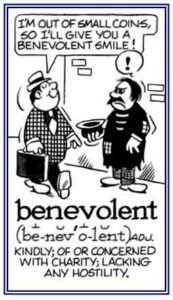
The Random Acts of Kindness Foundation is a non-profit organization that inspires a culture of kindness in schools, homes, and communities. It encourages acts of kindness by providing resources to people who are both benevolent and beneficent.

This week’s Word Tripper clarifies the difference between these similar words.


Image Source: http://wordinfo.info/unit/293/page:2


Barbara McNichol is a nonfiction editor, who works with authors, speakers, and business professionals to add power to their pen through the written word. Barbara wrote Word Trippers: The Ultimate Source for Choosing the Perfect Word When It Really Matters. She offers helpful writing tips weekly and a course to take your writing and editing to the next level: “WordShops: Strengthen Everything You Write.”

Categories: Barbara McNichol, Editorial Services, Writing

Grammar Glitches You Can’t Ignore

Monday, March Post a comment

My attention was recently drawn to an article in Ragan Report (great resource for communicators) that puts the “Top 25 Grammar and Language Mistakes” in your face.

This handful of grammar glitches stood out for me. I’m eager to point them out because they’re extremely important to good writing. I encourage you to take them to heart.

  • Using could of, would of, should of. These are all 100 percent wrong, born of our sloppy speaking styles—could’ve, would’ve, should’ve. What you want to write is could have, would have, should have. We all coulda, woulda, shoulda become better at grammar.
  • Using me and somebody. I tell my children that it’s common courtesy to put the other person first. Thus, you should always say, Fred and I went to the gym together, or Suzie and I saw that movie.
  • Using that instead of who (and vice versa). If you’re writing about people, always use who. If a company president says, employees that are affected by layoffs will be greatly missed, no one is likely to believe him because he’s treating them as objects by using the word that.
  • Using they when referring to a business. Starbucks said they would give everyone a free latte today. Although this might sound right, the correct sentence is: Starbucks said it would give everyone a free latte today. And if that grates on your ears, then rewrite the sentence to avoid the problem: Starbucks is offering everyone a free latte today.


Barbara McNichol is a nonfiction editor, who works with authors, speakers, and business professionals to add power to their pen through the written word. Barbara wrote Word Trippers: The Ultimate Source for Choosing the Perfect Word When It Really Matters. She offers helpful writing tips weekly and a course to take your writing and editing to the next level: “WordShops: Strengthen Everything You Write.”

Categories: Barbara McNichol, Editorial Services, Writing

Word Tripper: Envelop vs. Envelope

Thursday, March Post a comment

The U.S. Postal Service processes 6,050 mail pieces every second, employs more than 8 million people, and is part of a $1.3 trillion mailing industry that envelops most of the known world.

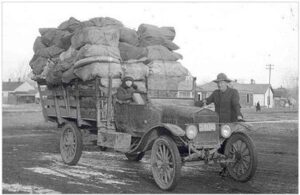
Overloaded mail truck used by a mail contract carrier in Cody, Wyoming

This pair, envelop and envelope, differ by just one letter and are different parts of speech with distinct meanings.

Envelop, envelope – Envelop, a transitive verb, means to completely cover, enclose, or surround someone or something. Envelope, a noun, is a flat container that covers a letter or other object, often for mailing or delivery. It also refers to a set of performance or conventionally accepted limits.

“Let me envelop you in the warm, fuzzy envelope of my love.” – Gary Michael

“She pushed the envelope of her endurance by running an extra mile.”

“Enveloped by the stacks of papers he had to grade, he felt overwhelmed.”


Barbara McNichol is a nonfiction editor, who works with authors, speakers, and business professionals to add power to their pen through the written word. Barbara wrote Word Trippers: The Ultimate Source for Choosing the Perfect Word When It Really Matters. She offers helpful writing tips weekly and a course to take your writing and editing to the next level: “WordShops: Strengthen Everything You Write.”

Categories: Barbara McNichol, Editorial Services, Writing

Nifty New Tool: Headline Analyzer

Thursday, March Post a comment

Whenever I hear about a fun writing tool, I have to try it out. Most recently I learned about a nifty headline analyzer from SpeakerNet News (a highly recommended weekly resource for professional speakers and trainers).

For a recent Word Tripper of the Week, I played with various subject lines. After starting with the too-familiar Random Acts of Kindness, the analyzer scored these various ideas and helped me choose one (noted in bold). Which one of these would you have selected? Do you have an idea for a subject line?

  1. The Kinder Side of Life (score of 65)
  2. No Act of Kindness Is Too Small (score of 60)
  3. The Gift of Kindness (score of 62)
  4. Cool To Be Kind (score of 66)
  5. Speak the Language of Kindness (score of 53)

Feel free to experiment with your own headings.


Barbara McNichol is a nonfiction editor, who works with authors, speakers, and business professionals to add power to their pen through the written word. Barbara wrote Word Trippers: The Ultimate Source for Choosing the Perfect Word When It Really Matters. She offers helpful writing tips weekly and a course to take your writing and editing to the next level: “WordShops: Strengthen Everything You Write.”

Categories: Barbara McNichol, Editorial Services, Headlines, Writing

Whack Extraneous Phrases in Your Writing

Thursday, March Post a comment

In their classic book The Elements of Style, Strunk and White called word clutter “the leeches that infest the pond of prose, sucking the blood out of words.”

You can start by eliminating extraneous phrases that clutter your writing. But which phrases can be “whacked”?


Consider taking out these extra phrases whenever you can:

  • “is intended to”; “meant to”; “designed to” e.g., He gives a workshop that is designed to teach writing skills. Better: He gives a workshop that teaches writing skills.
  • “it is all about”; “the fact of the matter is”; “the fact that”; “it’s important to remember that” e.g., The fact of the matter is that it’s unwise to go out carousing. Better: It’s unwise to go out carousing.
  • “in regard to” e.g., Seek additional websites in regard to your industry. Better: Seek additional websites in your industry.
  • “is going to” e.g., He is going to be a key contributor. Better: He will be a key contributor.
  • “in order to” e.g., Add key words in order to describe the new position. Better: Add key words to describe the new position.
  • “there is” and “there will be” e.g., There will be many managers attending the meeting. Better: Many managers will attend the meeting.
  • “the reason why is that” e.g., A simple “because” will suffice.
  • “at this time” e.g., Now!

To reinforce this exercise, take something you wrote and circle any of these extraneous phrases. Challenge yourself to rework or remove them altogether. You may choose to keep some in, but at least you’ve asked the question: “Do I really need this phrase?” (In this sentence, “really” is an extra word.)

Keep this list handy. What would you add to it?


Barbara McNichol is a nonfiction editor, who works with authors, speakers, and business professionals to add power to their pen through the written word. Barbara wrote Word Trippers: The Ultimate Source for Choosing the Perfect Word When It Really Matters. She offers helpful writing tips weekly and a course to take your writing and editing to the next level: “WordShops: Strengthen Everything You Write.”

Categories: Barbara McNichol, Editorial Services, Writing

Word Tripper: Atrophy vs. Entrophy

Thursday, March Post a comment

Things break down. Muscles atrophy from lack of use, cars won’t start from lack of maintenance, and houses get messy due to lack of cleaning. Sometimes life just doesn’t go the way you plan, and the entropy of everyday living can take its toll on a person’s body and mind.

http://articles.naiwe.com/files/2021/05/Barbara-McNichol-Word-Tripper-Atrophy-vs.-Entrophy.mp4

Here’s help in making sure your lexicon doesn’t break down. This week’s word tripper highlights the differences between atrophy and entropy.

Atrophy, entropy – Atrophy, a noun and a verb, refers to a gradual loss or wasting away physically or psychologically. It can also refer to poor development. Entropy, a noun, is the degree of disorder or uncertainty in a system. In a technical sense, it’s the gradual breakdown of energy and matter. In casual usage, entropy refers to the disintegration or disorganization of any situation.

“The teenager’s muscles started to atrophy from lying in bed too long. His room, scattered with clothes, shoes, and books, showed a degree of entropy from being neglected.”


Barbara McNichol is a nonfiction editor, who works with authors, speakers, and business professionals to add power to their pen through the written word. Barbara wrote Word Trippers: The Ultimate Source for Choosing the Perfect Word When It Really Matters. She offers helpful writing tips weekly and a course to take your writing and editing to the next level: “WordShops: Strengthen Everything You Write.”

Categories: Barbara McNichol, Editorial Services, Writing

Overcoming Project Paralysis

Tuesday, March Post a comment

In business and in life, we tend to irrationally build things up in our heads and overcomplicate what’s in front of us. We tend to overthink what it takes to complete our next project. In reality, there’s only one requirement: to simply start. Few understand this principle better than Dan Sullivan at Strategic Coach. Dan’s simple 80% Approach is the simplest, clearest recipe we’ve seen for overcoming the two mental habits that stall far too many important projects and entrepreneurs, sometimes “for an entire lifetime.” These two insidious and all too common habits are perfectionism and procrastination.

I’ve compiled key take-aways below from Dan’s book The 80% Approach.


For most projects, 80% is all it takes to successfully launch.

Although the perfectionist says, “no way, it must be exactly correct before releasing,” this habit is entirely an internal struggle. This notion has no basis in the value of the project as perceived by most clients and the outside world. In most instances, the audience will accept 80% as 100%. So, if all that’s needed is 80%, this “gives us permission to nip perfectionism in the bud.” Otherwise, the result is usually unnecessary delays. Engaging clients early in the development process, before we consider it perfect, allows for checkpoints along the way, preventing misalignment on the project’s direction and the potential for rework down the road.


Don’t wait to complete your first 80%.

This is all about baby steps. Instead of looking at the whole and feeling overwhelmed, ask yourself this: What is the next incremental task I can do today to move this project forward. One word or one sentence on paper is sometimes all it takes. One phone call is better than no phone call. Chances are, you’ll get into a flow state and before you know it, you’ve written an entire page, chapter, or article.


Complete the second 80%.

This represents a further improvement to the original 80% effort and is best handled by other talented people. When you compound two 80% efforts, the result is 96% completion. As Dan says, “In a world filled with many sub-standard, shoddy, and unsatisfactory results, a 96%-quality project would look and actually be extraordinary.”


Do only the 80% that only you can do.

Owners, entrepreneurs, founders, and project leaders should be firmly entrenched in their unique abilities, producing their 80% portion of the project from their unique abilities only, “where their personal efforts will produce the best and fastest results.”


Community vs. Isolation – 80% vs. 100%.

When each member of a team is striving for 80% rather than 100%, they’re inspired to rely on each other. This leads to a cohesive environment that fosters genuine teamwork, reliance on each other, and community building. If everyone is focused on achieving 100% individually, they become isolated and full of doubt.


Ultimately, when we give ourselves permission to strive for 80% using our highest and best talents only, we start faster, we gain confidence, and we learn to trust in others to exercise their unique talents to move the project forward. As Dan coins it, “By riding the 80% wave of accelerating confidence, you make rapid progress, find it easy, and want to move even faster.”

You can pick up a complimentary copy of Dan’s book The 80% Approach.


Stephen (Steve”) Colwell serves as CEO and head of strategy for Clarify Media and Completing, two Southern California–based firms specializing in marketing and project management. With over 10 years of hands-on agency experience as a copywriter, brand strategist, and project manager, he brings a broad and deep range of both marketing and operations expertise to the community. From strategy and design to growth and performance, Steve offers a rare mix of creative and analytical thinking toward helping creative professionals, teams, and small businesses accelerate their progress and achieve more. He has led project teams responsible for over $100+ million in annual revenue across four continents. A certified Agile practitioner, Steve is fanatical about helping others work in teams more effectively and operate at their best using the same proven routines practiced by today’s top-performing companies.

Categories: Business, Freelancing, Stephen Colwell

Active-ate Your Verbs and Improve Your Writing

Tuesday, March Post a comment

Before detecting the passive voice and addressing how to change it to active, consider why you should care.

Active verbs will improve your writing (most of the time) because

  • active verbs declare who or what is (or should be) performing the action; you avoid confusion, guesswork, or dodging responsibility
  • active verbs make your writing flow smoothly; readers will easily get the ideas you want to convey
  • sentences constructed in the active voice usually require fewer words; you want to aim to write concisely!


How to Identify Passive

As a reader, if you can’t identify the doer of the action—the subject—the sentence has likely been constructed in the passive voice. Even when the subject is clear, two clues help you identify passive use: (1) the word “by” and (2) variations of the verb “to be.”

Consider these sentences:
Passive—“The juicy watermelon was eaten by the boy.”
Active—“The boy chomped into the watermelon’s juicy belly.”
Passive—“Employees are seen by their managers as responsive and enthusiastic.”
Active—“Managers see their employees as responsive and enthusiastic.”

In addition, passive verbs can foster weasel-like communication. They may be used to hide who’s responsible for an action, thus evading accountability rather than declaring it. For example, if a contract states “the rules for the homeowners will be enforced” but doesn’t note who will enforce those rules, what’s the result? Ambiguity. Confusion. Inaction.


How to Identify Active

The pattern for an active sentence is typically “subject + verb + direct object.” The direct object is the recipient of the action—that is, what or whom the verb affects.

Example: The employees (subject) implement (verb) the new strategy (object).

Who’s doing the action of implementing the new strategy? The employees. Thus, it’s clear the employees are accountable for the action.


Your Turn

Notice the passive construction in the following sentence and rewrite it, making sure to use an active verb. (Hint: You’ll need to make up a subject.)

Passive: This policy is being implemented in an effort to streamline our process.
Active: ___________________________________


Barbara McNichol is a nonfiction editor, who works with authors, speakers, and business professionals to add power to their pen through the written word. Barbara wrote Word Trippers: The Ultimate Source for Choosing the Perfect Word When It Really Matters. She offers helpful writing tips weekly and a course to take your writing and editing to the next level: “WordShops: Strengthen Everything You Write.”

Categories: Barbara McNichol, Editorial Services, Writing

A Great Year for Writing Your Nonfiction Book

Monday, March Post a comment

Did you develop a plan or even start crafting your book?

If so, congratulations! If not, you have a clean slate in this new year—a fresh opportunity to share your expertise with the world!

Look at this year as a fresh start to attract more opportunities and build more connections through the increased exposure a book gives you.  As you do, go for these eight book-writing resolutions to help fulfill your dream of being an author—and all that it brings you—in this wonderful new year.

1. I will devote a significant amount of time to planning how I’ll write or promote my book.

2. I will look for interesting, unique ways to craft my chapters. I want them to be informative, intelligent, and fun to read.

3. I will put into place new ways to promote my book, perhaps even before it’s been produced (e.g., turn parts of chapters into blog posts, use social media to draw attention to them).

4.I will create an ezine or website to convey my book’s concepts, build a list of interested people, and communicate regularly with those who can benefit from my message.

5. I will stop procrastinating! When I’m tempted to put off working on my book, I’ll remind myself of the reputation-building value a professional book brings to my business. It will help me engage with my prospects, gain exposure to my market, demonstrate my expertise, and land new opportunities.

6. I will not let lack of time or dislike of writing stop me. I have something valuable to say to the world, and I will put it out there in a quality way. Yes, I will set aside time to write, revise, and perfect my chapters and my marketing materials.

7. I will ask for help to perfect my manuscript. Knowing there comes a time when I can’t read my own writing objectively, I will ask for writing/editing assistance to polish it to a fine sheen. I’ll be alert to when that time is right.

8. I will do my best to choose the right word when it matters most—and not let grammar gremlins and wrong choices spoil the party.

Barbara McNichol is a nonfiction editor, who works with authors, speakers, and business professionals to add power to their pen through the written word. Barbara wrote Word Trippers: The Ultimate Source for Choosing the Perfect Word When It Really Matters. She offers helpful writing tips weekly and a course to take your writing and editing to the next level: “WordShops: Strengthen Everything You Write.”

Categories: Barbara McNichol, Writing

  • « Previous Page
  • 1
  • …
  • 15
  • 16
  • 17
  • 18
  • 19
  • …
  • 26
  • Next Page »

Recent Posts

  • Beyond Writing: How Expanding Your Services Can Strengthen Your Freelance Business
  • Am I a Writer or Not?
  • Be Prepared for That Crisis Moment When You Need Business Backup
  • Stick with Your System
  • In a Pricing Rut? Try These 3 Strategies

Categories

Meta

  • Log in
  • Entries feed
  • Comments feed
  • WordPress.org

Latest Posts

Beyond Writing: How Expanding Your Services Can Strengthen Your Freelance Business

July 22, 2026

Am I a Writer or Not?

July 16, 2026

Be Prepared for That Crisis Moment When You Need Business Backup

June 30, 2026

Stick with Your System

June 29, 2026

In a Pricing Rut? Try These 3 Strategies

June 25, 2026

Improving Your Vision

June 24, 2026

Contact Us

  • 804-476-4484
  • P.O. Box 412
    Montpelier, VA 23192-0412
Facebook Instagram Linkedin twitter

© NAIWE. All rights reserved. Designed by My House of Design.