
Member's Library I am what the librarians have made me . . . B. K. Sandwell
  • About
    • About NAIWE
    • Board of Experts
    • Books Published by NAIWE Experts
    • FAQs
    • Advertising
  • Member’s Area
    • Member’s Library
    • Member Website Development
    • Benefit Links and Passcodes
    • Manage Your Account
    • The Member’s Edge
    • NAIWE Media
    • On-Demand Training (Discount)
  • Training
    • Upcoming Webinars
    • On-Demand Training (Discount)
  • Find a Professional
  • News & Events
    • Blog
    • The Edge
    • The Member’s Edge
    • The Edge Writers Guidelines
    • Conference
    • Podcasts
    • Summer Challenge
    • Words Matter
      • Words Matter Week
      • How to Participate
      • Media
  • Post a Job
  • Contact
  • Member Sites

Word Play: Lots More Figures of Speech

Tuesday, June Post a comment

What’s a figure of speech? Words taken out of their literal meaning to create a vivid or dramatic picture. Play with them in your writing!


Aphorisms

Aphorisms are short, pointed sentences expressing a wise or clever observation or a general truth. Examples:

  • A good time to keep your mouth shut is when you’re in deep water.
  • If you don’t have a sense of humor, you probably don’t have any sense at all.
  • There are no new sins; the old ones just get more publicity.


Eponym

“Proper names that have become improper and uncommonly common.” That’s how author Willard R. Espy described eponyms, which are words coined after people’s names.

Examples:

Byronic: One who is melancholic, passionate, melodramatic, and disregards societal norms. Named after poet Lord Byron (1788–1824) who displayed these characteristics as did his poetry.

Orwellian: Of or relating to a totalitarian state in which citizens’ activities are tightly controlled. Named after George Orwell, pen name of Eric Blair (1903–1950), whose novel Nineteen Eighty-Four depicted a futuristic totalitarian state.

Draconian: Unusually harsh. Named after Draco (late 7th century BCE), Athenian legislator, noted for the harshness of his code of laws.


Paraprosdokian

A figure of speech in which the latter part of a sentence or phrase is surprising or unexpected; it causes the reader to reframe or reinterpret the first part. It’s how you add “funny” to your writing!

Examples:

“Where there’s a will, I want to be in it.”

“A friend in need is a friend I don’t need.” –Deepak Jhangiani

“Honesty is the best policy until the policy expires.” –Deepak Jhangiani

“You can lead a horse to water…but if you can teach him to roll over on his back and backstroke, you got something.” –Rudy Cluke

“If I agreed with you, we’d both be wrong.”

“War does not determine who is right—only who is left.”

“Women will never be equal to men until they can walk down the street with a bald head and a beer gut, and still think they are sexy.”



Barbara McNichol is a nonfiction editor, who works with authors, speakers, and business professionals to add power to their pen through the written word. Barbara wrote Word Trippers: The Ultimate Source for Choosing the Perfect Word When It Really Matters. She offers helpful writing tips weekly and a course to take your writing and editing to the next level: “WordShops: Strengthen Everything You Write.”
Categories: Barbara McNichol, Writing

Word Play: Using Fun Figures of Speech

Tuesday, June Post a comment

What’s a figure of speech? Words taken out of their literal meaning to create a vivid or dramatic picture. Play with them in your writing!


Alliteration

Matching or repetition of consonants or repeating of the same letter (or sound) at the beginning of words. Examples:

  • Papa’s potatoes and poultry were a big hit at the potluck.
  • Dewdrops danced on the Day Lilies’ tongue.


Chiasmus

A sentence that reads forward and backward like a mirror, often used in speeches in an artistic, persuasive way. Examples:

  • Ask not what your country can do for you but what you can do for your country. (John F. Kennedy)
  • People in cars cause accidents and accidents in cars cause people. (Garrison Keillor)
  • Gossip is the art of saying nothing in a way that leaves practically nothing unsaid. (Walter Winchell)


Colloquialism

Colloquialisms are informal expressions (slang) that play a role in how we communicate but shouldn’t be used in formal speech or writing (unless it’s dialogue). Examples:

  • Gonna and wanna
  • There ain’t nothin’ to it.
  • He done good.


Heteronyms

These are words that are spelled the same but differ in pronunciation. Examples:

  • Close – (CLOZE) to shut; (CLOHSS) nearby
  • Lead – (LEED) to guide; (LED) a metallic element
  • Tear – (TARE) to rip; (TEER) a drop of the clear liquid emitted by the eye


Homonyms and Homophones

Homonyms are spelled the same but differ in meaning while homophones are pronounced the same but differ in meaning, origin, and sometimes spelling.

Examples of homonyms:

  • Bank (a place to deposit money) and bank (a river’s edge)
  • Fair (county fair), fair (reasonable), fair (in appearance as fair-skinned)

Examples of homophones:

  • Cite (to quote as an authority or example), sight (to see), site (location or place)
  • Sea (body of water) and see (vision)


Hyperbole

This figure of speech adds exaggeration to your writing. Hyperbole (hy-PER-buh-lee) statements are not literally true but are used for emphasis. Examples:

  • Her feet were as big as skis.
  • I’m so hungry I could eat a horse.
  • I’ve heard that joke a thousand times.


Malapropism

Named after Richard Sheridan’s character Mrs. Malaprop in The Rivals, malapropisms are a comic misuse of language. Examples:

  • He had to use a fire distinguisher.
  • Dad says the monster is just a pigment of my imagination.
  • My sister has extra-century perception.


Metaphor

A metaphor lets us use one image to conjure up another. Overused metaphors are considered clichés. Examples:

  • You are my sunshine.
  • All the world’s a stage.
  • The thick blanket of snow covered the frozen field.

These three metaphors about life were featured in one of my all-time favorite ezines, Dr. Mardy’s Quotes of the Week.

  • “Life is a moderately good play with a badly written third act.” (Truman Capote)
  • “Life is a great big canvas, and you should throw all the paint on it you can.” (Danny Kaye)
  • “Life is the art of drawing without an eraser.” (John W. Gardner)


Oxymoron

An oxymoron takes two incongruous or contradictory terms and puts them together to express two contrasting qualities in one concept. Examples:

  • Old news
  • Dull roar
  • Open secret
  • Random order


Palindrome

A word, phrase, verse, or sentence that reads the same backward or forward. Examples:

  • Straw – warts
  • Do geese see God?
  • Never odd or even


Pangram

A pangram uses all 26 letters of the alphabet. Examples:

  • The quick brown fox jumps over the lazy dog.
  • Watch Jeopardy! Alex Trebek’s fun TV quiz game.


Personification

A figure of speech that gives “human” characteristics (emotion, honesty, volition, etc.) to an animal, object, or idea. Examples:

  • The haughty peacock strutted around his mate.
  • Fate frowned on her success.
  • My car was happy to be washed.


Pleonasm

Pleonasm consists of two concepts (usually two words) that are redundant. Examples:

  • boiling hot
  • cash money
  • dark night
  • empty hole
  • little baby
  • pair of twins


Simile

Makes a comparison using “as” or “like” to show how two things that are not alike in most ways are similar in another way. Examples:

  • Busy as a beaver.
  • Mad as a wet hen.
  • The snow was as thick as a down blanket.


Spoonerism

Words or phrases in which letters or syllables get swapped. Examples:

  • I’m driving in the right lane, for I’m driving in a light rain.
  • Tease my ears, for Ease my tears.
  • Wave the sails, for Save the whales.


Barbara McNichol is a nonfiction editor, who works with authors, speakers, and business professionals to add power to their pen through the written word. Barbara wrote Word Trippers: The Ultimate Source for Choosing the Perfect Word When It Really Matters. She offers helpful writing tips weekly and a course to take your writing and editing to the next level: “WordShops: Strengthen Everything You Write.”

Categories: Barbara McNichol, Writing

Write with Intention Every Time

Tuesday, June Post a comment

Much of the spoken language slides into our writing, but at times the words we say aren’t the exact fit for what we mean. Check your intention every time!
Consider these sentences from a manuscript about education:

  • How many principals do what they feel will win approval?
  • The public feels certain people shouldn’t be teaching.

Given the context, is “feel” the correct word to express the author’s meaning? No, because the essence of the intended meaning doesn’t come from an emotional “feeling” source. Rather, it comes from a profound conviction based on experience—a place of belief.

Replace “feeling” with the word “believe,” which involves caring about something. It implies a deeper kind of thinking—a mental activity that doesn’t necessarily have a sense of conviction. Because of this distinction, the better word choices would be:

  • How many principals do what they believe will win approval?
  • The public believes certain people shouldn’t be teaching.

Your challenge: Question yourself when you select a commonly spoken word. Does it express the exact meaning based on its context? From now on, designate “feel” a red-flag word. Then replace it with “think” or “believe” or “hope” or another verb and reread your sentence. Is “feel” the most precise word to convey your intended meaning? If not, pause and find exactly the right one.


Barbara McNichol is a nonfiction editor, who works with authors, speakers, and business professionals to add power to their pen through the written word. Barbara wrote Word Trippers: The Ultimate Source for Choosing the Perfect Word When It Really Matters. She offers helpful writing tips weekly and a course to take your writing and editing to the next level: “WordShops: Strengthen Everything You Write.”

Categories: Barbara McNichol, Writing

Writing and Editing: Wear Two Different Hats

Tuesday, June Post a comment

Just as you’d wear a straw-brimmed hat in the sunshine and a rain cap in the pouring rain, remember the importance of wearing two different hats when you’re writing versus editing your nonfiction book.

One hat represents the creative process; the other deals with the critical process. Attempting to edit as you write can dampen your creativity, as I learned when working with an author recently. Because she was on a fast track to get her book printed, she had me editing the beginning chapters while she was still writing the middle and final chapters. She interrupted her writing flow to give me feedback on the chapters I’d sent back. It affected her ability to move forward smoothly with her final chapters, plus we had trouble keeping track of our progress. What frustration!

In retrospect, we needed to put on the brakes and say, “Each task—writing and editing— demands a separate and specific focus.” Here are three reasons why:

  1. When editing your own work, your mind can fill in, correct, or overlook errors. It’s easy to miss things that should be corrected—like missing words and inconsistencies.
  2. When you put a week or two between completing a draft and reviewing it, you break the link between what you thought you wrote and what you actually wrote.
  3. Once a first draft is finished, if you rush in to evaluate it too quickly, you haven’t allowed your brain to “hang out in the shade and cool.” That’s when you mentally step back and “see” gaps in information, research, and logic. Taking a “big picture” look also enables you to see what fits and what doesn’t.

What can you do to separate writing from editing even more?

  • When you reread your work, reformat it by changing the font, margins, line spacing, and other elements so it tricks the mind and looks like a new document.
  • Keep wearing your creativity hat and go through each chapter asking these important questions:
  1. Is it complete from a content point of view? What’s missing?
  2. Have I included all the facts and stories to meet my objectives for this chapter?
  3. Can I take out any content that doesn’t fit?

Once you have answered these questions satisfactorily, you’re ready for the critical process to take over. While wearing your editing hat, leave behind your content questions and look for the elements of good writing—style, grammar, spelling, capitalization, punctuation, and so on. And when you’re ready for feedback, call in an objective editor who can apply both the creative and critical process to perfecting your manuscript.


Barbara McNichol is a nonfiction editor, who works with authors, speakers, and business professionals to add power to their pen through the written word. Barbara wrote Word Trippers: The Ultimate Source for Choosing the Perfect Word When It Really Matters. She offers helpful writing tips weekly and a course to take your writing and editing to the next level: “WordShops: Strengthen Everything You Write.”

Categories: Barbara McNichol, Editorial Services, Writing

Word Tripper: Conscious vs. Conscience

Thursday, May Post a comment

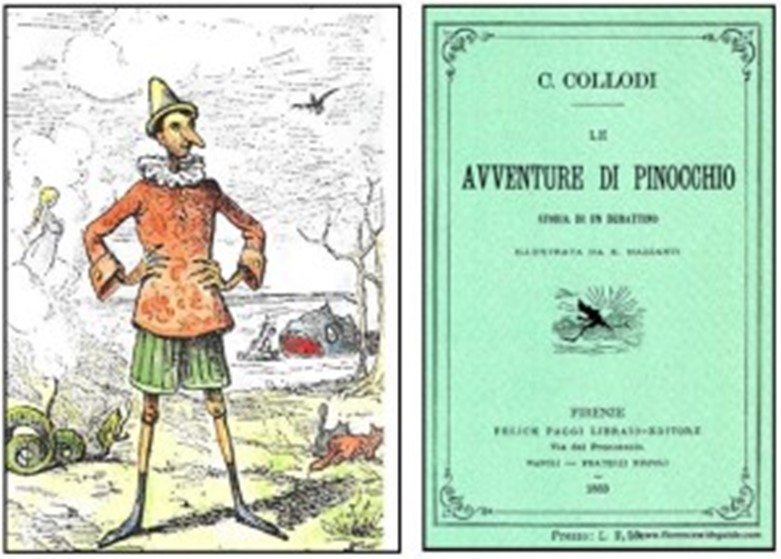
Italian writer Carlo Collodi wrote the children’s novel The Adventures of Pinocchio in 1883. Pinocchio was a wooden puppet who wanted to become a real boy. Despite the efforts of his trusty conscience, The Talking Cricket, he kept lying and wasn’t conscious of his actions.

http://articles.naiwe.com/files/2021/05/Barbara-McNichol-Word-Tripper-Conscious-vs.-Conscience.mp4

Much like The Talking Cricket, let this week’s Word Tripper be your guide to the difference between
conscious and conscience.


Conscience, conscious – “Conscience,” a noun, is part of the mind that makes you aware of your actions being morally right or wrong. “Conscious,” an adjective, describes being awake and able to understand what’s happening around you (a fact or feeling).

“I was highly conscious of my inability to pocket the wad of twenty-dollar bills I’d found. I knew my conscience wouldn’t allow me to keep this money.” – Bobbie Bookhout


Barbara McNichol is a nonfiction editor, who works with authors, speakers, and business professionals to add power to their pen through the written word. Barbara wrote Word Trippers: The Ultimate Source for Choosing the Perfect Word When It Really Matters. She offers helpful writing tips weekly and a course to take your writing and editing to the next level: “WordShops: Strengthen Everything You Write.”

Categories: Barbara McNichol, Editorial Services, Writing

Whack Wordiness

Monday, May Post a comment

As you revise, proofread, and finalize what you’ve written, whack all the extra words you can to sharpen your message in compelling ways.

Watch for the following opportunities to take away the bumps so your writing moves forward smoothly like a car accelerating on a freeway.


 Aim to Eliminate Extraneous Phrases

  • “there is” and “there will be”

e.g., There will be many candidates who are already planning to move. Better: Many candidates may be already planning to move.


  • “It is all about”; “the fact of the matter is”; “the fact that”

e.g., The fact of the matter is that it’s unwise to go out carousing. Better: It’s unwise to go out carousing.


  • “in regards to”

e.g., There may be additional sites you should seek out in regards to your industry. Better:  Seek additional sites related to your industry.


  • “is going to”

e.g., He is going to be a key asset. Better: He will be a key asset.


  • “in order to”

e.g., Add key words in order to describe the new position. Better: Add key words to describe the new position.


  • “is intended to”; “meant to”; “designed to”

e.g., Prescreening is intended to focus on key aspects of the position. Better: Prescreening focuses on key aspects of the position.


  • “the reason why is that  . . .” (a simple “because” will suffice)


Strunk and White, in their classic guide The Elements of Style, call such clutter “the leeches that infest the pond of prose, sucking the blood of words.”


Take Out Wobbly Words

  • some “We rely on some long-standing methods.”
  • much “Jobs posted on the internet reach a much larger audience.”
  • very “Get ready to do a very good job.”
  • quite a few “It’s been quite a few days since we spoke.” Be specific; use a number.
  • that “Find information that you can apply easily.”

Note: The word that doesn’t substitute for who when referring to a human being. E.g., “. . .  a person that plays the piano” should be “a person who plays the piano.”


Knock Out Redundancies

  • end result
  • add more
  • tally up
  • future plan
  • absolute guarantee
  • actual experience
  • adhesive tape
  • alongside of
  • ask yourself
  • at the present time
  • spell out in detail
  • sum total
  • sworn affidavit
  • unexpected surprise
  • visible to the eye

Think of these extra words as layers of onion skin before you get to the usable part. Peel them from your writing. –Diana Booher, Booher’s Rules of Business Grammar


Replace Phrases with Single Words

  • “a great number of” with “many”
  • “ahead of schedule” with “early”
  • “during the time that” with “while”
  • “give consideration to” with “consider”
  • “in spite of the fact that” with “although”


Change Nouns to Verbs

  • “the examination of” becomes “examine”
  • “reach a decision” becomes “decide”
  • “the transformation of” becomes “transform”
  • “the reorganization of” becomes “reorganize”


Revise Long-Winded Sentences

  • Chop a long sentence into two, and make sure they both sound correct!
  • Combine thoughts and ideas when you can.
  • Question every single word, especially every adverb and adjective.
  • Take out the ones that don’t add to the meaning.


Route Out Words That Are Inadvertently Used Twice

  • “Following a process for hiring, we followed his techniques.”  Better: “Following a process for hiring, we adopted his techniques.”
  • “Hoping for warm weather, we hoped to book our vacation in the south.” Better: “Hoping for warm weather, we booked our vacation in the south.”


Let Absolutes Be Absolute

Ever heard someone say “his bucket is emptier (or more empty) than mine”? How can something be emptier than empty? The same holds true for all absolute words. Drop the “less” or “more” in front of these:

  • perfect
  • unique
  • equal
  • final
  • first
  • last


Get Rid of Tag-Ons To Verbs

  • continue on
  • refer back to
  • grouped together
  • gathered together
  • open up
  • cancel out
  • first began
  • add together
  • link together


Stop Your Writing from Idling in Neutral

“I try to leave out the parts that people skip.” –Elmore Leonard


Avoid Writing a Run-On Sentence

What is it? A sentence that contains too many subjects and predicates . . . like running two independent clauses together without the benefit of a comma, a conjunction, or another type of “glue” such as a punctuation mark or connecting word.

E.g., “We received the package yesterday it arrived in the mail.”

E.g., “Now Hiring New Chicken Livers” (actually seen on a billboard!)

E.g., (You’ll find sentences that go on and on all around you.)


When is it time to start a new sentence so you don’t have a run-on collision?

Here’s a suggestion: Use your breath. Yes, that’s right. Allow one inhalation and one exhalation for sentence as you read it, either aloud or silently. If you run out of breath before the end, consider this sentence too long!


Shorten Lengthy Sentences

Does wordiness imply writing only short sentences? No. The length of your sentence depends on what you want to say, and naturally some ideas take more words to express than others.

Still, head in the direction of “concise” rather than “verbose.” Just like you don’t want to spend much time with people who are verbose—they talk on and on and on—your readers don’t want to hang out with verbosity in your writing.

Why? Too-long sentences tend to drag readers into complacency. They also demand a good memory. Readers have to hold onto the concept in the first part of the sentence. Then they have to wade through all the fluff to finally reach the connecting point at the end of the sentence.

Rule of Thumb: No sentence should be longer than 21 words and shorter if possible. It’s just difficult to keep track of the sentence’s core idea if it’s longer than that. Note: the longest sentence in the paragraph above is 21 words. Whew!

Whack Wordiness Example: Editing this 46-word sentence (#1) brought it down to 23 words (#2)—that’s 50 percent!

#1 – The subsequent chapters then will focus in great detail on each of the steps to make sure you know how to accomplish each step before proceeding to the next step and how to measure whether or not you are ready to move to the next step. (46 words)

#2 – The subsequent chapters detail all 13 steps and show how to accomplish each one while measuring whether you are ready to move on. (23 words)


Exercise

Dig out a page or two of your own writing and pick the longest paragraph. Count the number of words in that paragraph and rewrite it completely. As you do, look for ways to

  • Eliminate extraneous phrases
  • Take out wobbly words
  • Knock out redundancies
  • Replace phrases with single words
  • Change nouns to verbs
  • Revise long-winded sentences
  • Route out repeated words
  • Let absolutes be absolute
  • Get rid of tag-ons to verbs

You want your writing to move forward in drive, not idle in neutral, meander off course, or ramble. So don’t stop until you’ve ruthlessly reduced the number of words in your sentence. Aim for paring it down by 33 percent or more. Be succinct!


How to Stop Rambling

“Make every word work like a galley slave.” —William Zinsser

Rambling often stems from muddy thinking—that is, not having a clear idea of what you want to say. When analyzing a piece of your writing that rambles on, ask, “Exactly what was I trying to say?”

Challenge yourself to state its purpose in one simple sentence. Then once you have your intended point in mind, ask:

  • Did I put in unnecessary facts on the road to making my point?
  • Did I add any phrases that were irrelevant to this point?
  • Did I keep in mind what readers might be asking as I make my point?
  • Do my sentences seem to jar like riding on a bumpy road?
  • Did I take a straight line to make my point, or did I take unnecessary detours?

Consider using this formula* to help keep your writing concise. Use no more than:

  • 5 paragraphs per page
  • 10 sentences per paragraph
  • 15 words per sentence
  • 3 syllables per word

*Recommended in Don’t Let Your Participles Dangle in Public!


Exercise

Step 1: Take one page of your writing, 300–400 words, and count the number of paragraphs. Fewer than five?

Step 2: In an average paragraph, count the number of sentences you have. Fewer than 10?

Step 3: Choose one paragraph and count the number of words in each sentence. What’s the average? Fewer than 15?

Step 4: Now circle all the words on the page that have four syllables or more.


Following these four steps, you now have lots of clues where to smooth out the potholes on the road.


Keep Your Writing Motor Running

“Writings are useless unless they are read, and they cannot be read unless they are readable.” –Theodore Roosevelt


One Thought, One Sentence

Unless you’re a novelist like William Faulkner, it’s best to express one thought in one sentence and end it. Spend another sentence on the next thought, and so on to keep your prose moving forward.

When a sentence has too many ideas and runs on too long, it is called a run-on sentence. Actually, a run-on sentence really has TWO sentences (or thoughts) that have been INCORRECTLY combined into one. You can combine two sentences into one, but you must follow some rules to do it correctly.

e.g., Mary loved traveling in Norway she thought it was cold.

To correct this, use a punctuation mark, a bridge word, or separate the two thoughts completely.

Mary loved traveling in Norway; she thought it was cold.

Mary loved traveling in Norway, but she thought it was cold.

Mary loved traveling in Norway. She thought it was cold.


Steer on the Sunny Side

It’s hard for readers to track what’s being written when it’s stated in a negative way. And most of the time, negative statements require a lot more words to make a point. Avoid using “no” and “not” except when you strongly want to emphasize or contrast something.


Example #1

Negative: The answer doesn’t lie in not having enough people to do the job.

Better: The answer lies in hiring enough people to do the job.


Example #2

Negative: We can’t incorporate all the design features we want without increasing the unit size.

Better: To provide all the design features we want, we increase the unit size.


Build Bridges to Guide Your Reader

Since your goal is to whack wordiness, you may consider bridge words and phrases extraneous. Yet, the transitions from one sentence to another do keep your motor running and should be kept in high gear. Why? They create logical links that smooth the road like a well-maintained highway.

Examples of bridge words that

  • connect two ideas of the same kind: and, plus, as well as
  • add another thought: besides, also, then, again, secondly, etc.
  • compare or contrast ideas: but, still, however, yet, nevertheless
  • reinforce an idea: indeed, in fact, of course, by all means
  • show results: as a result, consequently, thus, hence


Place Strongest Words at End

Whenever possible, place your most prominent words at the end of your sentence. Doing so provides emphasis and helps advance your writing from one new idea to the next.


Exercise

Which ending phrase is more targeted and memorable? (The clue is in the italics.)


Statement #1

You’ll drive smoothly toward your destination of delivering a compelling message with your new ability to whack wordiness.


Statement #2

With your new ability to whack wordiness, you’ll drive smoothly toward your destination of delivering a compelling message.


Resources

Booher, Dianna. Booher’s Rules of Business Grammar: 101 Fast and Easy Ways to Correct the Most Common Errors. McGraw Hill. 2009.

DuPont, M. Kay. Don’t Let Your Participles Dangle in Public! Jedco Press. 3rd Edition. 2006.

Fryxell, David A. Structure & Flow. Writer’s Digest Books. 1996.

O’Connor, Patricia T. Woe Is I. Riverhead Books. 1996.

Reddick, Karen L. Grammar Done Right! Hub House Publishing. 2009.

Strunk, William Jr. and White, E.B. The Elements of Style. 3rd Edition. McMillan Publishing 1979.


Barbara McNichol is a nonfiction editor, who works with authors, speakers, and business professionals to add power to their pen through the written word. Barbara wrote Word Trippers: The Ultimate Source for Choosing the Perfect Word When It Really Matters. She offers helpful writing tips weekly and a course to take your writing and editing to the next level: “WordShops: Strengthen Everything You Write.”

Categories: Barbara McNichol, Writing

Why Grammar Mistakes Proliferate: Don’t Writers Care?

Monday, May Post a comment

Recently, I learned what a hot topic grammatical errors can be when one of my favorite blogs, Article Writing and Marketing Insights, from Ezine Articles, took a subject close to my heart and made it relevant to everyone who writes.

Within 24 hours of posting “Avoiding the (6) Common Grammatical Errors That Make Authors Look Du…Unprofessional,” the blog received 776 views and 93 comments. That’s evidence of how “hot” the topic of incorrect grammar can be!

The blog post started:

in these days of txting, iming and all low caps, its easy to take shortcuts to writing


However, even though we now use our keyboards as we once did our phones, what most people do not understand is how unprofessional the improper use of the English language can make an article, and its author, look. Look at the sentence above again. Does it look professionally written to you?

Now, I’m not saying you need to go back to 9th grade English class and try and figure out where your participles are dangling, but making sure you have a command of the basics is essential.

The post went on to list six common errors that make authors look unprofessional. Five of them are what I call Word Trippers—a pair of similar words with different meanings and spellings that can trip people up: loose/lose, affect/effect, it’s/its, their/there, than/then. (The sixth addressed misuse of semicolons, something that riled writer Jeff Rubin so much, he established September 24 as National Punctuation Day.)

Among the blog comments, the most philosophic came from a subscriber named Jenny who wrote, “I am always amazed at how many who consider themselves writers make these mistakes—which are so easily avoided if one is paying attention. Personally, I think they just don’t care. Thanks for a provocative post that is a very good starting point in dealing with a problem that is unfortunately much bigger than those six examples!”


Do They Care?

As an editor who deals with mistakes like these in articles and manuscripts, I endorse Jenny’s observation that the problem is bigger than these six examples. But I challenge her statement, “I think they just don’t care.”

Rather, I see three factors at play here:

  1. People tend to write in a stream-of-consciousness manner, eager to get ideas down (that’s how I approach drafting of my ezine and the initial piece is downright sloppy). In this creative mode, fine tuning isn’t the first priority.
  2. “Instant messaging” is just that! People seem to be hurrying to move on to the next thing, feeling good about “getting that done” and prematurely declaring the piece complete. They don’t make sure what they’ve written comes across exactly the way they wanted to say it.
  3. Writers often lack the desire, discipline, or dedication to revisit their prose with a fresh eye, a clear mind, and breathing space to think it through.


Half-Baked Prose

I call the result of this propensity to write fast, move on, and never look back “half-baked.” After all, you wouldn’t eat a loaf of bread that’s half-baked. Why would you send out a written piece that isn’t fully “cooked” either?

The solution? Take time to put your writing “back in the oven” and question the key elements: the validity of the thoughts, the logical thread of persuasion, and the correct use of each word.

Yes, gremlins such as incorrect grammar and punctuation still get through unintentionally. So do unclear transitions and inexact word choice. Because of these, reviewing your written piece only once simply isn’t enough.


Three Steps to Perfection

I suggest if you habitually add these simple steps, you can “bake” your piece close to perfection:

  1. Print your piece and then go to another area to read it aloud as if a 10 year old needed to understand it. You’ll recognize unclear passages quickly that way.
  2. Question each word for its meaning, spelling, and role in the sentence, then take time to look up what you suspect isn’t correct. Don’t rely on memory alone; it can be shaky. Instead, access easy-to-use resources that will make your writing life easier.
  3. Revise, reread, revise, reread . . . until you’re satisfied.

Above all, slow down and think about your readers, be they 10 years old or 100. No one wants to eat half-baked bread, nor do they want to read partly polished prose. Flavor your writing until it’s “cooked” just right!


Barbara McNichol is a nonfiction editor, who works with authors, speakers, and business professionals to add power to their pen through the written word. Barbara wrote Word Trippers: The Ultimate Source for Choosing the Perfect Word When It Really Matters. She offers helpful writing tips weekly and a course to take your writing and editing to the next level: “WordShops: Strengthen Everything You Write.”

Categories: Barbara McNichol, Writing

How to Use a Planner to Put Authors and Editors on the Same Page

Sunday, May Post a comment

Through a blog post, I recently asked what worries nonfiction authors about the editing process. The insights gained can be helpful to any editor as well as the authors they work with.

I received the following array of answers from 40 authors who responded. Specifically, they want:

  • more than a clean up; they want a major step up in clarity
  • support in thinking through the book’s organization before nitty-gritty editing begins
  • their book editor to be tuned in to their objectives for the book, keeping them top-of-mind throughout the process
  • their points made more succinctly and artistically and their stories told well.

As one author said, “An unedited piece can make my point but in a less elegant way than one that’s been edited.”

From the first contact with a client, I open a dialog through what I call a Planner—a questionnaire that focuses on the long-term goals for the book itself. Questions not only address the mechanics of editing but emphasize the author’s big-picture dreams. A few are:

  1. What successful books would be good models for yours?
  2. After people in your target audience have read this book, what do you want them to say about it? How would you like a testimonial to read?
  3. What actions do you want readers to take as a result of reading your book—both for their own benefit and for yours?
  4. What changes do you want to create in your life/business as a result of putting this book out into the world?
  5. Which results do you seek most in working with an editor (followed by a list for ranking)?


Barbara McNichol is a nonfiction editor, who works with authors, speakers, and business professionals to add power to their pen through the written word. Barbara wrote Word Trippers: The Ultimate Source for Choosing the Perfect Word When It Really Matters. She offers helpful writing tips weekly and a course to take your writing and editing to the next level: “WordShops: Strengthen Everything You Write.”

Categories: Barbara McNichol, Editorial Services, Writing

Word Choice: When to Use “Like” vs. “Such As”

Sunday, May Post a comment

When it comes to word choices and deciding what to use in your writing, check out these phrases from a book I’m editing:

. . . the answers that so-called geniuses like/such as Newton seem to embody.

. . . centuries of innovations like/such as the airplane and the space shuttle have resulted.

Here’s why “such as” is preferred instead of “like” in these phrases: The word “like” implies comparison while “such as” implies inclusion. Thus, being like something doesn’t include the thing itself. If the sentence was “they’re like a fish trying to swim upstream,” then it’s a clear comparison.

Let’s examine this more closely. In the first phrase, the author does include Newton as a so-called genius, so “such as” is the better choice. Similarly, in the second phrase, the airplane and space shuttle are examples of innovations, so they’re meant to be included.

Do you see how your intended meaning within the context of your writing helps you choose which word to use?

Your challenge: When you’re about to write “like,” ask this question: Would I include this point in a list or exclude it? That’s your clue on selecting “like” (exclude) or “such as” (include).


Barbara McNichol is a nonfiction editor, who works with authors, speakers, and business professionals to add power to their pen through the written word. Barbara wrote Word Trippers: The Ultimate Source for Choosing the Perfect Word When It Really Matters. She offers helpful writing tips weekly and a course to take your writing and editing to the next level: “WordShops: Strengthen Everything You Write.”

Categories: Barbara McNichol, Editorial Services, Writing

Word Tripper: Breach vs. Breech

Sunday, May Post a comment

Every practice has its tricks of the trade. In this week’s Word Tripper, the trick to knowing the difference between the homonym “breach” and “breech” is this: “Breach,” meaning to open by force or break an agreement, is spelled with an “ea” like the word “break” itself.

If writing is part of your trade, use this trick to differentiate between these two words both in meaning and spelling. Happy Word Tripping!

Breach, breech – As a noun, “breach” is a failure to do what’s required or promised; a break in friendly relations between people or groups; a hole or opening in something created by force. As a verb, it means to fail to do what’s required or promised; to force an opening or break an agreement. “Breech,” a noun, refers to the hind end of something. For example, a breech birth occurs when an infant’s bottom comes out first during delivery. “Breech” is also the part of a firearm (e.g., a rifle or cannon) found at the rear end of its barrel.

“It’s clearly a breech birth when the doctor sees the newborn’s bottom breach the birth canal.” – Dr. Ron Minson


Barbara McNichol is a nonfiction editor, who works with authors, speakers, and business professionals to add power to their pen through the written word. Barbara wrote Word Trippers: The Ultimate Source for Choosing the Perfect Word When It Really Matters. She offers helpful writing tips weekly and a course to take your writing and editing to the next level: “WordShops: Strengthen Everything You Write.”

Categories: Barbara McNichol, Editorial Services, Writing

  • 1
  • 2
  • 3
  • Next Page »

Recent Posts

  • Beyond Writing: How Expanding Your Services Can Strengthen Your Freelance Business
  • Am I a Writer or Not?
  • Be Prepared for That Crisis Moment When You Need Business Backup
  • Stick with Your System
  • In a Pricing Rut? Try These 3 Strategies

Categories

Meta

  • Log in
  • Entries feed
  • Comments feed
  • WordPress.org

Latest Posts

Beyond Writing: How Expanding Your Services Can Strengthen Your Freelance Business

July 22, 2026

Am I a Writer or Not?

July 16, 2026

Be Prepared for That Crisis Moment When You Need Business Backup

June 30, 2026

Stick with Your System

June 29, 2026

In a Pricing Rut? Try These 3 Strategies

June 25, 2026

Improving Your Vision

June 24, 2026

Contact Us

  • 804-476-4484
  • P.O. Box 412
    Montpelier, VA 23192-0412
Facebook Instagram Linkedin twitter

© NAIWE. All rights reserved. Designed by My House of Design.