
I’ve told this story before, but not in the context that I’ll tell it today. What do you do when you’ve received a harsh critique? Give up? Take it to heart? Weigh it? Figure it out? Keep plugging away? Here’s what happened to me at the genesis of my writing career.
I went to my first writing conference, a small regional affair, after I’d completed several chapters of my first novel. I rode with my friend Sandra Glahn who is a professor at Dallas Seminary, my good friend, and at that time, my mentor. I selected two people to meet with about my piece. The first one, a nonfiction author, ripped my piece to shreds. Hers was not constructive criticism; it was downright mean. And most of what she said didn’t make sense to me. (I should’ve realized that a nonfiction author might not be the best person to offer a critique.)
The second person was a man who was also a professor at the seminary, Reg Grant. I am totally embarrassed to write this, but I showed him a short one-act play I’d written. And when we were done with the critique, I slid it across the table to him. “You can have it,” I said, secretly nursing some painful hope that Reg would see my genius and recommend me to a screenplay agent. Ha!
But on the way home, all I could do was concentrate on the woman’s harsh criticism. I was naïve and easily crushed. I nearly gave up writing. But Sandra pep-talked me back to reality. She listened and told me to keep at it. I asked her for some plotting advice. During that time, I was so green, I felt you always had to have a villain to write a good story. “No,” she told me. “The story arc can be a character’s growth. It doesn’t necessitate a villain.” The AHA went off in my head. I’d created a villain in my Depression-era story, worse than Hitler. And he was taking over everything. Once I eliminated Hitler, the story took off. My story arc became my heroine’s lack of emotional connection with her children after her husband’s death and her subsequent journey to come back to the hearts of her children. In three months, I finished the book, attended Mount Hermon writers’ conference and met my agent.
Had I listened to the snarky woman and not the voice of Sandra, who knows what would’ve happened. Isn’t God good to put folks like Sandra in our paths?
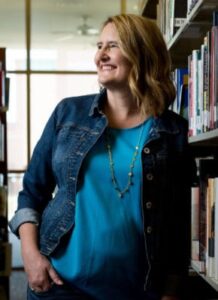 Mary E. DeMuth helps people to turn their trials into triumphs. She mentors new authors through the publishing process and has written two tutorials on book proposals (one for fiction and another for nonfiction). An expert in Pioneer Parenting, Mary enables Christian parents to navigate our changing culture when their families were not good faith examples to follow. Her parenting books include Authentic Parenting in a Postmodern Culture (Harvest House, 2007), Building the Christian Family You Never Had (WaterBrook, 2006), and Ordinary Mom, Extraordinary God (Harvest House, 2005). Mary also inspires people to face their trials through her real-to-life novels, including Watching the Tree Limbs (nominated for a Christy Award) and Wishing on Dandelions (NavPress, 2006). A pioneer parent herself, Mary and her husband, Patrick, reside in Texas with their three children. They recently returned from breaking new spiritual ground in Southern France, where they planted a church.
Leave a Reply