

Member's Library I am what the librarians have made me . . . B. K. Sandwell
  • About
    • About NAIWE
    • Board of Experts
    • Books Published by NAIWE Experts
    • FAQs
    • Advertising
  • Member’s Area
    • Member’s Library
    • Member Website Development
    • Benefit Links and Passcodes
    • Manage Your Account
    • The Member’s Edge
    • NAIWE Media
    • On-Demand Training (Discount)
  • Training
    • Upcoming Webinars
    • On-Demand Training (Discount)
  • Find a Professional
  • News & Events
    • Blog
    • The Edge
    • The Member’s Edge
    • The Edge Writers Guidelines
    • Conference
    • Podcasts
    • Summer Challenge
    • Words Matter
      • Words Matter Week
      • How to Participate
      • Media
  • Post a Job
  • Contact
  • Member Sites

Remember Your Editor When You Write

Saturday, June Post a comment

A funny thing happened on the way to editing a large manuscript for a friend and book publisher . . . A case of first impressions — not good ones — ended the editing effort before the end of the first chapter . . . section . . . it was hard to tell. The submission had come from someone who was not a writer but the publisher was anxious to acquire the subject matter for publication. This meant, for me, a book doctoring job more than an edit, but it was proposed as a straight edit, sight unseen, and thus the rate to do the edit was less than half the lowest going rate, largely as a favor to the publisher, who happens to be otherwise quite visionary and aggressive in what he chooses to publish. But the manuscript was in bad shape on arrival and impossible to follow. Even after being informed of the problems, the publisher wanted me to take a shot at a fix. When it takes months to plow through one “chapter” of the book of undefined scope, it is not an editing gig. This book forced me to wear two hats: developmental and copy editor — in basic terms — a book doctor with a patient on life support.

So how did it go with the author? After offering detailed feedback and many recommendations — the fixes — via the publisher, not great. While most authors are typically overwhelmed by criticism and more or less grateful for the inputs, this was not the case and the author responded defensively; it was anger. Trying to cure a manuscript as bad as this one was is a daily headache. To get this reaction from the author, who clearly believed that nothing was wrong with the work submitted, was stressful. In my experience, this writer reaction to critique is rare. The publisher was also dismayed at the reaction.

To attest to how bad this was from the start, after months of trying to whip the manuscript into shape, it was only fair to inform the publisher that while developmental editing and rewriting entire sections would continue, there was no way the publisher’s money could be accepted for the effort. To that point, the rate agreed to with the publisher, again, was well below the going rate for book doctoring. This was a $15,000 to $25,000 job — easy. The publisher knew this after seeing pages of comments from me regarding the manuscript. Reports to the publisher on a regular basis are important because the publisher is your partner in the effort to get a writer on track.

So, what stood out and what can you take away from it: Two things stood out immediately:

  • the overall submission lacked proper construction. There was no proper introduction and no narrative arc — a proper beginning, middle, and end — to the work. This submission struck me as a body of research that required division into at least FIVE+ books. To organize the book for writer feedback, an order of the book was crafted by me to make the point the material carved out to a single book should flow and a template would achieve this.
  • An edit of the entire body of research — in excess of 600,000 words — yes, you read that correctly, was not possible. Rewriting heavily in the first chapter/section to demonstrate proper use of subject reference, sentence structure, and narrative flow ate up the limited budget for the edit gig.


Other problems drew quick attention and criticism: When you make a statement on your book or devise a premise to some of the research material, you must cite at least two and preferably three sources to corroborate the assumption/finding. No spurious or conspiracy theory is needed/required. Just document thoroughly and be accurate in your endnotes and bibliography (which, in this edit job, required an entire verification of EVERY source and proper formatting) as to where you gleaned the information. From the introduction to the blurb for the book cover, the author must make it clear why the author’s narrative — your “take” — on these subjects should be published and thus read. What makes it stand out. If you don’t know, the publisher and editor can’t do it for you. Convince us. Make your argument. The author of this aforementioned work had not done the heavy lifting. Citing others’ works one after the other without much original thought on the subject matter isn’t what publishers of full-length manuscripts need to see; they need more than aggregation. Think like and of your editor when you write; it can save your manuscript from costly delays in the pre-publication phase and make you a better writer.

 

Amy Waters Yarsinske is the author of several best-selling, award-winning nonfiction books, published regionally, nationally, and internationally. Amy’s proposal technique was featured in literary agent/author Peter Rubie’s Telling the Story: How to Write and Sell Narrative Nonfiction; she also did a National Press Club panel with Rubie during the No One Left Behind press tour. She has been a regular contributor with international, national, and regional media, to include continued guest spots on national radio. An American in the Basement: The Betrayal of Captain Scott Speicher and the Cover-up of His Death won the Next Generation Indie Book Award for General Non-fiction in 2014, and No One Left Behind: The Lt. Comdr. Michael Scott Speicher Story earned her literary awards, an incredible press tour, and national/international recognition. With over 30 years in the publishing industry, Amy has published over 85 nonfiction books, most of them spotlighting current affairs, the military, history and the environment with a few biographies and corporate histories interspersed. Amy graduated from Randolph-Macon Woman’s College in Lynchburg, Virginia, where she earned her bachelor of arts in English and economics and the University of Virginia School of Architecture, where she earned her Master of Planning and was a DuPont Fellow and Lawn/Range resident.

Categories: Amy Waters Yarsinske, Editorial Services, Writing

4 Red Flags to Look For

Tuesday, April Post a comment

Have you ever gotten an email from someone claiming to be a Nigerian prince and promising you millions of dollars? Did you assume he was telling the truth, or did you question his authenticity?

Thankfully, most people know better than to believe the prince scheme, but it’s not the prince you need to worry about — it’s the book editor promising you a perfect book for $100. Like the Nigerian prince, if the book editor making big promises for minimal investments seems to good to be true, it might be.

Here’s the hard truth: anyone with an email account can contact you and promise you millions of dollars. The same is true with book editors. Anyone with a computer can create a website or social media accounts and promise you a ready-to-publish manuscript in no time at all.

Neither of these people need to prove their identity to the internet. That’s why it’s crucial for authors to do their research and vet their editors before signing a contract. Here are a few red flags to look for before working with an editor:

  1. Fraction-of-the-price fees. If someone promises an edit at 50-75% below their competitors, it’s okay to be suspicious. It could be that the editor is new and looking for experience, but it’s also possible the editor isn’t going to do the same quality of work as their colleagues (or, in this era, they’re using AI instead of doing the work themselves).
  2. No contract. It might seem convenient not to have a contract, but every professional needs one — it clarifies expectations, including the work to be done, the timeline, and the fee. It protects both the editor and the author. If an editor won’t use a contract, keep looking.
  3. No editing experience. Just because someone works in publishing doesn’t mean they know how to edit. When I worked as an acquisitions editor, I received many manuscripts “edited” by authors and agents. They were successful authors and agents, but knowing how to write or sell a manuscript doesn’t automatically translate into knowing how to edit one.
  4. No professional affiliations or education. Is it possible to learn how to edit without formal training? Probably. Do all editors need to join professional groups? No. But if your editor doesn’t have any connections to editing groups or instructors, it’s safe to question how they learned to edit (and who evaluated their work to let them know they were doing it well).

Is this an all-inclusive list of potential red flags? No.

Does this list suggest that anyone who meets these requirements is automatically a bad editor and/or scammer? Of course not.

But because it’s easier than ever to call yourself an editor and start taking money from eager authors, it’s more important than ever for writers to do their homework and make sure they’re getting what they paid for and working with someone who can do the work they’ve promised.


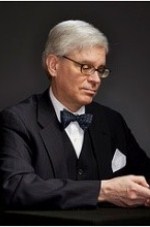
Karin Beery is a published author and editor with experience in traditional and self-publishing, freelance editing, and editing for publishers. She is an active member of Advanced Writers and Speakers Association, Christian Authors Network, and the Christian Proofreaders and Editors Network, as well as a PEN Institute instructor. Her specialty is substantive fiction editing with an emphasis in romance and women’s fiction.
 

Categories: Editorial Services, Karin Beery

What I Do and Why

Monday, April Post a comment

Growing up in a minuscule town in eastern Kentucky, I was a good student, a teacher’s pet, and a bookworm.
Being a good student meant always having the right answer, and in English class, where I excelled, the right answer was always formal written English. I absorbed the dangerous belief that formal written English is “correct” English, all other forms being inferior at best, or downright wrong.

Consequently, I came to talk like a book and developed into a terrible language snob during adolescence and early adulthood, the worst kind of prescriptivist. It took some time for me to discover — through wide reading, through acquaintance with other editors in ACES: The Society for Editing, and through blogging exchanges with linguists and lexicographers — that language snobbery is no more noble, moral, or excusable than snobbery based on ancestry, place of birth, IQ score, wealth, physical beauty, or wardrobe.

This means I have had to revise, or even reverse, what I have told students in my editing class at Loyola University Maryland, but unlearning is an inescapable part of learning.

Over nearly forty years as an editor at newspapers, first The Cincinnati Enquirer and currently The Baltimore Sun, I have come to understand that my task is not to enforce a handful of superstitions and shibboleths, but to assist the writer in accomplishing their purpose. (Yes, singular their. Get over it.)

Accomplishing that purpose means making judgments rather than enforcing rules or rigidly adhering to a house style. The judgments involve balancing a set of interests: what is appropriate for the writer, appropriate for the subject, appropriate for the occasion, appropriate for the publication — and appropriate for the reader, the party most commonly overlooked.

That’s the job.


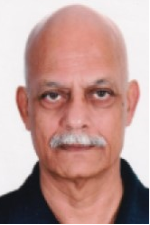
John Early McIntyre has been a professional editor for nearly 40 years, more than 31 of them at The Baltimore Sun, where he has headed the copy desk. John earned an undergraduate degree in English from Michigan State University, where he was elected to Phi Beta Kappa, and a master’s degree in English from Syracuse University, where he was a university fellow. John has taught copyediting at Loyola University Maryland since 1995. A charter member of the ACES: The Society for Editing, he served two terms as its president. John has presented workshops on writing and editing at conferences and publications in the United States and Canada.
 

Categories: Editorial Services, John McIntyre

Citing Works Used in Blogs, Press Releases, Newsletters

Saturday, May Post a comment

Copyeditors, given their passion for exactness, like to go by the book and feel uneasy if they have to improvise. In copyediting scholarly works, citations, and references are relatively straightforward matters, and all style guides explain in excruciating detail the recommended form for citing sources. If you look up the successive editions of any style guide, you will see that the number of examples it uses to illustrate the format of presenting the full details of a given source — a journal article, a chapter in a book, a web page, an audio recording, and so on — has been steadily rising to keep pace with newer digital forms in which the content is packaged: emails, Facebook posts, WhatsApp posts, Instagram posts and messages, YouTube videos. . . .

The fact that NAIWE’s executive director, April Michelle Davis, suggested that I contribute an article on how to cite blogs, press releases, and newsletters is proof enough that editors need a template for every form of packaging. And that, to my mind, is a demand unlikely to be met no matter how comprehensive a style guide. I will of course dispense some advice on dealing with blogs, press releases, and newsletters as dictated by a couple of style guides, mainly APA (the Publication Manual of the American Psychological Association, 7th ed.) and Chicago (the Chicago Manual of Style, 17th ed.), but I also intend to share with my fellow editors how, once you know the four basic elements of a reference, namely the author, the date, the title, and the source, it is easy to deal with every new kind of source that information technology can throw at us.

As the following examples show, these basic elements continue to make up any reference and continue to retain the sequence in which they are given in a reference. For example, here is how to format the reference, APA style, when the source in question is a blog post:

  • Charlesworth Author Services. (2022, April 16). Understanding author affiliation and accurately mentioning it in different scenarios. https://www.cwauthors.com/article/understanding-and-accurately-mentioning-author-affiliation


Chicago differs in that it adds the word “blog,” in parenthesis, after the title of the blog post, moves the date farther from the author’s name, and places the title of the blog post within quotation marks:

  • Yateendra Joshi, “Using “et al.” for in-text citations in research paper,” Editage Insights (blog), January 16, 2014, https://www.editage.com/insights/using-et-al-for-in-text-citations-in-research-papers?refer-type=article.


For press releases, however, APA makes it a point to identify the genre by inserting the phrase “Press release,” within square brackets, at the end of the title or heading of the press release, as shown in the following made-up example:

  • Institute of Typographic Research. (2021, July 18). Unambiguous characters for captcha texts [Press release]. https://www.ITR.org/Newsroom/announce/glyphs34.htm


Chicago differs in that it uses “news release” and does not enclose it within square brackets:

  • Institute of Typographic Research, “Unambiguous characters for captcha texts,” news release no. ITR07182021, July 18, 2021, https://www.ITR.org/Newsroom/announce/glyphs34.htm


Formatting the reference to an item in a newsletter is straightforward because newsletters are serial publications, usually with volume numbers, issues numbers, and a date (typically the month and the year). Therefore, the reference follows the standard format for an article in a journal. However, items in newsletters are rarely attributed to named authors, and the entity that publishes the newsletter is taken as the author.

However, what is really important — far more than following the stipulated format by using square brackets instead of round brackets (or vice versa, as the case may be) — is that as copyeditors we ensure that readers are given all the necessary information so that

  • the exact source is pinpointed
  • enough information is given (especially the author, the title, and the year) to help readers decide whether they should consult the original article
  • relevant details are supplied to help readers obtain the article in question.

In turn, the necessary information comprises the four basic elements mentioned above, basic because they answer the following questions:

  • Who is the entity responsible for the content (the author)?
  • How recent or dated is the information (the date)?
  • What is the content all about (the title)?
  • How to locate it (the source)?

So long as you keep these basic elements in mind, you will be less worried about not having the exact template for each kind of source — be it a blog, a press release, or a story in a newsletter.


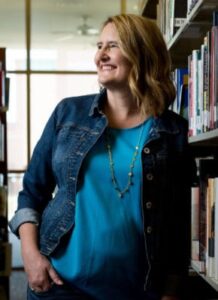
Yateendra Joshi, has been copyediting scientific and technical documents for more than 30 years and helps researchers and academics get published in high-impact-factor journals. Certified as a master editor by the Board of Editors in the Life Sciences — only 30 editors worldwide have been thus recognized so far — and a former researcher himself, Yateen has taught full-semester courses on technical writing, has conducted more than 30 shorter training programs, and as many webinars from March 2020 to December 2021 on successful submissions to high-impact-factor journals. Yateen is a member of the editorial board of Information Design Journal, was elected for the second term (2021–2023) as a member of the council of the European Association of Science Editors, and is a professional member of the Chartered Institute of Editing and Proofreading. His book, Communicating in Style, was favorably reviewed by a dozen international journals and newsletters, and the late John le Carré called it “A gem. Courteous, unfrightening and essential. A perfect companion to Fowler’s A Dictionary of Modern English Usage for today’s communicators.”

Categories: Citations, Editorial Services, Yateendra Joshi

Trivia question: How should we refer to someone from Ecuador?

Wednesday, March Post a comment

A farmer on a horse looks at the Tungurahua volcano eruption on December 10, 2010, in Banos, Cordillera, central Ecuador. (Photo by Kseniya Ragozina)[/caption]

As a freelance copy editor, I follow the guidelines of The Associated Press Stylebook in perhaps a third of my professional work. I also edit using The Chicago Manual of Style, the Publications Manual of the American Psychological Association, other style manuals, or no preferred style manual at all in some cases. The AP’s book is always close at hand, though, because it is one of the most useful reference books available for carefully considered questions of language, culture and current events.

There is a little-known field on the website of The Associated Press Stylebook that lets users outside AP offer suggestions for updates for the style guide. I’ve dug my way through various layers to find it, and I’ve offered my thoughts on various minor questions of language and usage. The most recent was one of the more inconsequential, I thought, but it was also a relative no-brainer. AP Stylebook took my suggestion, even thanked me in a tweet. So, now, those who follow AP Style should say Ecuadorian rather than Ecuadorean, as was previously advised.

This seems trivial, and it certainly is. But setting style and sticking with it provides readers with clarity and signals to them we care about getting things right. Despite AP’s preference over the decades, Ecuadorean never was used as much as Ecuadorian, and Ecuador’s English-language tourism website uses Ecuadorian.

This illustrates a strength of the AP Stylebook over other reference sources — it responds quickly when it needs to. It was updated almost immediately after I brought Ecuadorian to the Stylebook editors’ attention. Every spring, the book publishes anew with scores of changes and additions. Between editions, the online version updates as needed. Some recent additions include advice on reggaeton, the musical style, and on the United States–Mexico–Canada Agreement, the successor to the North American Free Trade Agreement (the initialism USMCA is acceptable on first reference with a definition, but spelling it out is preferred).

I’ve had many writers and copy editors tell me they avoid the AP Stylebook because they don’t edit for news. But I wonder why they would ignore a reference book created with thoughtful advice on how we use language. If we don’t edit in AP Style, we don’t need to follow the advice, but on pesky issues of language, I prefer all the advice I can get.


Mark Allen is an editor, writer, and teacher focused on helping people communicate with clarity and honesty. He has trained hundreds of editors and writers on a variety of topics, including the latest and most important elements in the Associated Press Stylebook and the Chicago Manual of Style. Mark has led conversations about copyediting and writing at conferences and workshops in Detroit, St. Louis, Las Vegas, New Orleans, Philadelphia, Portland, Columbus, Chicago, Pittsburgh, New York City, and York, England. He was the first freelancer elected to the executive board of ACES: The Society for Editing, and Mark currently teaches advanced copyediting for UC San Diego Extension’s copyediting certificate program.
 

Categories: Editorial Services, Mark Allen, Style Manuals

There Is No Correct English

Friday, July Post a comment

NAIWE’s Grammar Expert John E. McIntyre has not gone around the bend. Let me explain.

Usually someone talking about “correct” English imagines that one form of English, the dialect we identify as standard English or standard formal English, is the one, true English, all variants being inferior, wrong, and ignorant.

People who rattle on about “correct” English, often expressing a belief that the language is in decline and ignorance on the rise, want either to exert social prestige over you or to lure you into sharing their misguided sense of superiority. There will be mouthing of “dumbing down” and “the common herd.” Do not play their game.

In my own work as an editor, I have found it much more effective to talk about appropriate English. What form of English is the best match for the subject, the genre, the publication, the occasion, the writer, and the reader? (D’you remember the reader?) All the Englishes have a place at the table, and your task is to find the ones that best suit your purposes.

Standard formal English is the language of law, government, business, and academia. If you are writing in those areas, you will have to display a grasp of its conventions. Lapses in grammar and usage will undermine your credibility. (Mind you, not all the things that people think of as rules in standard English are genuine rules. For reference, my book, Bad Advice: The Most Unreliable Counsel Available on Grammar, Usage, and Writing.)

To be more broadly successful in writing you will also need to master what linguists call code switching. You already know how it works in speech: You don’t talk to your grandmother the same way you talk to friends in a bar; you don’t talk to your supervisor quite the same way you talk to a subordinate or to your peers. You adjust vocabulary and syntax to match the occasion and the people.

Those of you who write fiction already understand this modulation as you give voice to your narrators and characters, like this one: “You don’t know about me without you have read a book by the name of The Adventures of Tom Sawyer; but that ain’t no matter.” But the guardians of “correct” English at the Concord, Massachusetts, public library expelled The Adventures of Huckleberry Finn at the time of its publication as “the veriest trash.”

Sufficiently adept writers discover the possibilities of code switching within a text, as you can see in a passage from H.L. Mencken’s opinion of the Warren Harding inaugural address: “He writes the worst English I have even encountered. It reminds me of a string of wet sponges; it reminds me of tattered washing on the line; it reminds me of stale bean-soup, of college yells, of dogs barking idiotically through endless nights. It is so bad that a sort of grandeur creeps into it. It drags itself out of the dark abysm (I was about to write abscess!) of pish, and crawls insanely up the topmost pinnacle of posh. It is rumble and bumble. It is flap and doodle. It is balder and dash.”

But always keep in mind what Flannery O’Connor said about what one can do and cannot do in writing: “You can do anything you can get away with, but nobody has ever gotten away with much.”

Let me recommend to you two books to enlarge your sense of language and its possibilities. You will profit from reading Don’t Believe a Word: The Surprising Truth About Language by David Shariatmadari and Because Internet: Understanding the New Rules of Language by Gretchen McCulloch.


John Early McIntyre was a professional editor for more than 40 years, 34 of them at The Baltimore Sun, from which he recently retired. John earned an undergraduate degree in English from Michigan State University, where he was elected to Phi Beta Kappa, and a master’s degree in English from Syracuse University, where he was a university fellow. John taught editing at Loyola University Maryland for 25 years. A charter member of ACES: The Society for Editing, he served two terms as its president. John has presented workshops on writing and editing at conferences and publications in the United States and Canada. He is the author of two small but trenchant books, The Old Editor Says: Maxims on Writing and Editing, and Bad Advice: The Most Unreliable Counsel Available on Grammar, Usage, and Writing.

Categories: Editorial Services, John McIntyre

A Surefire Way to Improve Your Writing Today: Read Your Work Aloud

Saturday, July Post a comment

This past weekend I went to Nashville to record the Thin Places’ audio book. This is my first time reading for a book recording, and the whole process proved to be enlightening. Afterward, I realized that if every author read their work aloud, their work would improve dramatically.

Reading the book aloud, I found three errors. Remember that a traditionally published book goes through several phases of editing. The substantive edit is the biggie where the editor tells you your macro problems (leaps of logic, if a novel: story issues, lack of clarity, poor research, etc.). Then the book goes through a line edit where grammar issues are corrected. After that, you read through it again, then you receive the galleys to also proofread. So you’re typically looking at the manuscript at a minimum of four times, not to mention all the editorial eyes on the piece. Thin Places had been through all four of these stages, and yet as I read it aloud, I caught what I considered blaring errors, which I’ve emailed to the publisher. Thankfully, the book is not yet in print, so it’s easily fixable.

  1. You find your pet words. Who knew I used the word penchant way too much? Or mess? Editors do catch these things, but sometimes they don’t. At this point in the game, I can’t replace my extra words, but I do wish I’d have read it out loud before it was submitted to the publisher.
  2. You catch awkward sentence structure. Nothing is better than articulating your sentences out loud to catch clunky wording. I stumbled a few times, having to re-read the sentence or paragraph to make it work. Had I read the entire manuscript out loud, I’d have caught these.
  3. You catch repetitive themes. I realized how much I wrote about how hard it is for me to justify my existence on this earth, how very broken and needy I was/am. How my insecurity bleeds into my life. (Of course, this is dependent on the type of book you’ve written. Since mine is a memoir, these are the kinds of things I found.)

If you truly want to grow, change, and become an excellent writer, I highly recommend reading your work out loud. Sure, you risk your family thinking you’re bonkers, but at least you’ll be a better writer (crazy, yes, but better!)


Mary E. DeMuth helps people to turn their trials into triumphs. She mentors new authors through the publishing process and has written two tutorials on book proposals (one for fiction and another for nonfiction). An expert in Pioneer Parenting, Mary enables Christian parents to navigate our changing culture when their families were not good faith examples to follow. Her parenting books include Authentic Parenting in a Postmodern Culture (Harvest House, 2007), Building the Christian Family You Never Had (WaterBrook, 2006), and Ordinary Mom, Extraordinary God (Harvest House, 2005). Mary also inspires people to face their trials through her real-to-life novels, including Watching the Tree Limbs (nominated for a Christy Award) and Wishing on Dandelions (NavPress, 2006). A pioneer parent herself, Mary and her husband, Patrick, reside in Texas with their three children. They recently returned from breaking new spiritual ground in Southern France, where they planted a church.

Categories: Editorial Services, Mary DeMuth, Writing

Your Editor Does Not Live Here

Thursday, July Post a comment

You will have to pick up after yourself.

Writers find themselves increasingly on their own. Because proper editing is time-consuming and expensive, publications and publishers have significantly diminished — or outright eliminated — editing staffs. Those who remain are overworked. As a practical matter, your self-editing might turn out to be the only significant editing you get.

All this said, it is still the case that a writer is not necessarily the best judge of their own work. You have a sense in your head of what you meant to say, but a reader may come to a completely different understanding. Adopting the approach of an editor for your own work can give you some protection.

To do that, you have to understand that there are several kinds of editors, and you will need to know how to function as each one.

You will start as your own developmental editor, thinking through possible approaches to your subject and deciding which will be most effective. You’ll work out the focus, the main thing that you want your text to say, and what components you’ll need to carry that out. You may well go through a series of drafts. Read your draft aloud; that will highlight awkwardness and infelicities.

(Here’s a tip: Unless you are desperately pressed by a deadline, you need to walk away from your text between drafts. Have a coffee. Have a smoke. Go for a walk. If you can leave it for a day or two, all the better. It will look different when you come back to it, and you will see more clearly what needs to be done.)

Once you have a draft that you think is ready, you will become your own line editor. You will ask whether that text had the focus you imagined it had; does it say one single clear thing? Can you say in one sentence what your main point is? If not, perhaps you’re unclear on what your main point is. You will look at the structure to see whether it is adequate to the purpose, and you will question whether the organization within that structure makes any sense and can be easily followed. You’ll also check to see that everything is properly sourced and attributed.

(Here’s a tip: If you didn’t work from an outline at the developmental stage, make one now. Not the I. A. 1. a. outline from high school. Make a list of the subtopics under your main topic, paragraph by paragraph if necessary. Do all the parts contribute? Are they arranged in an order that makes it easy for the reader to follow? Would it be better to rearrange the order?)

At the next stage you will be your own copy editor. You will check for factual accuracy throughout. You will establish that the spelling, punctuation, grammar, and usage throughout are reliable and in an appropriate register. Don’t be shy about making use of a dictionary, Bryan Garner’s Garner’s Modern English Usage, and Merriam-Webster’s Dictionary of English Usage. If there is a house style to which you are meant to conform, conform to it.

(Here’s a tip: If there is some fact — name, date, whatever — that you think you know, look it up. If there’s a point of grammar or usage that you think you have under control, look it up. Proper editors know that they don’t know everything and are forever looking things up. They don’t trust their own memories, so neither should you.)

You’re nearly there, ready to be your own proofreader. Read over your text, word by word; doing it aloud may help you focus. Look for repeated words (the the), dropped words, garble, inconsistencies in typography, any other blemishes.

(Here’s a tip. Run the spell-check as the last thing you do before submitting the text. It will flag common misspellings, typographical errors, and inconsistencies in the spelling of names. But do not trust it too much. It will not help you with the wrong word correctly spelled, and English is crawling with homonyms. You will need to know whether you mean to say premier or premiere, because your spell-check won’t help you.)

And one final caution. There will be errors. There will be things you overlooked, embarrassing things. That you can produce an error-free text is an illusion, and someone will always be ready to point out the deficiencies in yours. This is how editors learn humility. So will you.


John Early McIntyre has been a professional editor for nearly 40 years, more than 32 of them at The Baltimore Sun, where he has headed the copy desk. John earned an undergraduate degree in English from Michigan State University, where he was elected to Phi Beta Kappa, and a master’s degree in English from Syracuse University, where he was a university fellow. John has taught copyediting at Loyola University Maryland since 1995. A charter member of the ACES: The Society for Editing, he served two terms as its president. John has presented workshops on writing and editing at conferences and publications in the United States and Canada.

Categories: Editorial Services, John McIntyre

Writing and Editing: Wear Two Different Hats

Tuesday, June Post a comment

Just as you’d wear a straw-brimmed hat in the sunshine and a rain cap in the pouring rain, remember the importance of wearing two different hats when you’re writing versus editing your nonfiction book.

One hat represents the creative process; the other deals with the critical process. Attempting to edit as you write can dampen your creativity, as I learned when working with an author recently. Because she was on a fast track to get her book printed, she had me editing the beginning chapters while she was still writing the middle and final chapters. She interrupted her writing flow to give me feedback on the chapters I’d sent back. It affected her ability to move forward smoothly with her final chapters, plus we had trouble keeping track of our progress. What frustration!

In retrospect, we needed to put on the brakes and say, “Each task—writing and editing— demands a separate and specific focus.” Here are three reasons why:

  1. When editing your own work, your mind can fill in, correct, or overlook errors. It’s easy to miss things that should be corrected—like missing words and inconsistencies.
  2. When you put a week or two between completing a draft and reviewing it, you break the link between what you thought you wrote and what you actually wrote.
  3. Once a first draft is finished, if you rush in to evaluate it too quickly, you haven’t allowed your brain to “hang out in the shade and cool.” That’s when you mentally step back and “see” gaps in information, research, and logic. Taking a “big picture” look also enables you to see what fits and what doesn’t.

What can you do to separate writing from editing even more?

  • When you reread your work, reformat it by changing the font, margins, line spacing, and other elements so it tricks the mind and looks like a new document.
  • Keep wearing your creativity hat and go through each chapter asking these important questions:
  1. Is it complete from a content point of view? What’s missing?
  2. Have I included all the facts and stories to meet my objectives for this chapter?
  3. Can I take out any content that doesn’t fit?

Once you have answered these questions satisfactorily, you’re ready for the critical process to take over. While wearing your editing hat, leave behind your content questions and look for the elements of good writing—style, grammar, spelling, capitalization, punctuation, and so on. And when you’re ready for feedback, call in an objective editor who can apply both the creative and critical process to perfecting your manuscript.


Barbara McNichol is a nonfiction editor, who works with authors, speakers, and business professionals to add power to their pen through the written word. Barbara wrote Word Trippers: The Ultimate Source for Choosing the Perfect Word When It Really Matters. She offers helpful writing tips weekly and a course to take your writing and editing to the next level: “WordShops: Strengthen Everything You Write.”
Categories: Barbara McNichol, Editorial Services, Writing

Word Tripper: Conscious vs. Conscience

Thursday, May Post a comment

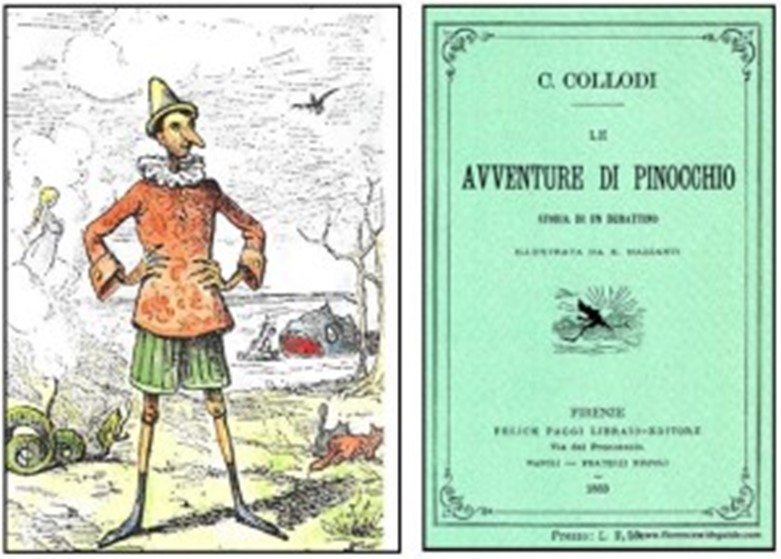
Italian writer Carlo Collodi wrote the children’s novel The Adventures of Pinocchio in 1883. Pinocchio was a wooden puppet who wanted to become a real boy. Despite the efforts of his trusty conscience, The Talking Cricket, he kept lying and wasn’t conscious of his actions.

http://articles.naiwe.com/files/2021/05/Barbara-McNichol-Word-Tripper-Conscious-vs.-Conscience.mp4

Much like The Talking Cricket, let this week’s Word Tripper be your guide to the difference between
conscious and conscience.


Conscience, conscious – “Conscience,” a noun, is part of the mind that makes you aware of your actions being morally right or wrong. “Conscious,” an adjective, describes being awake and able to understand what’s happening around you (a fact or feeling).

“I was highly conscious of my inability to pocket the wad of twenty-dollar bills I’d found. I knew my conscience wouldn’t allow me to keep this money.” – Bobbie Bookhout


Barbara McNichol is a nonfiction editor, who works with authors, speakers, and business professionals to add power to their pen through the written word. Barbara wrote Word Trippers: The Ultimate Source for Choosing the Perfect Word When It Really Matters. She offers helpful writing tips weekly and a course to take your writing and editing to the next level: “WordShops: Strengthen Everything You Write.”

Categories: Barbara McNichol, Editorial Services, Writing

  • « Previous Page
  • 1
  • 2
  • 3
  • 4
  • Next Page »

Recent Posts

  • Beyond Writing: How Expanding Your Services Can Strengthen Your Freelance Business
  • Am I a Writer or Not?
  • Be Prepared for That Crisis Moment When You Need Business Backup
  • Stick with Your System
  • In a Pricing Rut? Try These 3 Strategies

Categories

Meta

  • Log in
  • Entries feed
  • Comments feed
  • WordPress.org

Latest Posts

Beyond Writing: How Expanding Your Services Can Strengthen Your Freelance Business

July 22, 2026

Am I a Writer or Not?

July 16, 2026

Be Prepared for That Crisis Moment When You Need Business Backup

June 30, 2026

Stick with Your System

June 29, 2026

In a Pricing Rut? Try These 3 Strategies

June 25, 2026

Improving Your Vision

June 24, 2026

Contact Us

  • 804-476-4484
  • P.O. Box 412
    Montpelier, VA 23192-0412
Facebook Instagram Linkedin twitter

© NAIWE. All rights reserved. Designed by My House of Design.