
Writing is not a one-step process. It not only has many steps but the steps — really phases — are recursive. You start to compose and then you decide you need to do some additional research. Then you compose some more and decide you need to start “fixing” some of your writing and then . . . well. You know how this goes. In general, this is an inefficient and reasonably unproductive way to get your writing done. Let me share five ways to help you be more productive in your writing process, particularly focusing on the editing and revising portions.
Note: Although editing and revising are somewhat different aspects, we will consider them together for this article especially because they are separate from the “creating/composing” part of writing.
- Separate editing and composing. These two processes use different parts of the brain, and when we try to write (compose) and then edit what we’ve written and then write some more and edit that, we end up producing very little and we feel frustrated with the overall process. Keep these two phases separated.
- Read out loud. It is amazing how we can catch errors and other problems in our writing when we read it out loud. So during your editing/revising time, just read what you have written out loud.
- Read backward. When you are doing copyediting and in particular looking for typos or other misspellings, start at the end of your document and read forward. You can’t build any momentum this way because the syntax isn’t helping. You are able to just focus on copyediting (spelling, punctuation, etc.)
- Don’t use words you can’t define. Because I have taught elementary school, high school, undergraduates, and graduate students (and also helped professors with their writing), I know that we all have a temptation to sound smart. Let us agree that we are smart. Then, let’s be smart about using words that we know the meanings for. We run the risk of using a word incorrectly (no considering its connotation, for example) if we are not truly familiar with the word and what it means. So, keep expanding your vocabulary, but be careful about using words in your writing that you cannot easily define. During your editing and revising portions, ask yourself if you can define all the words you’ve used. If the answer is no, then remove them and find alternatives.
- Separate editing and composing. I know I mentioned this one before, but I have to mention it again. So many writers are not tapping into their brains efficiently. You need to have days (or times) that are just for composing. You generate ideas and just go with the flow, not stopping or “fixing.” Then, you have other times where you are only editing and revising. Start getting in this habit today.
You probably have some writing you need to edit. See if you can apply one of these ideas immediately. Once these suggestions have become habits, then you’ll really see your writing productivity soar.
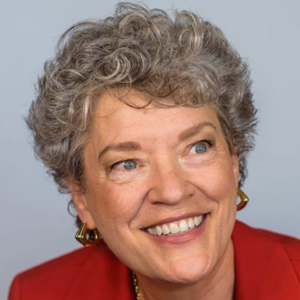 Meggin McIntosh, the PhD of Productivity, is an award-winning professor who now works with academics who prefer overjoyed to overwhelmed. She is a former university professor and administrator and currently a coach, author, and workshop leader. People who are overwhelmed and would prefer to be overjoyed instead, are the people I’m fortunate enough to connect with.
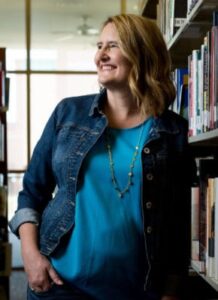 Mary E. DeMuth helps people to turn their trials into triumphs. She mentors new authors through the publishing process and has written two tutorials on book proposals (one for fiction and another for nonfiction). An expert in Pioneer Parenting, Mary enables Christian parents to navigate our changing culture when their families were not good faith examples to follow. Her parenting books include Authentic Parenting in a Postmodern Culture (Harvest House, 2007), Building the Christian Family You Never Had (WaterBrook, 2006), and Ordinary Mom, Extraordinary God (Harvest House, 2005). Mary also inspires people to face their trials through her real-to-life novels, including Watching the Tree Limbs (nominated for a Christy Award) and Wishing on Dandelions (NavPress, 2006). A pioneer parent herself, Mary and her husband, Patrick, reside in Texas with their three children. They recently returned from breaking new spiritual ground in Southern France, where they planted a church.