
May this piece be a blessing to those of you who want to deepen your stories.
While I prefer to have a life like a maple tree in spring — full of promise, growth, and branches that reach for the sky in greening prayer — I realize I’m a better writer when I’m an autumn oak, bereft of leaves, dried out, and my arms brittle from the reach. On my run today, I see why. When trees begin their shedding, and when the promise of life floats away on a crisp breeze, you see more of the sky. More sun, more blue, and more clouds peek-a-boo through barren branches. What is hidden is revealed. I’d never see the curiosity of bird nests had the camouflaging leaves not fallen.
That’s the secret of great writing.
Naked lives letting the sun poke through, revealing snatches of life not otherwise seen.
That all sounds breathtakingly ethereal, but really, it’s pragmatism. Because I’m at my best, literarily speaking, when I embrace my frailty. And I think you are, too. The best novels out there are populated with characters who fail, struggle, and reach for heights but miss the mark, lose loved ones and rail at the heavens and at the unfairness of it all. How can we possibly give our characters such beautiful angst if we’re not willing to experience life ourselves?
The best novel chapter I wrote came after an excruciating conversation with a loved one. Such hollowness poured over me as I asked the question, “What if my character had these same feelings? But toward another person?” With all the raw energy of my fragile emotions, I scratched out that scene, let it sit, then sent it to my good friend who’s an excellent novelist. She deemed it my best writing. I wept. I thanked God for the scarred circumstance that brought it about, how He made beauty from the ashes of a painful conversation.
In life we long to have things tied up neatly with a velvet bow; but life, in all its wild tumbles, wrestles the bow away, flinging the box wide open. It should be that way with our stories too. I’m guilty of writing first drafts full of black and white characters and plots that tie up neatly and happily. I’m thankful for editors who point this out and make me go back, adding wayward flesh to my characters and twists of reality to my plot.
In that exercise, I only have to look at my own life to see that the most beautiful parts of my life were birthed in the cauldron of bitterness and unmet expectations — in the autumns and winters of my life. Why would I deprive my characters of that same experience by making everything springtime and summer? And why would I deprive my reader? They’ve experienced their own share of worry and heartache. They’re looking for storytellers who understand, who dare to tell their stories because that is what readers relate to.
It’s not easy to go there. It’s never easy. But how can you expect to mine the depths of human depravity and grace in your stories if you’re unwilling to mine them in yourself? Someday, if God opens the door, I’m going to teach novel writing. It will be unlike any other workshop I’ve attended. Of course I will delve into story structure and passivity and point of view, but before I begin any of that, I want to inspire writers to understand how we deepen our stories beyond mechanical constructs. I want writers to see that great stories grab you by the throat because of their terrible humanity, because readers feel the story is theirs somehow. And that can only happen when we’re willing to live in the pain and joy of our own stories. It’s my firm belief that great writing flows from the pen of self-aware writers.
Here’s your assignment. I give you permission right now to write something from a place of emptiness or angst or bitterness or bewilderment or nakedness. You know what I’m referring to. Take those emotions, feel them, pray about them, go to Jesus with them. Then, write like the wind. See your story not as a tree in cacophonic bloom, but as a shrub awaiting winter, leaves gone, glory faded. Let the sun glory through the spindly branches.
Sometimes I’m asked how I write deep, relate-able stories. It’s because I do what I assigned above. I recognize those autumn places, walk through them (not always graciously either), and translate those emotions into the landscape of my stories. This is something you can do. It’s something you must do. Embrace your frailty today, and venture forth. The world needs to hear your story.
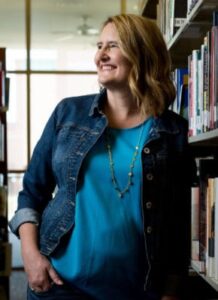 Mary E. DeMuth helps people to turn their trials into triumphs. She mentors new authors through the publishing process and has written two tutorials on book proposals (one for fiction and another for nonfiction). An expert in Pioneer Parenting, Mary enables Christian parents to navigate our changing culture when their families were not good faith examples to follow. Her parenting books include Authentic Parenting in a Postmodern Culture (Harvest House, 2007), Building the Christian Family You Never Had (WaterBrook, 2006), and Ordinary Mom, Extraordinary God (Harvest House, 2005). Mary also inspires people to face their trials through her real-to-life novels, including Watching the Tree Limbs (nominated for a Christy Award) and Wishing on Dandelions (NavPress, 2006). A pioneer parent herself, Mary and her husband, Patrick, reside in Texas with their three children. They recently returned from breaking new spiritual ground in Southern France, where they planted a church.
Leave a Reply