
 Many publications have decided recently to capitalize the racial identifier Black. This is a perfect time to review this internal style question.
In the wake of nationwide protests over police brutality and racial disparity, prominent publications have adopted capital Black to refer to people of color who trace their roots to Africa. Among them are The Los Angeles Times, NBC News, The San Diego Union-Tribune, and the Gannett newspaper chain, including USA Today. They join the Boston Globe and Seattle Times, which made the change several months ago.
The descriptive term has traditionally not been capitalized, just as white has been lowercase to refer to lighter-skinned people who trace their roots to Europe. The Chicago Manual of Style points out that “terms such as black and white, when referring to ethnicity, are usually lowercased unless a particular author or publisher prefers otherwise.” In contrast, the Publication Manual of the American Psychological Association has long called for capitalizing racial designations.
The Associated Press Stylebook goes with lowercase for descriptive terms regarding race. But AP Stylebook editors are gauging the mood. In answers to Ask the Editor queries at apstylebook.com, the editors write: “We continue to discuss the question, as we have been for some time. Some black people believe strongly that the term should be capitalized. Some black people believe strongly that it shouldn’t be capitalized. There also are other considerations, such as how to handle white. In-depth study and discussions continue.”
The argument for uppercase has been that the word identifies a distinctive group of people and should follow the pattern of other racial or ethnic identifiers, such as Asian and Latino. But other racial or ethnic identifiers are based on geographic location or language, which are generally capitalized. The terms black and white are vaguely descriptive and are not based on location or language. Linguistically, the general trend is toward lowercasing words as they become more widely used. To capitalize Black goes against this pattern.
One issue with capitalizing Black is what do we do with White? Some argue that the latter is not as distinctive as a self-identified group, except perhaps among a few racists who are militant in their identity. But leaving white lowercase risks presenting one race as the norm. Writing on March 23 on the website of the Center for the Study of Social Policy, Ann Thuy Nguyen and Maya Pendleton argue that “to not name ‘White’ as a race is, in fact, an anti-Black act which frames Whiteness as both neutral and the standard.”
Looking to precedent
There is a strong precedent for capitalization that can provide us guidance now, a century later. The Spanish and Portuguese word for the color black was adopted in American English as a racial term and was commonly written lowercase. In the late 19th and early 20th centuries, writers and activists—including W.E.B. Du Bois—campaigned for Negro to be capitalized. In 1929, Du Bois told the editors of Encyclopedia Britannica that he considered “the use of a small letter for the name of twelve million Americans and two hundred million human beings a personal insult.” There are now 44 million Americans and more than a billion people worldwide who have ancestral ties to Africa.
In grappling with this decision, publications also might look to the New York Times in 1930, which acknowledged it was late to capitalization when it decided to uppercase Negro, joining “many of the leading Southern newspapers as well as most of the Northern in according this recognition.” In a small announcement of the change in the March 7, 1930, New York Times editorial page, the editors wrote: “In our ‘style book,’ ‘Negro’ is now added to the list of words to be capitalized. It is not merely a typographical change; it is an act in recognition of racial self-respect for those who have been for generations in ‘the lower case.’”
In the 1960s, the word Negro began to fall out of favor, to the point of now being considered an offensive throwback. It was spoken by Martin Luther King Jr. in his 1963 “I Have a Dream” speech, but James Brown helped hasten the reclamation of black when he sang “Say It Loud, I’m Black and I’m Proud” in 1968. Only recently has African American (with or without a hyphen) become a commonly used term, but it has had a mixed reception.
Looking for guidance
News organizations and other publications look to the AP Stylebook and other big style guides for leadership on social, political, and cultural language trends. The AP Stylebook likes to reflect the norm rather than push cultural change, but it has demonstrated an awareness of what writer Karen Yin calls conscious style—favoring words that acknowledge underrepresented communities and avoiding words that disparage or belittle. Yin, creator of the Conscious Style Guide, suggested in 2017 that publications not wait for the big style guides to change because the big style guides will change when they see publications adopting the capital B.
Yin also suggests that Black-focused magazines can show the way.
“If your editorial directive is to call people what they want to be called—including names, pronouns, and labels—then look to Black media outlets like Ebony and Essence for accepted usage and avoid overriding their terminology,” she wrote.
Arguments about linguistic trends and descriptive vs. nominal uses seem petty in the face of the real, often violent inequality in American society. And capitalizing Black now might seem reactionary or an emotional response. But as is usually the case, the right time to engage in the discussion is now.
 Mark Allen is an editor, writer, and teacher focused on helping people communicate with clarity and honesty. He has trained hundreds of editors and writers on a variety of topics, including the latest and most important elements in the Associated Press Stylebook and the Chicago Manual of Style. Mark has led conversations about copyediting and writing at conferences and workshops in Detroit, St. Louis, Las Vegas, New Orleans, Philadelphia, Portland, Columbus, Chicago, Pittsburgh, New York City, and York, England. He was the first freelancer elected to the executive board of ACES: The Society for Editing, and Mark currently teaches advanced copyediting for UC San Diego Extension’s copyediting certificate program.
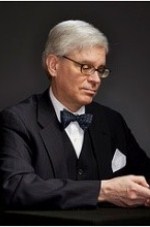 John Early McIntyre has been a professional editor for nearly 40 years, more than 31 of them at The Baltimore Sun, where he has headed the copy desk. John earned an undergraduate degree in English from Michigan State University, where he was elected to Phi Beta Kappa, and a master’s degree in English from Syracuse University, where he was a university fellow. John has taught copyediting at Loyola University Maryland since 1995. A charter member of the ACES: The Society for Editing, he served two terms as its president. John has presented workshops on writing and editing at conferences and publications in the United States and Canada.